Owlet vs Snuza is the choice between the two best-known wearable baby monitors, and they watch for different things. The Owlet Dream Sock measures pulse rate and oxygen through a sock. The Snuza Hero clips to the diaper and senses abdominal movement, vibrating to rouse a baby if movement stops. One needs an app and a base station; the other needs nothing but a battery. Here is how they compare.
Quick Verdict
Choose the Owlet Dream Sock if you want measured vital signs, FDA clearance, app tracking, and alerts on your phone. Choose the Snuza Hero if you want something simple, portable, and app-free that works anywhere a diaper does, including travel, at about a third of the price. Neither prevents SIDS, and both companies say so; safe sleep practices come first, and these are supplements for peace of mind.
Owlet Dream Sock vs Snuza Hero at a Glance
| Owlet Dream Sock | Snuza Hero | |
|---|---|---|
| What it senses | Pulse rate and oxygen via pulse oximetry | Abdominal movement via a direct-touch sensor |
| Worn on | Foot, in a fabric sock | Clipped to the diaper waistband |
| Alerts | Base station light and sound, phone notifications | Vibrates after 15 seconds of no movement, then audible alarm at 20 |
| App and Wi-Fi | Required for app features; base works without | None |
| Power | Rechargeable sock sensor, plug-in base | Replaceable battery |
| FDA status | Cleared for pulse rate and oxygen monitoring | Not an FDA-cleared medical device in the US |
| Age range | 1 to 18 months, 6 to 30 lb | Birth until the baby rolls, in a crib |
| Amazon rating | 4.0 stars, 5,300+ ratings | 4.5 stars, 590+ ratings |
| Price | About $300 | About $100 to $130 |
What Each One Measures
The Owlet uses pulse oximetry, the same method as a hospital finger clip, to read pulse rate and oxygen saturation while the baby sleeps. Readings appear live in the app and the base station glows green when they are in range, alerting with light and sound if they fall outside preset limits. The FDA cleared the Dream Sock for this purpose in 2023, which no other consumer monitor has.
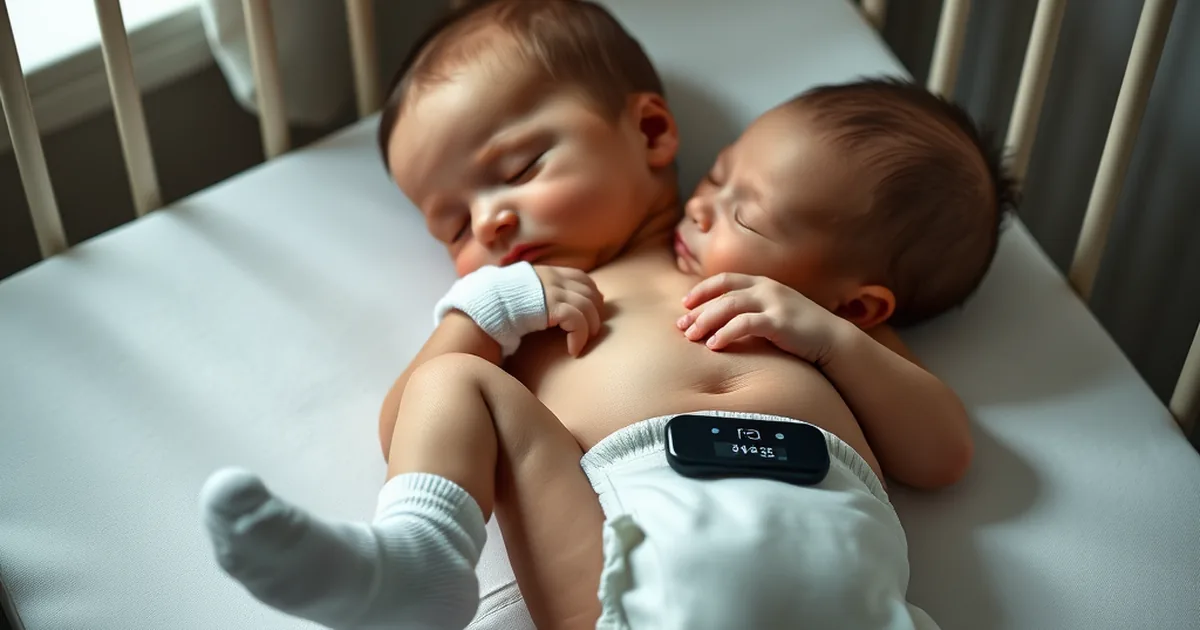
The Snuza Hero senses the rise and fall of the baby's abdomen through a sensor that rests against the belly. If it detects no movement for 15 seconds, it vibrates to stimulate the baby, and if movement does not resume by 20 seconds, it sounds an alarm. It measures movement only, not breathing quality or oxygen, and it has no app or remote alert; the alarm is on the device itself.
Simplicity and Portability
The Snuza wins. It clips on in seconds, works in any crib or bassinet, needs no Wi-Fi or base station, and goes in a pocket for travel. The Owlet requires the base station plugged in near the crib, the sock charged, and the app set up, though once running it is low effort.
False Alarms
Both have them. The Owlet's come from a loose or misplaced sock; correct fit cuts them sharply. The Snuza's come from the sensor losing contact with the belly, often with a loose diaper or a baby who has rolled onto their side, and from the baby moving to a position where the sensor cannot feel breathing. Both brands' instructions address fit, and both settle down once parents learn the placement.
Lifespan
The Owlet Dream Sock fits babies from about 1 to 18 months with the included sock sizes. The Snuza is used until the baby starts rolling and moving around the crib, usually 4 to 6 months, after which it becomes unreliable and most parents stop using it.
Who Should Buy the Owlet Dream Sock
Parents who want measured vitals with FDA clearance, phone alerts, and sleep trend data, and who will use it well past 6 months.
Check Owlet Dream Sock Price on Amazon
Who Should Buy the Snuza Hero
Parents who want a simple, app-free movement monitor for the newborn months, especially for travel, at a lower price.
Check Snuza Hero Price on Amazon
Frequently Asked Questions
Do baby monitors like Owlet or Snuza prevent SIDS?
No. The American Academy of Pediatrics does not recommend home monitors as a way to reduce SIDS risk, and neither company claims they do. Back sleeping, a firm empty sleep surface, room sharing, and no smoke exposure are the measures that reduce risk.
Can you use Owlet and Snuza at the same time?
Yes, they do not interfere. Some parents use the Snuza for naps and travel and the Owlet at night.
Is the Snuza safe to use with a sleep sack?
Yes. It clips to the diaper under the sleep sack, with the sensor against the belly. It should not be used with a swaddle that compresses the sensor or on a baby who is not on their back.