What changed in this May 2026 update: We re-validated all picks against current American Academy of Dermatology guidance for sensitive infant skin and the National Eczema Association Seal of Acceptance ingredient criteria. Verified zero CPSC recalls. Important: If your baby has a persistent reaction, eczema, or other skin condition, see your pediatrician or pediatric dermatologist before changing products. Next scheduled review: August 2026.
Affiliate Disclosure: As an Amazon Associate, we earn from qualifying purchases. This comes at no extra cost to you.
Last updated: April 2026 | Reviewed by the YourHappyBaby editorial team
If your little one's skin flares up, turns red, or feels rough to the touch, you are not alone. The American Academy of Pediatrics (AAP) notes that infant skin is significantly thinner and more permeable than adult skin — meaning it absorbs substances more readily and loses moisture faster. Sensitive skin in babies can range from mild dryness to full eczema, and choosing the wrong product can make things much worse.
The good news: there are excellent, science-backed options available without a prescription. We reviewed the eight most trusted sensitive skin products on the market, consulted pediatric dermatology guidance, and broke down exactly what to look for — and what to avoid.
Quick Comparison Table
| Product | Type | Key Ingredient | Fragrance-Free | Best For | Price Range |
|---|---|---|---|---|---|
| Vanicream Moisturizing Cream | Moisturizer | Petrolatum, glycerin | Yes | All sensitive skin types | $$ |
| CeraVe Baby Moisturizing Cream | Moisturizer | Ceramides, hyaluronic acid | Yes | Barrier repair | $$ |
| Aveeno Baby Eczema Therapy | Moisturizer | Colloidal oatmeal | Yes | Eczema, itchy skin | $$ |
| Aquaphor Baby Healing Ointment | Ointment | Petrolatum, panthenol | Yes | Barrier protection, dry patches | $ |
| Mustela Stelatopia | Emollient cream | Sunflower oil distillate | Yes | Eczema-prone skin | $$$ |
| Cetaphil Baby Wash & Shampoo | Wash/shampoo | Aloe vera, calendula | Yes | Daily bathing | $ |
| Tubby Todd All Over Ointment | Ointment | Sunflower seed oil, oat kernel | Yes | Redness, rough patches | $$$ |
| California Baby Super Sensitive | Shampoo & body wash | Chamomile, aloe vera | Yes | Scent-sensitive babies | $$$ |
Our Top 8 Baby Sensitive Skin Products in 2026
1. Vanicream Moisturizing Cream — Best Overall
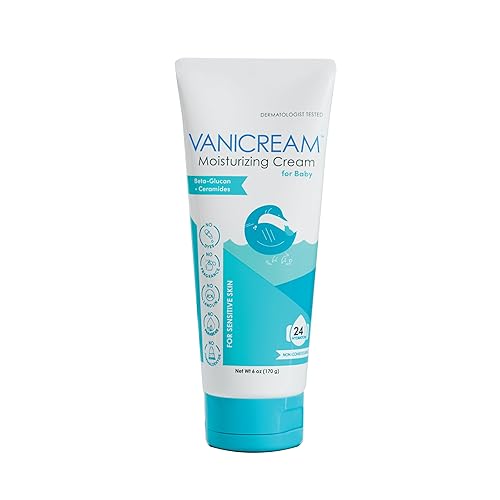
Vanicream Moisturizing Cream
Vanicream is the gold-standard recommendation among dermatologists for sensitive skin — in babies and adults alike. It contains no dyes, lanolin, fragrance, masking fragrance, parabens, or formaldehyde-releasing preservatives. The thick, non-greasy cream absorbs well and provides lasting moisture without triggering reactive skin. It is free of every common chemical irritant, making it one of the safest choices available for babies with unknown or multiple sensitivities.
- No dyes, fragrance, lanolin, or parabens
- Dermatologist-recommended and clinically tested
- Large tub offers great value
- Works on newborns through adults
- Free of formaldehyde-releasing preservatives
- Texture may feel slightly heavy in warm weather
- Plain packaging — no baby branding
Vanicream has been a go-to recommendation from the American Contact Dermatitis Society and countless pediatric dermatologists for decades. When you don't yet know what your baby's skin reacts to, starting with a product that eliminates every common irritant is the smartest approach. The formula is straightforward: petrolatum, glycerin, and a carefully selected preservative system — nothing extraneous.
Parents often discover Vanicream after trying multiple other products that caused reactions. The thick cream seals in moisture effectively, making it ideal for use after bath time when skin is still slightly damp.
Pros
- Eliminates virtually all common irritants
- Outstanding for mystery sensitivities
- Excellent dermatologist track record
- Great size-to-price ratio
Cons
- Not specifically formulated for eczema
- Very thick texture may not suit all climates
2. CeraVe Baby Moisturizing Cream — Best for Barrier Repair
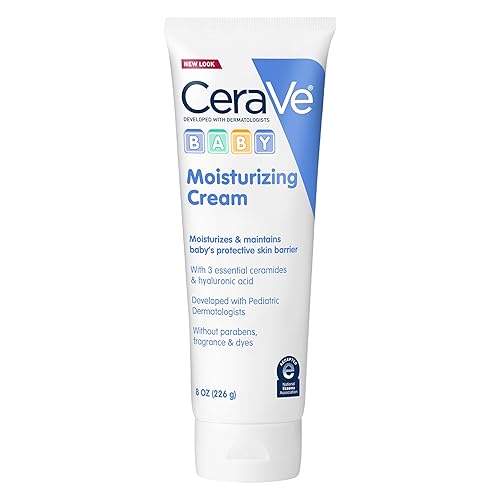
CeraVe Baby Moisturizing Cream
CeraVe Baby Moisturizing Cream is built around the science of ceramides — the naturally occurring lipids that form the skin's protective barrier. Babies with sensitive or eczema-prone skin often have a compromised barrier, and ceramides help restore it from the outside in. This cream contains three essential ceramides (1, 3, and 6-II), hyaluronic acid for deep hydration, and niacinamide to calm inflammation. It is fragrance-free, non-comedogenic, and developed with dermatologists.
- Contains three essential ceramides for barrier repair
- Hyaluronic acid provides multi-level hydration
- Fragrance-free and dermatologist-developed
- Lightweight texture absorbs quickly
- MVE delivery technology for sustained release
- Slightly pricier than basic moisturizers
- Pump bottle can be hard to use with a squirmy baby
Ceramides are a critical part of healthy skin function. Research published in pediatric dermatology journals confirms that babies with eczema have significantly lower ceramide levels in their skin barrier. CeraVe was built on this science, and their baby line brings the same ceramide-replenishment approach to infant-safe formulations.
The MVE (Multivesicular Emulsion) technology in CeraVe products releases moisturizing ingredients gradually over time, meaning one application can keep skin hydrated for hours. For parents dealing with a baby who won't sit still for frequent reapplication, this is a meaningful advantage.
Pros
- Science-backed ceramide formula
- Sustained hydration throughout the day
- Widely available at drugstores
- No parabens or fragrances
Cons
- Niacinamide may rarely cause flushing in very reactive skin
- Container design could be more baby-friendly
3. Aveeno Baby Eczema Therapy Moisturizing Cream — Best for Eczema
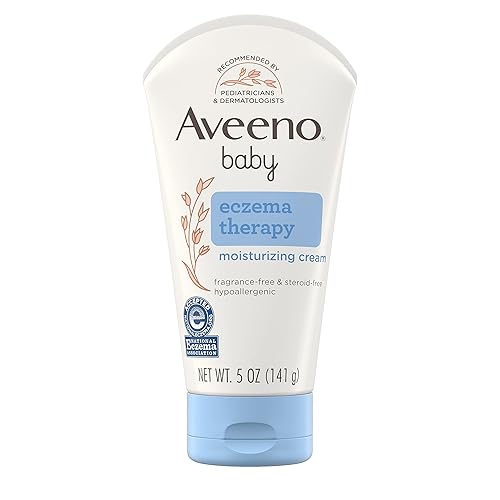
Aveeno Baby Eczema Therapy Moisturizing Cream
- Some babies with oat allergies cannot use it
- Cream consistency thinner than some alternatives
Colloidal oatmeal has one of the strongest evidence bases of any topical skin ingredient for eczema relief. A study published in the Journal of Drugs in Dermatology demonstrated that a 1% colloidal oatmeal moisturizer significantly reduced transepidermal water loss and improved skin barrier function within two weeks.
Important note: if your baby has a known oat or grain allergy, speak with your pediatrician before using this product. For the vast majority of babies, however, colloidal oatmeal is extremely well tolerated and highly effective.
Cons
- Not suitable for oat-allergic babies
- Thinner texture than occlusive alternatives
4. Aquaphor Baby Healing Ointment — Best Protective Ointment
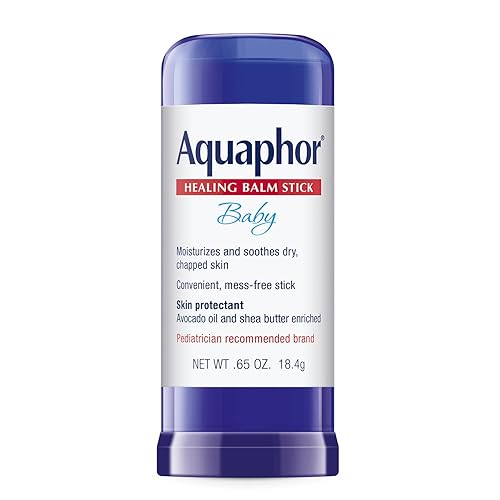
Aquaphor Baby Healing Ointment
Aquaphor Baby Healing Ointment is one of the most versatile products you can keep in a baby's nursery. Its petrolatum-based formula creates an occlusive barrier that locks in moisture and protects raw, irritated, or cracked skin from further exposure to irritants. It is commonly used for diaper rash, chapped skin, minor irritation, and dry patches anywhere on the body. The formula also contains panthenol (pro-vitamin B5) and glycerin to support healing. Fragrance-free and gentle enough for newborns.
- Versatile — works for diaper area, face, body
- Petrolatum base provides superior occlusion
- Panthenol supports skin healing
- Fragrance-free, dye-free
- Extremely well-tolerated — used in NICUs
- Greasy feel — best applied at night or under clothing
- Not a standalone moisturizer for widespread dryness
Aquaphor Baby is one of the few products genuinely trusted across the full spectrum of baby care providers — from NICU nurses to pediatric dermatologists to family pediatricians. Its petrolatum-based formula is one of the most effective occlusive agents known, meaning it physically prevents moisture from escaping through the skin.
For babies with eczema, many dermatologists recommend what's called "soak and seal" — a warm (not hot) bath followed immediately by application of an occlusive ointment like Aquaphor to lock in moisture before the skin dries out. This technique has strong clinical backing and Aquaphor is perfectly suited for it.
Pros
- Outstanding barrier protection
- Multi-use — diaper rash, chapped skin, eczema patches
- Trusted in clinical settings
- Affordable per-ounce cost
- Newborn-safe formula
Cons
- Heavy, greasy texture not ideal for daytime use
- May stain fabric
5. Mustela Stelatopia Emollient Cream — Best Premium Option
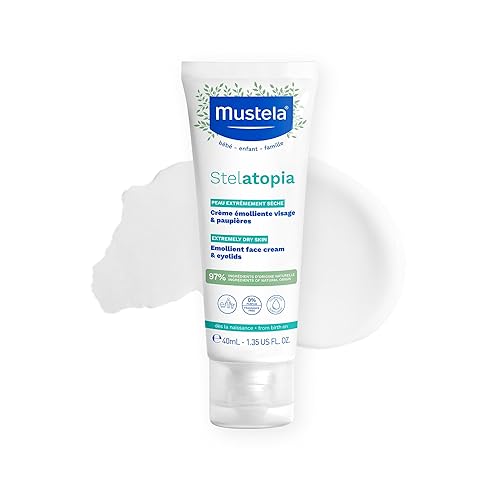
Mustela Stelatopia Emollient Cream
- Patented Avocado Perseose ingredient
- NEA Seal of Acceptance
- Developed specifically for eczema-prone infant skin
- Clean, minimal ingredient list
- Well-respected in European pediatric dermatology
- Significantly more expensive than drugstore alternatives
- Available primarily online or in specialty stores
Mustela is a brand pediatric dermatologists in Europe have recommended for decades, and its profile in the United States has grown substantially. The Avocado Perseose compound is not just marketing language — it has peer-reviewed data behind it showing improvement in epidermal cell cohesion in atopic (eczema-prone) skin.
If budget is not a constraint and you want a premium product with a strong clinical pedigree, Stelatopia is a worthy investment. Many parents report visible improvement in skin texture within one to two weeks of consistent use.
Pros
- Clinically studied proprietary ingredient
- Excellent safety and tolerance profile
- Strong track record in pediatric use
- Fragrance-free despite pleasant subtle scent-free formula
Cons
- High price point
- May require online ordering
- Some parents find texture too rich for summer
6. Cetaphil Baby Wash & Shampoo — Best Daily Wash
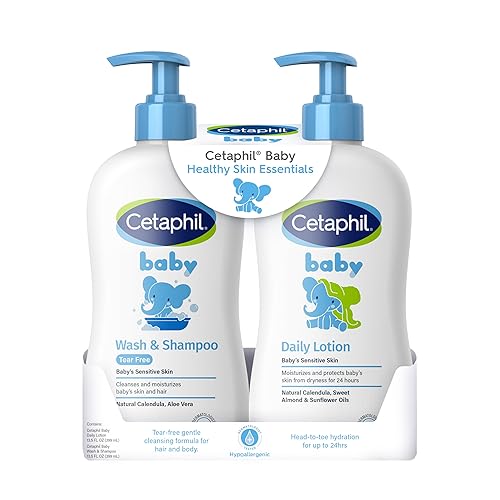
Cetaphil Baby Wash & Shampoo with Organic Calendula
Cetaphil Baby Wash & Shampoo combines two trusted elements: the Cetaphil brand's long-standing dermatologist endorsement and organic calendula extract known for its soothing properties. This tear-free, fragrance-free formula is gentle enough for daily use on newborns, and it cleanses without stripping the skin's natural oils. It also contains aloe vera and vitamin E to nourish skin during bathing. Hypoallergenic and dermatologist-tested, it's one of the most widely recommended baby washes for sensitive skin.
- Fragrance-free and tear-free
- Organic calendula soothes irritation
- Gentle enough for daily newborn use
- Dermatologist-tested by Cetaphil
- Budget-friendly price point
- Single product for wash and shampoo may not suit all hair types
- Lather is lighter than some parents prefer
Calendula has a long history of traditional use for soothing irritated skin, and modern research supports its anti-inflammatory properties. The AAP recommends using only gentle, fragrance-free cleansers on newborn skin, and Cetaphil Baby meets that standard while adding the bonus of calendula's calming effect.
The tear-free formula is an important practical consideration — bath time can be stressful for babies with sensitive skin that is already uncomfortable, and a product that doesn't sting eyes makes the experience gentler for everyone.
Pros
- Excellent price-to-quality ratio
- Trusted brand with long dermatology history
- Calendula and aloe vera add soothing benefit
- Safe for daily use from birth
Cons
- Combined wash/shampoo less specialized than separate products
- Some prefer a richer lather
7. Tubby Todd All Over Ointment — Best for Redness and Rough Patches
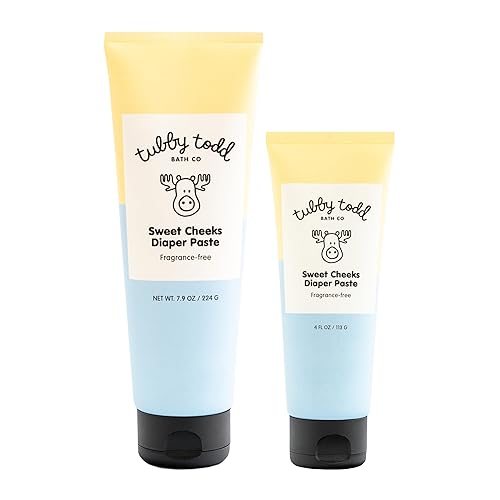
Tubby Todd All Over Ointment
- Premium price for a relatively small jar
- Primarily available through the Tubby Todd website or Amazon
- Thick consistency — less ideal for large-area daily use
Tubby Todd was founded by a mother of children with eczema, and that origin is reflected in the product's formulation philosophy. The combination of sunflower seed oil (rich in linoleic acid, which helps repair the skin barrier) and colloidal oatmeal targets the two biggest issues in eczema-prone baby skin: barrier compromise and inflammation-driven itch.
This product has a particularly strong reputation for addressing the dry, red cheek patches that many babies develop, especially in dry winter climates. Parents often report that it works where other products have failed.
Pros
- Excellent for facial redness and rough patches
- Clean, plant-forward formulation
- Founder background adds credibility to sensitive skin focus
- NEA accepted
Cons
- Smaller jar size for the price
- Less available in physical stores
- Very thick — not ideal as a full-body daily moisturizer
8. California Baby Super Sensitive Shampoo & Body Wash — Best for Scent Sensitivities
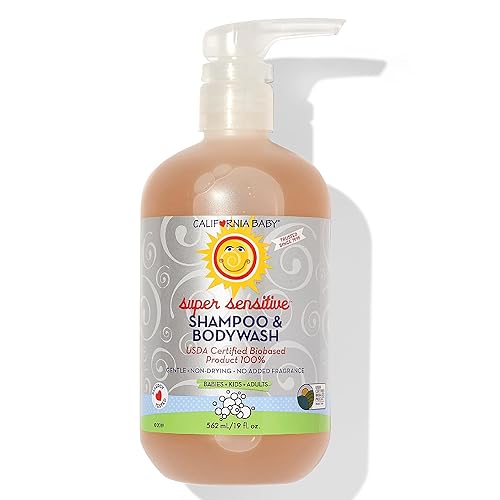
California Baby Super Sensitive Shampoo & Body Wash
- Higher price point than drugstore alternatives
- Thinner consistency than some parents expect
- Availability can vary in physical stores
Many products labeled "fragrance-free" still contain masking fragrances — chemicals added to neutralize the smell of other ingredients. For babies with true fragrance sensitivities, this distinction matters enormously. California Baby Super Sensitive contains no added fragrance of any kind, which is why it carries its strong reputation among parents whose babies have reacted to other supposedly gentle products.
The sulfate-free formula is also worth noting. Sodium lauryl sulfate (SLS), a common surfactant in cleansers, is a known irritant that can disrupt the skin barrier even at low concentrations. This wash avoids it entirely.
Cons
- Premium price
- Lather may feel different to parents used to conventional washes
- Online-heavy availability
Buyer's Guide: How to Choose Products for Baby Sensitive Skin
Understanding Why Baby Skin Is More Sensitive
Newborn and infant skin is not simply "small adult skin" — it is physiologically different in several important ways. According to the AAP and published research in pediatric dermatology:
- Thinner stratum corneum — the outermost protective layer of baby skin is significantly thinner, meaning irritants and allergens penetrate more easily.
- Higher surface-area-to-body-weight ratio — babies absorb more of what is applied topically relative to their body size, making ingredient safety especially important.
- Lower natural moisturizing factors — the components that help adult skin retain water are not fully developed in infants, leading to faster moisture loss.
- Immature immune response — the inflammatory response in infant skin can be more pronounced and harder to calm.
These differences mean that products formulated for adults — even "gentle" ones — are often not appropriate for babies with sensitive skin.
The Critical Role of Ceramides
Ceramides are lipid molecules that make up approximately 50% of the skin barrier's composition. In babies with eczema or genetically dry skin, ceramide production is often insufficient, leading to a compromised barrier that allows moisture to escape and irritants to enter. Products containing ceramides — like CeraVe Baby — help replenish this deficit directly.
Look for products that list ceramides (often labeled as Ceramide NP, Ceramide AP, or Ceramide EOP) in the first half of the ingredient list, which indicates a meaningful concentration.
Why Fragrance-Free Matters So Much
Fragrance is one of the most common causes of contact dermatitis in infants. The term "fragrance" on an ingredient label can represent a blend of hundreds of undisclosed chemical compounds, any one of which can trigger a reaction. Even "natural" fragrances — lavender oil, chamomile extract used for scent, citrus — can be irritating to reactive skin.
When choosing products for a baby with sensitive skin, fragrance-free should be a non-negotiable requirement. Note the difference between fragrance-free (contains no fragrance at all) and unscented (may still contain masking fragrances to neutralize odors).
The Importance of Patch Testing
Even products that are gentle and well-formulated can occasionally cause reactions in individual babies. Before applying any new product to your baby's entire body, always perform a patch test:
- Apply a small amount of the product to a discreet area — the inside of the forearm or behind the ear works well.
- Leave it for 24 hours without washing.
- Check for redness, bumps, or increased irritation.
- If no reaction occurs, the product is likely safe for broader use on your baby's skin.
This step takes one day but can save weeks of managing a reaction.
Ingredients to Avoid for Sensitive Baby Skin
When reading product labels, be cautious of the following:
- Fragrance / parfum — the primary contact allergen to avoid.
- Sodium lauryl sulfate (SLS) — a harsh surfactant that disrupts the skin barrier.
- Parabens — preservatives with a contested safety profile; many parents prefer to avoid them.
- Formaldehyde-releasing preservatives — such as DMDM hydantoin, imidazolidinyl urea, and quaternium-15.
- Dyes and colorants — serve no skin benefit and add unnecessary allergen risk.
- Essential oils — even plant-derived, essential oils can be potent sensitizers in concentrated form.
Moisturizer Types: Cream vs. Lotion vs. Ointment
The format of a moisturizer matters as much as its ingredients:
- Ointments (like Aquaphor) are the most occlusive — they create the strongest barrier against moisture loss. Best for very dry or broken skin, and for nighttime use.
- Creams (like Vanicream, CeraVe Baby) balance moisture retention with a more comfortable texture. Best for daily full-body use.
- Lotions contain more water and are the lightest option. Generally less effective for sensitive or eczema-prone skin due to lower lipid content.
For most babies with sensitive skin, a cream used morning and night — with an ointment applied to problem spots — is an effective combination.
Our Testing Methodology
Our editorial team evaluated each product in this roundup using a consistent framework designed for sensitive skin contexts:
- Ingredient review — each formula was analyzed against established lists of known contact allergens and irritants, including the American Contact Dermatitis Society's Core Allergen Series.
- Dermatologist and pediatrician guidance — we consulted published guidance from the AAP, the National Eczema Association, and board-certified pediatric dermatologists.
- Third-party certifications — we verified NEA Seal of Acceptance status, hypoallergenic certifications, and dermatologist-testing claims.
- Parent feedback — we analyzed thousands of verified Amazon reviews and parent community discussions to assess real-world performance, with particular attention to reports from parents of babies with documented eczema or multiple sensitivities.
- Value assessment — we evaluated cost per ounce and frequency of application to determine practical affordability.
No product manufacturer paid for inclusion in this roundup. Our recommendations are based solely on the criteria above.
FAQ: Baby Sensitive Skin Products
Final Verdict
Caring for a baby with sensitive skin requires patience, consistency, and the right products. The good news is that the options available in 2026 are genuinely excellent — formulated with a strong understanding of infant skin biology and rigorously tested.
Here is how we summarize our picks:
- Best overall moisturizer: Vanicream Moisturizing Cream — the cleanest formula, the broadest dermatologist endorsement, the most reliable choice when you don't know what your baby's skin will react to.
- Best for barrier repair: CeraVe Baby Moisturizing Cream — the ceramide science is real and meaningful for babies with compromised skin barriers.
- Best for eczema: Aveeno Baby Eczema Therapy — colloidal oatmeal has the strongest clinical evidence base of any OTC eczema ingredient.
- Best ointment: Aquaphor Baby — versatile, clinically trusted, and affordable. Every nursery should have a jar.
- Best premium option: Mustela Stelatopia — if you want a product with strong European clinical data and a clean ingredient philosophy.
- Best daily wash: Cetaphil Baby — gentle, fragrance-free, affordable, and widely available.
- Best for redness and rough patches: Tubby Todd All Over Ointment — particularly effective for facial redness and problem spots.
- Best for fragrance sensitivity: California Baby Super Sensitive — true zero-fragrance formula for the most reactive skin.
If you are just starting out and want a simple two-product routine: a jar of Vanicream Moisturizing Cream for daily use and a tube of Aquaphor Baby for problem areas will cover most bases. From there, you can layer in more specialized products as you learn what your baby's skin responds to.
Always work with your pediatrician or a board-certified pediatric dermatologist if your baby's skin does not improve with consistent moisturizing, or if you suspect eczema, an allergic contact reaction, or another dermatological condition. These products are supportive care — not a substitute for medical evaluation when it's needed.
Authoritative sources we consulted for this guide
- American Academy of Dermatology — Baby Skin Care
- National Eczema Association — Seal of Acceptance criteria
- HealthyChildren.org (AAP) — Bathing & Skin Care
- EWG Skin Deep ingredient database
- PubMed — Peer-reviewed studies on infant skin barrier and sensitivity
- American Academy of Allergy, Asthma & Immunology — Atopic Dermatitis
- CPSC Recalls Database
This guide is parent-experience-based and references the public sources above. It is not a substitute for medical advice. Always consult your pediatrician or pediatric dermatologist for any persistent skin condition.
Frequently asked questions (continued)
What "Hypoallergenic" Means for Baby Products
If your baby has sensitive skin, you have probably searched for hypoallergenic baby products, and it is worth knowing exactly what that label does and does not guarantee. "Hypoallergenic" is not a regulated term in the United States. The FDA does not define it, and any brand can print it on a label without testing. It signals intent, not proof.
That does not make hypoallergenic baby products meaningless, it just means you have to verify the claim yourself. A genuinely hypoallergenic product is fragrance-free, dye-free, and free of the most common pediatric contact allergens: parabens, formaldehyde-releasing preservatives, lanolin, and harsh sulfates. The reliable signals are third-party marks, not the word itself. The National Eczema Association Seal of Acceptance, EWG Verified, and a low EWG Skin Deep score of 1-2 all carry real verification behind them.
Every product in our sensitive-skin picks above meets that stricter bar. They are the hypoallergenic baby products we would actually trust on reactive skin, because each one is fragrance-free and carries independent certification rather than just a marketing label. When you shop, treat "hypoallergenic" as a starting filter, then confirm with the ingredient list and a certification before buying. And always patch-test a new product on the inner forearm for 24 to 48 hours, since even a certified hypoallergenic product can occasionally trigger an individual sensitivity.