
What changed in this May 2026 update: We re-checked every feeding product against the active CPSC recall list and the latest FDA infant feeding safety guidance. Verified all bottles meet current BPA / phthalate-free standards. Refreshed price ranges. Next scheduled review: August 2026.
Affiliate Disclosure: As an Amazon Associate, we earn from qualifying purchases. This comes at no extra cost to you.
Last updated: April 2026 | Reviewed by the YourHappyBaby editorial team
Feeding is the activity that dominates the first year of parenting more than any other. A newborn feeds 8–12 times per day; a six-month-old feeds 5–8 times plus solid food introductions; a one-year-old is navigating the transition to family meals. At every stage, having the right equipment reduces friction, stress, and time — and in some cases, directly affects baby's comfort and development.
This guide covers the full feeding arc: breastfeeding and pumping tools, bottles and anti-colic systems, formula preparation, nursing support, and the gear that bridges the gap to solid foods. We've identified the products that genuinely earn their place in a nursery and skipped the ones that look useful but rarely get used.
Quick Comparison Table
| Product | Category | Best For | Age Range | Price Range |
|---|---|---|---|---|
| Haakaa Silicone Breast Pump | Breastfeeding | Passive letdown collection | Newborn+ | $ |
| Dr. Brown's Original Bottles | Bottle Feeding | Reducing gas and colic | 0–12 months | $$ |
| Comotomo Natural Feel Bottles | Bottle Feeding | Breastfed babies, natural feel | 0–6 months | $$ |
| Baby Brezza Formula Pro Advanced | Formula Prep | Automatic formula mixing | 0–12 months | $$$$ |
| Boppy Original Nursing Pillow | Nursing Support | Arm support for nursing and bottle feeding | 0–12 months | $$ |
| Lansinoh Breastmilk Storage Bags | Pumping/Storage | Freezer storage of expressed milk | 0–12 months | $ |
| Kiinde Kozii Bottle Warmer | Bottle Warming | Safe, even warming of breast milk and formula | 0–12 months | $$ |
| BEABA Babycook Baby Food Maker | Solid Foods | Steam cooking and blending for purees | 4–18 months | $$$ |
Our Top 8 Baby Feeding Products in 2026
1. Haakaa Silicone Breast Pump — Best for Breastfeeding Families
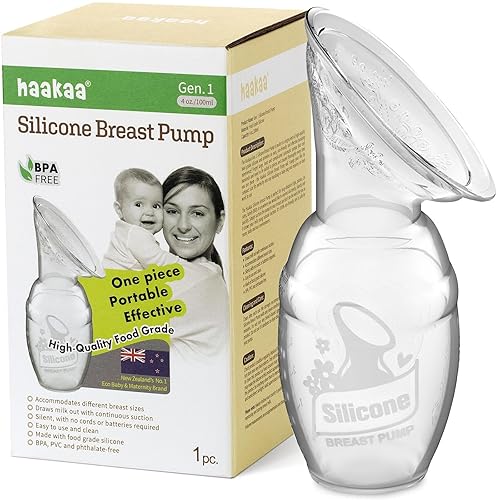
Haakaa Silicone Breast Pump
The Haakaa is a single-piece silicone cup that attaches to the breast via gentle suction, collecting the letdown reflex that occurs on the opposite side from the one being nursed from. Without the Haakaa, this letdown absorbs into a nursing pad and is lost. With it, nursing parents typically collect 0.5–2 oz per session per breast. Over 8–10 daily feeds, this represents 4–20 oz of additional expressed milk per day with no additional pumping sessions. The product has no motor, no parts, no electricity — it works entirely by the suction of a soft squeeze and attach. One piece means easy cleaning; food-grade silicone means microwave steam sterilization or dishwasher top rack.
- Collects letdown passively — no extra pumping time
- $13 price for potentially significant milk supply impact
- Single piece — nothing to assemble or lose parts
- Food-grade silicone, BPA-free, dishwasher safe
- Can help build a freezer stash with zero extra effort
- Lactation consultant top recommendation
- Not an active pump — cannot build supply or replace double electric pump
- Suction can occasionally stimulate oversupply if used every feed in early days
- Can spill if knocked — requires a stable attachment
The physics behind the Haakaa are simple but easy to underestimate. The let-down reflex is bilateral — when one breast releases milk for a feed, the other typically does too. Most breastfeeding parents manage this with nursing pads. The Haakaa is a nursing pad that stores the milk instead of absorbing it. Over months, the difference is significant: some parents report building a full month's freezer stash without a single dedicated pumping session.
A note for the early weeks: Lactation consultants sometimes advise waiting until breastfeeding is well-established (around 3–4 weeks) before using the Haakaa at every feed, particularly for parents with any tendency toward oversupply. The gentle stimulation can add to supply, which is ideal for most parents but should be monitored in the early weeks.
Pros
- Collect significant milk with zero extra pumping time
- Most cost-effective breastfeeding product available
- No assembly, no electricity, easy cleaning
- Top recommendation from lactation consultants globally
Cons
- Not a substitute for electric pump if supply building is needed
- Early oversupply risk — introduce after breastfeeding is established
- Requires stable positioning to avoid spilling
2. Dr. Brown's Original Baby Bottles — Best Anti-Colic Bottle
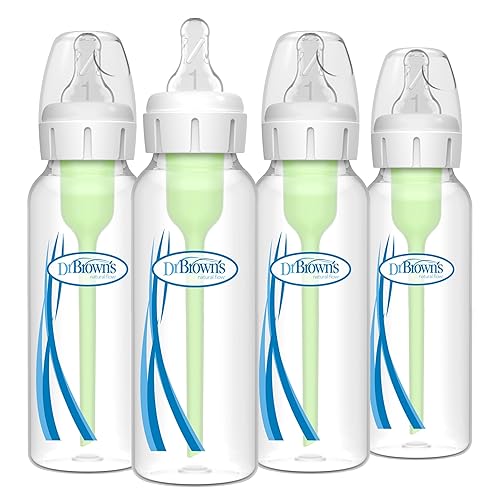
Dr. Brown's Original Baby Bottles
Dr. Brown's Original Bottles have been the pediatrician's first recommendation for gassy and colicky bottle-fed babies for over 25 years. The patented two-piece internal vent system allows air to travel through the vent tube from the nipple to the back of the bottle, bypassing the milk entirely. This means baby ingests liquid without swallowing air — the root cause of feeding-related gas, bloating, and colic-type symptoms. The system maintains positive pressure in the bottle (unlike conventional bottles that create a vacuum as milk is drawn), preventing nipple collapse and maintaining a steady, comfortable flow. BPA-free, available in narrow-neck (4 oz newborn, 8 oz older) and wide-neck versions, compatible with most breast pump flanges.
- Internal vent eliminates air ingestion — root cause of feeding gas
- 25+ years of pediatrician recommendation
- No nipple collapse — consistent flow throughout feed
- Compatible with most breast pump flanges
- Both narrow and wide-neck options available
- BPA-free
- Internal vent adds 2 parts to wash after every feed
- Vent must be correctly positioned — upright only when feeding
- Not spill-proof
- Slightly more expensive than simple-design alternatives
Feeding-related gas causes significant discomfort for many bottle-fed babies — the drawn-in, arched back, pulling-off-the-bottle signs of a baby who is uncomfortable while eating. In many cases, the cause is mechanical rather than formula-related: the bottle design creates a vacuum that collapses the nipple, forcing baby to work harder and swallow air with each suck.
Dr. Brown's vent disrupts this mechanism by equalizing pressure continuously throughout the feed. Clinical studies have shown reduction in spit-up, gas, and colic symptoms in bottle-fed babies using the Dr. Brown's system. If your baby is struggling with any of these symptoms, changing the bottle is the first intervention to try before adjusting formula or feeding positions.
Pros
- Best clinical evidence for reducing feeding-related gas and colic
- 25-year track record — over a generation of pediatrician trust
- Pump-compatible for expressed milk feeding
- Both narrow and wide neck versions available
Cons
- More parts to clean than simple bottles
- Two-piece vent requires correct assembly to work properly
- Not suitable for feeding at an angle — must be kept upright
3. Comotomo Natural Feel Baby Bottle — Best for Breastfed Babies
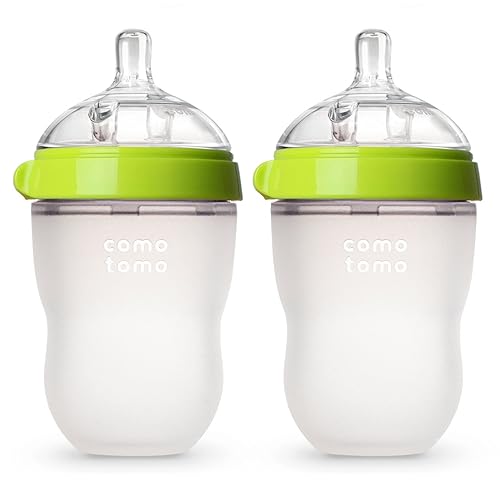
Comotomo Natural Feel Baby Bottle
The Comotomo bottle is designed from the ground up to feel as close to the breast as a bottle can. The wide, dome-shaped silicone body is soft and squeezable — not rigid plastic — which means a baby can hold and grip it in a way that resembles holding the breast. The nipple is wide-based with a very gradual slope, mimicking the shape of an areola. The slow-flow nipple requires active sucking effort similar to nursing, rather than gravity flow. All silicone construction makes it heat-resistant and suitable for boiling and microwave sterilization. Wide neck design makes filling and cleaning straightforward. BPA-free, PVC-free, phthalate-free.
- Wide, soft silicone body mimics the feel of nursing
- Wide-base nipple shape most closely resembles breast anatomy
- Slow-flow nipple requires active effort — reduces lazy latch risk
- All-silicone construction — no plastic parts
- Easy to clean due to wide neck
- BPA, PVC, and phthalate-free
- Higher price per bottle than plastic alternatives
- Silicone material can attract lint and pet hair
- Some babies still prefer nursing and reject any bottle regardless of design
Bottle refusal is a common and frustrating challenge for breastfed babies — particularly in families where one parent nurses and one handles bottle feeds. The resistance is partly sensory: conventional bottle nipples are hard, narrow, and rigid, requiring a fundamentally different oral motion than nursing. The Comotomo addresses each of these differences: the soft body, the wide base, and the slow flow together create the most nursing-similar bottle experience available.
No bottle guarantees acceptance by a breastfed baby. But the Comotomo, along with the Munchkin Latch, is consistently the first recommendation from lactation consultants for babies showing bottle refusal before other interventions are tried.
Pros
- Most nursing-similar design available — soft, wide-base, squeeze-able body
- Lactation consultant recommended for bottle refusal
- All silicone — easy to sterilize
- BPA, PVC, and phthalate-free
Cons
- Higher cost than conventional plastic bottles
- Silicone surface attracts lint
- Not guaranteed to resolve bottle refusal — infant preference is individual
4. Baby Brezza Formula Pro Advanced — Best for Formula Families
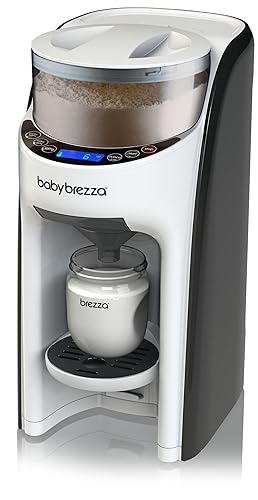
Baby Brezza Formula Pro Advanced
The Baby Brezza Formula Pro Advanced is the Nespresso machine of formula preparation: select your formula brand and bottle size, press a button, and receive a perfectly mixed, body-temperature bottle in 30 seconds. It stores dry formula in a hopper, dispenses the precise amount, mixes it with filtered water at exactly 98.6°F, and delivers a ready-to-feed bottle without any scooping, measuring, or warming. For parents doing 8–10 formula feeds per day, this eliminates one of the most tedious and error-prone parts of newborn care — particularly at 3 a.m. when incorrect formula concentration is most likely. Supports over 50 formula brands including Similac, Enfamil, Gerber, and store brands.
- 30-second perfectly mixed, body-temperature bottle on demand
- Eliminates 3 a.m. scooping and measuring errors
- Supports 50+ major formula brands and store brands
- Correct temperature every time — no warming step needed
- Significantly reduces formula preparation time for heavy users
- $200 upfront investment — significant cost
- Requires regular cleaning of formula dispenser to prevent clumping
- Formula hopper must be re-loaded and kept dry
- Some parents report formula clumping in humidity — requires attention
At $200, the Baby Brezza is one of the larger individual investments in baby feeding equipment. The math, however, is straightforward for formula-feeding families: 8 feeds per day × 365 days = 2,920 formula preparations in the first year. Each Baby Brezza feed takes 30 seconds. The time and stress savings are substantial, and the accuracy benefit — eliminating concentration errors that can occur when exhausted parents mis-scoop — is a real safety advantage.
The most important maintenance requirement: the formula dispenser must be kept clean and dry to prevent clumping, which can cause dispensing errors. A weekly cleaning routine addresses this completely, but it's the step that distinguishes satisfied users from frustrated ones.
Pros
- Fastest, most accurate formula preparation available
- Body temperature output eliminates warming step
- Dramatically reduces 3 a.m. feeding preparation stress
- Supports virtually all major formula brands
Cons
- $200 investment — highest cost on this list
- Weekly cleaning required to prevent formula clumping
- Formula hopper setup takes initial learning
- Not ideal for breastfed babies who only occasionally need formula
5. Boppy Original Nursing Pillow — Best Feeding Support
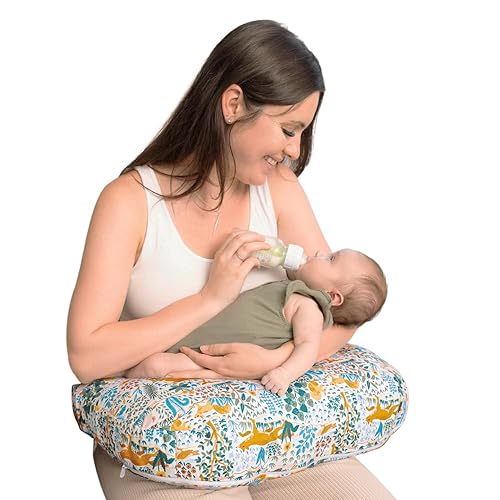
Boppy Original Nursing Pillow
The Boppy Nursing Pillow is the C-shaped pillow that has been a lactation consultant staple for over 30 years. It wraps around the parent's waist and creates a platform that supports the baby at nursing height, offloading the baby's weight from the parent's arms and shoulders. For mothers recovering from childbirth — particularly cesarean births where core engagement is painful — this arm and shoulder support is a genuine physical necessity, not a comfort upgrade. The same pillow serves as a tummy time surface for young babies, a propping support as baby begins to sit, and a general lounging surface through the first year. Covers are machine washable (sold separately with more pattern options).
- Arm and shoulder support during nursing is a physical necessity for recovery
- Works for both nursing and bottle feeding
- Tummy time surface, propped sitting support, lounging through year one
- Machine washable covers
- C-shape accommodates most body types and nursing positions
- Lactation consultant recommendation for 30+ years
- Cover included with purchase is basic — better patterns sold separately
- Foam insert compresses with heavy use — replace after 12–18 months
- Not for unsupervised baby use as a lounger
The Boppy's longevity in the baby product market — over three decades — reflects its genuine utility. Products that don't work get replaced; products that solve real problems persist. The nursing pillow solves a real problem that affects every breastfeeding parent: the physical strain of holding a 7–10 lb baby at breast height 8–12 times per day, often while recovering from major physical exertion or surgery.
For bottle-feeding parents, the same benefit applies: the pillow holds baby at bottle height without requiring a perfectly steady arm angle for 15–20 minutes per feed, multiple times per day. Both types of feeding families use it constantly through the newborn period.
Pros
- 30+ year track record endorsed by lactation consultants
- Relieves arm and shoulder strain during recovery
- Multi-purpose through entire first year
- Machine washable covers
- Works for breastfeeding, bottle feeding, tummy time, and sitting support
Cons
- Basic included cover — upgrade separately
- Foam compresses over time with heavy use
- Not designed for unsupervised baby positioning
6. Lansinoh Breastmilk Storage Bags — Best Milk Storage
Lansinoh Breastmilk Storage Bags
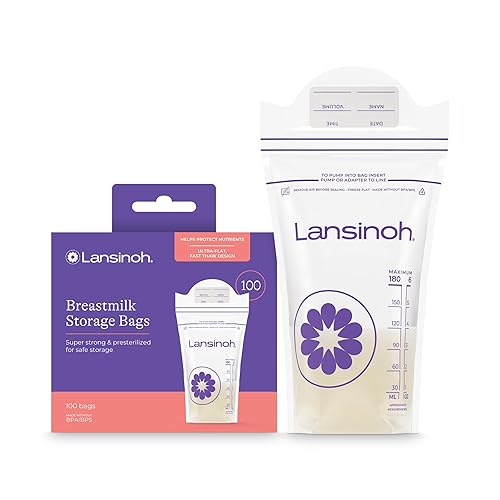
Lansinoh Breastmilk Storage Bags are the most widely used and trusted milk storage bags among breastfeeding and pumping parents. Pre-sterilized, BPA-free and BPS-free, each bag holds up to 6 oz of expressed milk with a double-sealed leak-proof zip closure. The bags lay flat for freezer storage to maximize space, stand upright for filling, and have a write-on area for date and volume labeling. They are compatible with all major breast pumps for direct pumping into the bag (with an adapter). Sold in counts from 25 to 200 bags. One of the only products in this category recommended by hospital lactation departments as standard issue.
- Pre-sterilized — no preparation needed before use
- Double-sealed leak-proof closure
- Lay-flat freezing maximizes freezer space
- Stand upright for easy filling
- Compatible with most pump brands via adapter
- Hospital lactation department standard recommendation
- Single-use — not reusable
- Cost adds up over months of regular pumping
- Thaw and use after freezing — no refreezing once thawed
Expressed breastmilk storage has clear guidelines from the CDC: freshly expressed milk can be stored at room temperature for up to 4 hours, in the refrigerator for up to 4 days, and in a deep freezer for up to 12 months. Lansinoh bags are designed around these parameters — the clear fill line helps with consistent 4–6 oz portions, the lay-flat design makes organized date-rotation possible in a standard freezer, and the double seal prevents the freezer-odor absorption that less well-sealed bags suffer from.
Pros
- Hospital-trusted standard for milk storage
- Pre-sterilized for immediate use
- Lay-flat freezing makes organized stash management straightforward
- Double seal prevents leaks and odor absorption
- Compatible with major pump brands
Cons
- Single use — ongoing purchase cost
- Lay-flat bags require organized system to date-rotate
- Cannot be refrozen once thawed — portion correctly the first time
7. Kiinde Kozii Bottle Warmer — Best Bottle Warmer

Kiinde Kozii Bottle Warmer
The Kiinde Kozii uses a gentle warm water bath rather than steam to warm expressed breastmilk and formula — a critical distinction. Steam-based bottle warmers can create hot spots that unevenly heat milk and can reach temperatures that denature the bioactive proteins in breastmilk, reducing its nutritional and immunological value. The Kozii's warm water bath provides even, consistent heat that warms milk gradually without hot spots or overheating risk. It handles bottles of all brands and sizes, as well as breast milk storage bags directly. Auto-shutoff prevents overheating if left unattended. Warm-in-minutes speed is competitive with steam models.
- Warm water bath heats evenly — no hot spots
- Does not denature breastmilk proteins the way steam can
- Accepts all bottle brands and sizes
- Accepts breastmilk storage bags directly
- Auto-shutoff for safety
- No water refilling between uses like some steam models
- Slightly slower than steam warmers
- Water reservoir requires periodic emptying to prevent mineral buildup
- Higher price than basic steam warmers
The hot spot problem with steam warmers is worth understanding: steam heating applies intense localized heat that can create temperature variations within the milk, even after shaking. For formula, this is primarily a comfort concern — hot spots burn baby's mouth. For expressed breastmilk, the concern is deeper: sustained temperatures above 104°F begin to degrade lysozyme and lactoferrin, the key antimicrobial proteins that make breastmilk uniquely beneficial. The Kozii's water bath avoids this entirely by warming gradually and evenly to a safe temperature.
Pros
- Protects breastmilk proteins — critical for pumping families
- Even heating eliminates hot spot risk
- Universal compatibility with all bottle brands and bag sizes
- Auto-shutoff for safety
Cons
- Slightly slower than steam alternatives
- Water reservoir needs occasional mineral deposit cleaning
- Premium price compared to basic warmers
8. BEABA Babycook Neo Baby Food Maker — Best for Solid Food Introduction
BEABA Babycook Neo Baby Food Maker
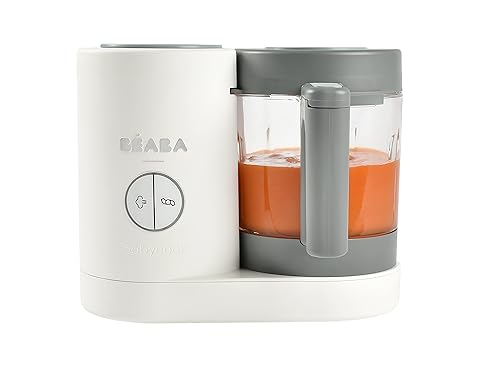
The BEABA Babycook Neo steams and blends baby food in one appliance — no transferring between a steamer and a separate blender. Place raw or cooked vegetables, fruits, or proteins in the bowl, add water, select steam time, then blend to any consistency from smooth puree to textured mash. The 5.5-cup capacity handles batch cooking; the glass bowl avoids BPA concerns and doesn't retain odors or stains. The Babycook Neo is the updated version with a larger glass bowl, quieter motor, and safer steam release compared to the original Babycook. For families who want to make their own baby food from fresh ingredients, this is the most practical and well-designed appliance available.
- Steam and blend in one appliance — no transfer needed
- Glass bowl is BPA-free and odor-resistant
- 5.5-cup capacity enables batch cooking and freezing
- Produces any consistency from smooth puree to textured mash
- Quieter motor than original Babycook
- Steam-cooks while preserving more nutrients than boiling
- $180 price — a high-end kitchen appliance, not a budget item
- Glass bowl is heavier than plastic alternatives
- Requires cleaning between uses when making multi-ingredient meals
Introducing solid foods between 4–6 months is one of the more enjoyable developmental milestones of the first year, and making baby food at home gives parents full control over ingredients, freshness, and texture progression. The BEABA's steam-then-blend design works because steaming retains significantly more water-soluble vitamins than boiling — vegetables that are boiled transfer a meaningful portion of their nutritional content into the cooking water, which is then discarded.
Batch cooking in the BEABA and freezing in ice cube trays is a common approach: one session on Sunday produces a week's worth of varied single-ingredient purees, which can then be combined and portioned as needed throughout the week.
Pros
- Steam-then-blend in one vessel — most convenient home baby food process
- Glass bowl avoids plastic concerns and odor retention
- Large batch capacity for efficient cooking
- Steam preserves more nutrients than boiling
- Wide texture range from puree to chunky mash
Cons
- $180 price point — highest cost item on this list
- Glass bowl adds weight
- Not a necessity — a standard blender achieves similar results at lower cost
Buyer's Guide: Feeding Products by Stage
Newborn Stage (0–3 Months): What You Actually Need
Newborns feed exclusively on breast milk or formula. The gear needs are minimal but specific:
- If breastfeeding: Boppy nursing pillow, Haakaa for letdown collection, lanolin nipple cream (not reviewed here but essential), and the Lansinoh bags if you plan to pump.
- If formula feeding: Dr. Brown's bottles (start with the 4 oz newborn size), Munchkin Formula Dispenser for nighttime and travel prep, and consider the Baby Brezza if budget allows.
- If using expressed milk: A breast pump (typically covered by insurance — check your plan before purchasing), Lansinoh storage bags, and the Kozii warmer.
Nothing else is needed in this phase. High chairs, food makers, and transition cups come later.
Infant Stage (3–6 Months): Adding Gear as Needed
The primary feeding equipment remains the same. This is when most parents start thinking about the solid food transition and may want to add:
- Bibs with a catch pocket — silicone bibs that catch falling food significantly reduce mess cleanup.
- A baby food maker or blender if you're planning to make home purees.
- A high chair to have ready by 4–6 months when sitting-supported feeds begin.
Solid Food Stage (6–12 Months): The Gear Expansion
This is when feeding equipment expands significantly. Key additions:
- Silicone suction bowl and spoon set (food stays in the bowl, not on the floor)
- Silicone bib with pocket — for every single meal
- Baby food storage containers for batch cooking and refrigerator organization
- First finger foods grip container — for when baby starts self-feeding
- A 360 sippy cup or straw cup (Munchkin Miracle 360 or Weighted Straw) for introducing water at 6 months
Breastfeeding: Managing the Feeding Journey
The AAP recommends exclusive breastfeeding for the first 6 months, with continued breastfeeding alongside solids through at least 12 months and as long thereafter as mutually desired. In practice, the breastfeeding journey looks different for every family, and the right equipment depends on individual circumstances:
- Exclusively nursing: Boppy, Haakaa, nipple cream, nursing pads. A breast pump for occasional relief or supply building if needed.
- Nursing and pumping (back to work): Double electric pump, Lansinoh bags, Kozii warmer, and a second set of pump parts for the workplace.
- Supplementing with formula: Dr. Brown's bottles for formula feeds maintain consistency with nursing sessions.
Our Testing Methodology
- Safety verification — BPA-free, BPS-free, and phthalate-free status confirmed for all feeding equipment in contact with food.
- Function testing — we evaluated whether each product's core claim (anti-colic venting, letdown collection, temperature accuracy) is supported by the design and real-world evidence.
- Compatibility assessment — bottle and pump compatibility with major brands was verified.
- Lactation and pediatric guidance — we reviewed recommendations from the AAP, International Lactation Consultant Association (ILCA), and individual LC and pediatric nurse guidance.
- Parent feedback — we analyzed thousands of verified purchase reviews with focus on reports from families who have actively compared multiple feeding products.
FAQ: Baby Feeding Products
Final Verdict
Feeding a baby is the most frequent repeated task of the first year, and the right products reduce friction at every stage. The investment in quality feeding equipment pays off in time, stress reduction, and — in some cases — baby's comfort and nutritional outcomes.
- Best breastfeeding tool: Haakaa Silicone Breast Pump — the highest-impact product per dollar in baby feeding.
- Best anti-colic bottle: Dr. Brown's Original — 25-year pediatrician track record for a reason.
- Best for breastfed babies: Comotomo — soft body and wide nipple base most closely mimic nursing.
- Best formula prep: Baby Brezza Formula Pro Advanced — significant time and accuracy investment that pays off for formula families.
- Best feeding support: Boppy Nursing Pillow — the original, still the standard, works for nursing and bottle feeding.
- Best milk storage: Lansinoh Storage Bags — hospital standard, pre-sterilized, lay-flat freezing.
- Best bottle warmer: Kiinde Kozii — warm water bath protects breastmilk proteins that steam warmers can degrade.
- Best for solids: BEABA Babycook Neo — steam-and-blend in one vessel, glass bowl, batch-cook capable.
Start with the products appropriate to your feeding method and your baby's current stage — and add from there as your feeding journey evolves. Every family's feeding path is different, and the best feeding products are the ones that fit your specific situation rather than every item on a generic checklist.