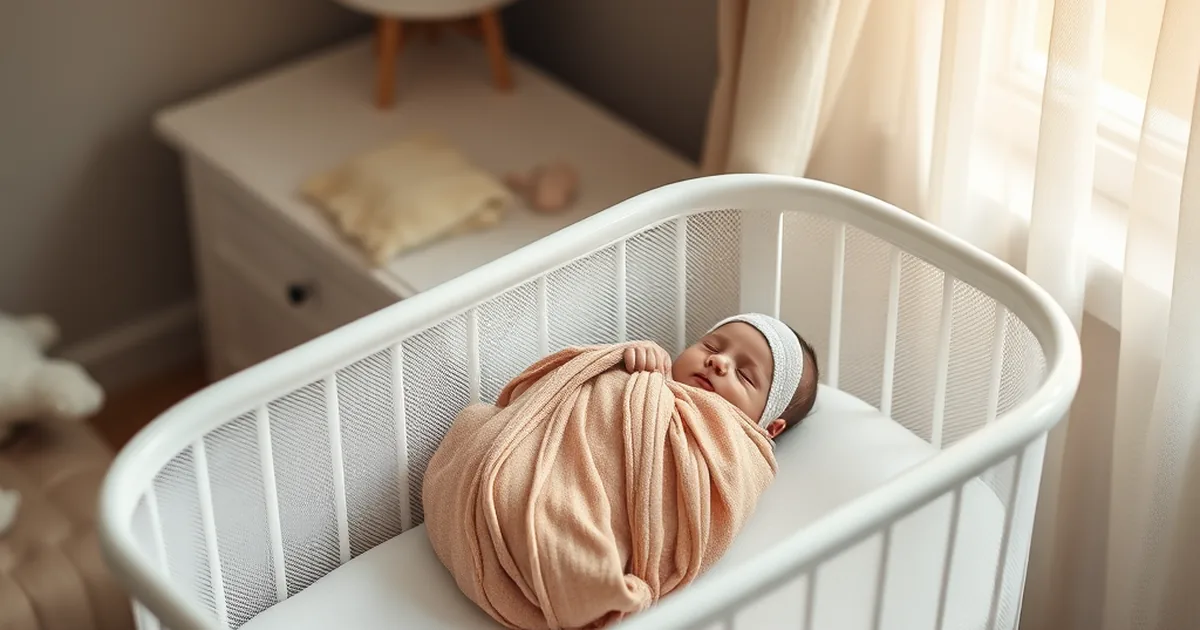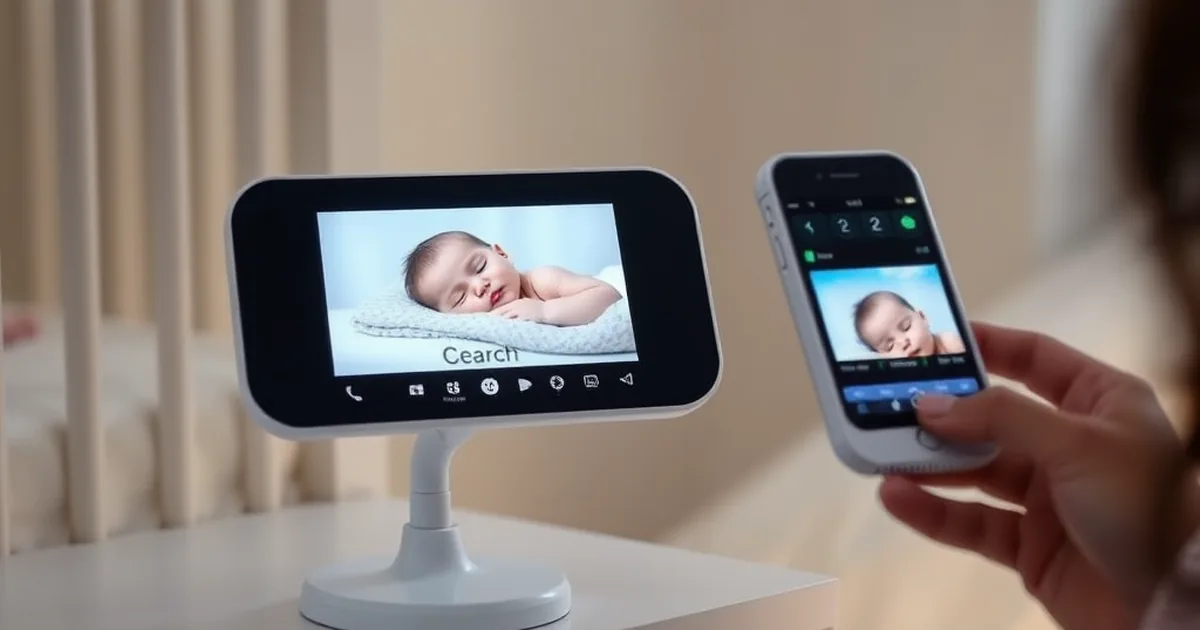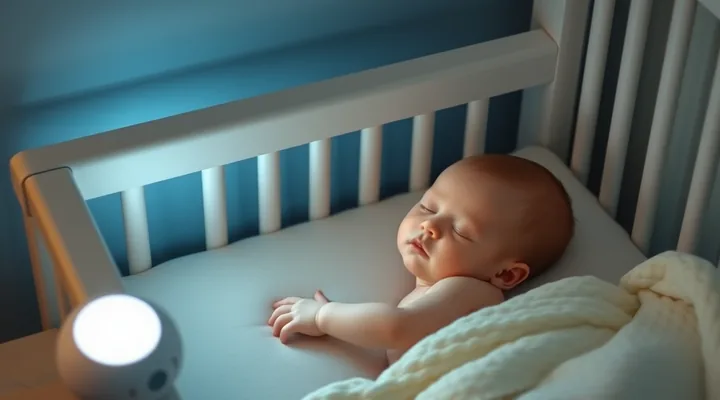
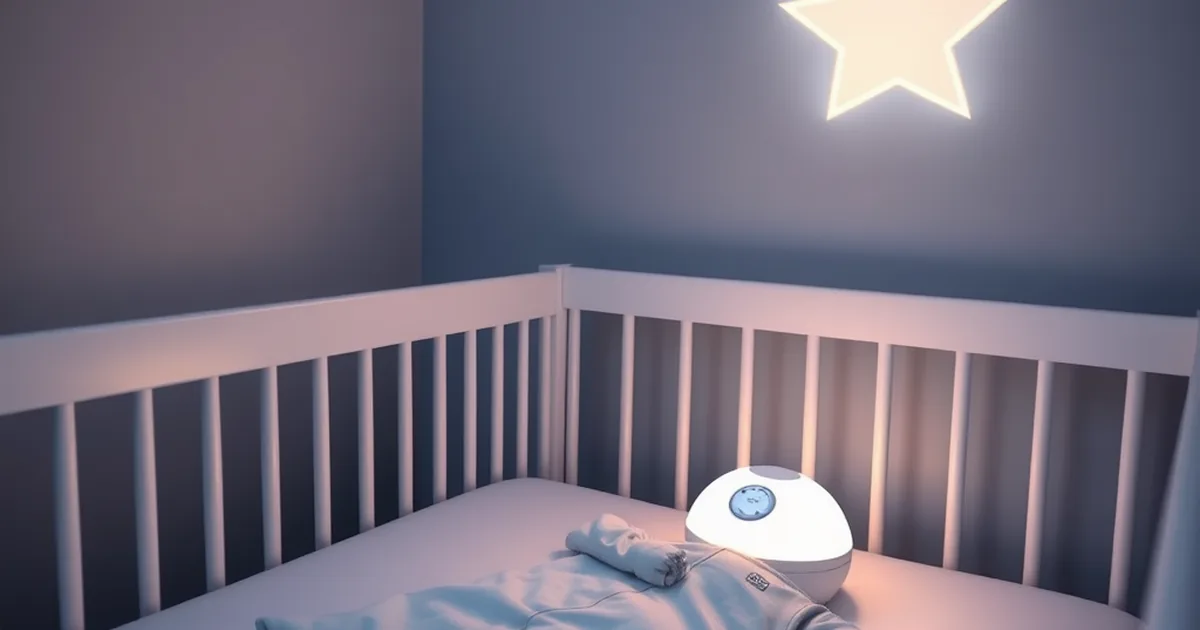
What changed in this May 2026 update: We re-validated all sleep-aid picks against current AAP safe-sleep guidance and the active CPSC recall list. Removed any products that don't meet 2022 Safe Sleep for Babies Act standards. Refreshed price ranges. Next scheduled review: August 2026.
Affiliate Disclosure: As an Amazon Associate, we earn from qualifying purchases. This comes at no extra cost to you.
Last updated: April 2026 | Reviewed by the YourHappyBaby editorial team
Baby sleep is not something you can force — but there are conditions you can create that make sleep more likely, more consistent, and longer in duration. The products in this guide address those conditions: sound masking, temperature regulation through wearable layers, light control, and the transition from swaddled to unswaddled sleep that every baby eventually makes.
These are not gadgets designed to solve problems that don't exist. Each product addresses a documented mechanism: white noise masks the household sounds that cause partial arousals; sleep sacks maintain warmth without loose bedding; blackout conditions support melatonin production; and a consistent pre-sleep routine anchors the sleep onset association your baby builds over the first months. Understanding why each product works makes it easier to use them effectively.
Quick Comparison Table
| Product | Category | Best For | Age Range | Price Range |
|---|---|---|---|---|
| Hatch Rest 2nd Gen | Sound + Light + Monitor | All-in-one nursery device | Birth–5 years | $$ |
| Halo SleepSack Swaddle | Swaddle Sleep Sack | Newborn swaddle period | 0–6 months | $$ |
| Love to Dream Swaddle UP | Arms-Up Swaddle | Babies who fight flat-arm swaddles | 0–6 months | $$ |
| Dreamegg D1 | White Noise Machine | Dedicated sound masking | Birth onward | $ |
| Nested Bean Zen Sack | Weighted Sleep Sack | Babies soothed by gentle pressure | 0–24 months | $$ |
| LectroFan Micro2 | Travel White Noise | On-the-go sound masking | Birth onward | $ |
| HALO BassiNest Swivel Sleeper | Bedside Bassinet | Newborn bedside sleep | 0–6 months | $$$ |
| Woolino 4 Season Sleep Sack | Merino Sleep Bag | Post-swaddle sleep through temperature changes | 2–24 months | $$$ |
Our Top 8 Baby Sleep Aid Products in 2026
1. Hatch Rest 2nd Gen — Best All-in-One Sleep Aid
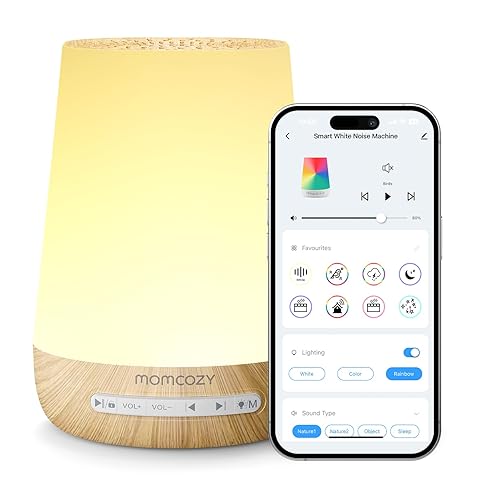
Hatch Rest 2nd Gen Sound Machine, Night Light and Time-to-Rise
The Hatch Rest 2nd Gen combines three nursery functions into a single app-controlled device: a white noise and sound machine with a high-quality speaker, a fully programmable RGB night light, and a 1080p monitoring camera. The sound machine produces non-looping white, brown, and pink noise along with nature sounds and lullabies — the non-looping aspect is critical for genuine sound masking, as looping tracks create audible pattern repetitions that can interfere with sleep. The night light cycles through any color at any brightness, programmed from the Hatch app, and doubles as a time-to-rise indicator for toddlers (e.g., room turns green at 6:30am as the visual cue it is OK to get up). Requires WiFi and a Hatch account. Basic sound and light functions work without a subscription; a Hatch+ plan ($49.99/year) unlocks guided sleep programs and a content library.
- Replaces three nursery devices in one unit
- Non-looping sounds provide genuine, consistent audio masking
- Programmable night light grows from newborn comfort light to toddler time-to-rise
- 1080p monitoring camera included
- App control from phone — adjust without entering nursery
- High-quality speaker — better than most standalone white noise machines
- WiFi required — cloud dependency
- Subscription unlocks full content library
- Camera is secondary vs. dedicated monitors
- No local-only mode available
The Hatch Rest's lasting popularity comes from its longevity. It is the one nursery device that genuinely earns its place from birth through toddlerhood: in the newborn period it provides sound masking and a dim night light for feeds; in the infant period it anchors the sleep routine with a consistent sound cue; and as a toddler, the time-to-rise light feature — teaching a 2-year-old that the green light means it is OK to get up — is one of the most requested features by parents who previously bought a separate OK-to-wake clock.
Pros
- Three devices in one with a single app
- Non-looping sounds for effective masking
- Time-to-rise feature extends usefulness into toddler years
- Consistent sleep routine anchor from birth to age 5
Cons
- WiFi-dependent
- Camera not as capable as dedicated monitors
- Annual subscription for full content library
2. Halo SleepSack Swaddle — Best Newborn Sleep Sack
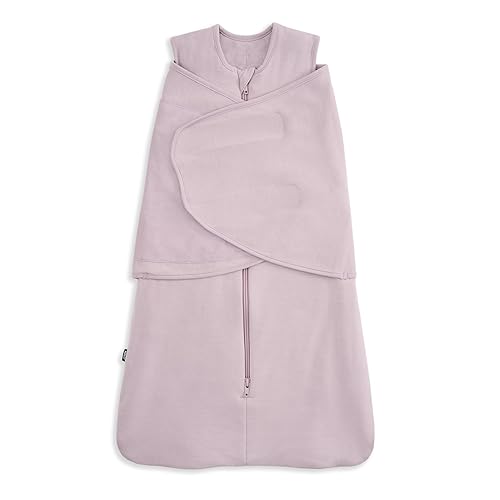
HALO Sleepsack Swaddle Wearable Blanket
The Halo SleepSack Swaddle is the swaddle sleep sack used in more hospital nurseries in North America than any other product. It provides a three-way swaddle system: arms-in (full swaddle), one arm out, or both arms out, allowing a gradual transition from full swaddle to arms-free sleeping as the baby develops and begins to show rolling attempts. The outer sack is a wearable blanket that eliminates loose bedding from the sleep space, keeping the baby warm without a blanket that could shift over the face. Cotton and microfleece versions are available for different temperatures. Inverse zipper runs from the bottom up for easy diaper changes without fully unwrapping.
- Hospital standard — used in more newborn nurseries than any other brand
- Three-way swaddle accommodates transition from full swaddle to arms-free
- Eliminates loose blanket — safe sleep compliant
- Inverse zipper for diaper changes without full unwrapping
- Multiple fabrics (cotton, microfleece) for temperature regulation
- Multiple TOG options and sizes
- Some babies find the arm restriction of full swaddle distressing and prefer an arms-up design
- Velcro can catch on clothing in the wash
- Sizing runs small — size up if baby is above average weight
The swaddle's mechanism for improving newborn sleep is well-established: it suppresses the Moro (startle) reflex, which causes involuntary arm extension that wakes sleeping newborns. Newborns cannot yet differentiate their own limb movements from external stimuli, so an unsuppressed Moro reflex repeatedly interrupts sleep. Swaddling removes this cause of arousal. The SleepSack Swaddle's hospital pedigree reflects widespread clinical confidence in its safety and effectiveness.
Critical safety note: swaddling must stop when the baby begins to show any sign of rolling — pushing up on arms or rolling to the side — because a swaddled baby who rolls to their stomach cannot reposition safely. The SleepSack Swaddle's arms-out mode facilitates this transition.
Pros
- Hospital standard — most trusted swaddle in clinical settings
- Three-way swaddle manages the transition from full swaddle
- Eliminates loose bedding from sleep space
Cons
- Some babies prefer arms-up position — try Love to Dream if resistance occurs
- Stop swaddling immediately when rolling signs appear
3. Love to Dream Swaddle UP Original — Best Arms-Up Swaddle
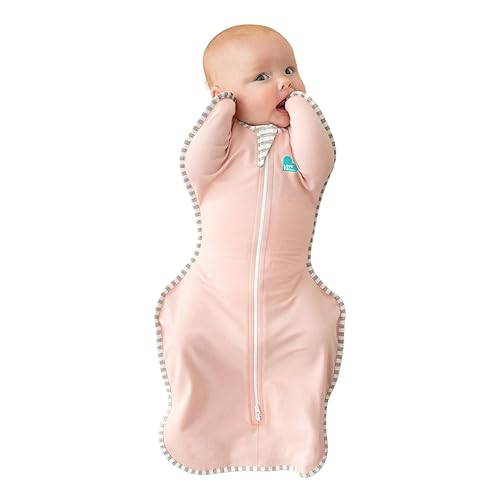
Love to Dream Swaddle UP Original
The Love to Dream Swaddle UP holds baby's arms in a natural raised position — bent at the elbows, hands near the face — rather than pinned to the sides. Many babies resist traditional flat-arm swaddles because they naturally seek their hands for self-soothing: hand-to-mouth contact is a primary self-settling mechanism that flat-arm swaddles eliminate. The Swaddle UP's design allows this self-soothing while still providing the firm, contained feeling that suppresses the Moro reflex. The zip-off arms design allows a staged transition: remove one arm, then the other, then use the Swaddle UP Transition Bag (sold separately) for the fully unswaddled phase. Available in 0.2 TOG (warm climates/summer), 1.0 TOG (year-round), and 2.5 TOG (winter/cool climates).
- Arms-up design allows hand-to-mouth self-soothing — not possible with flat-arm swaddles
- Zips off one arm at a time for a gradual transition
- Multiple TOG ratings for different climates
- Resolves swaddle resistance in babies who fight traditional designs
- Consistent containment without the arm restriction that distresses some babies
- Slightly more expensive than traditional swaddles
- Zip-off arms design means two separate purchases (Swaddle UP + Transition Bag) for the full transition
- Less hospital familiarity — less clinical data than Halo SleepSack line
The Swaddle UP is the product to try when traditional swaddles are not working. If your baby breaks free of flat-arm swaddles, screams when arms are constrained, or consistently wakes themselves up despite being swaddled, the arms-up design often resolves the issue. The hands-near-face position is the position most babies prefer naturally — it is where they were positioned in utero — and allowing it removes a source of swaddle resistance.
Pros
- Solves swaddle resistance in babies who fight flat-arm designs
- Arms-up position allows hand-to-mouth self-soothing
- Staged zip-off arm transition
- Multiple TOG ratings available
Cons
- Higher price than basic swaddles
- Full transition system requires additional purchase of Transition Bag
4. Dreamegg D1 White Noise Machine — Best Dedicated White Noise Machine

Dreamegg D1 White Noise Machine for Baby and Adults
The Dreamegg D1 produces 24 non-looping sound options including white noise, pink noise, brown noise, fan sounds, rain, ocean waves, and lullabies through a 360-degree speaker. At full volume it reaches approximately 65 dB — the level that effectively masks typical household noise including conversations, TVs, and passing traffic. A USB-C power input allows use with any standard phone charger or power bank. A memory function retains the last-used settings through power cycles. The timer function (30/60/90/120 minutes, or continuous) allows operation only during sleep onset if preferred. Compact design — smaller than a tennis ball — fits anywhere in a nursery.
- 24 non-looping sound options across multiple categories
- Reaches 65 dB — effective household noise masking volume
- Memory function retains last settings
- USB-C charging — works with any modern charger
- Timer or continuous mode
- Compact size fits any nursery layout
- Under $30
- 65 dB maximum volume may be insufficient in very noisy environments (apartment buildings, street-facing rooms)
- No app control
- No night light function
- Lullaby tracks are limited compared to the Hatch Rest library
White noise improves sleep by creating a consistent auditory floor — a steady baseline level of sound that household noises (a door closing, a dog barking, a passing truck) must exceed to register as a change that might cause arousal. At 65 dB, the Dreamegg D1 is loud enough to mask most household environments. The non-looping nature of the sounds is important: looping tracks have an audible seam where they restart, which can become a conditioned wake signal if the brain learns to detect it.
For travel, the Dreamegg D1's compact size and USB-C power make it the easiest white noise machine to pack. It fits in a toiletry bag and runs off any power bank, eliminating the need for a dedicated outlet in a hotel room or unfamiliar space.
Pros
- 24 non-looping sounds at effective masking volume
- Compact and USB-C powered — ideal for travel
- Under $30 — best value dedicated white noise machine
Cons
- No app control
- No night light
- Maximum volume may not be sufficient for very loud environments
5. Nested Bean Zen Sack Classic — Best Weighted Sleep Sack
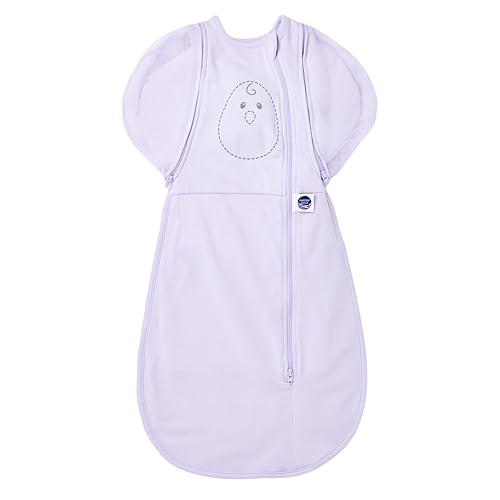
Nested Bean Zen Sack Classic
The Nested Bean Zen Sack features a small weighted pad (approximately 0.4 lbs) sewn into the chest area of the sleep sack, designed to simulate the gentle pressure of a parent's hand resting on baby's chest. The weight is lightly beaded and distributed over the chest, not concentrated at a point, and is within the safe weight range for infant chest load. Available in 0.5 TOG (warm season) and 1.0 TOG (year-round) for appropriate temperature regulation. Sized from 0–6 months (Newborn), 6–15 months (Small), 15–24 months (Large). The chest weighting is designed to comfort babies during the transition from arms-in swaddle to arms-free sleeping — the period when many babies struggle because they lose the contained feeling swaddling provided.
- Gentle weighted chest pad provides contained feeling without arm restriction
- Helps bridge the swaddle-to-sleep-sack transition
- 0.4 lbs chest weight is safe for infant use per product testing
- Two TOG options for temperature regulation
- Well-sized for 0–24 month range
- Zipper design allows easy diaper access
- 0.4 lb weighting is subtle — babies who need significant pressure may not respond
- More expensive than non-weighted sleep sacks at same size
- Not recommended as a first sleep sack — best introduced during swaddle transition period
The Zen Sack fills a specific transition gap. When swaddling ends — typically around 3–4 months when rolling begins — many babies experience several difficult nights as they adjust from the contained, pressure-filled feeling of a swaddle to the open freedom of a regular sleep sack. The Zen Sack's weighted chest pad mimics the residual pressure sensation, giving the baby something familiar while arms are now free. Many parents report the transition from swaddle to Zen Sack is meaningfully smoother than to an unweighted sack.
Pros
- Bridges the swaddle-to-sleep-sack transition with gentle chest weight
- 0.4 lbs is safe and effectively simulates resting hand pressure
- Two TOG options
Cons
- Subtle weighting — not dramatic enough for all babies
- Best as a transition tool, not a first sleep product
6. LectroFan Micro2 — Best Travel White Noise Machine
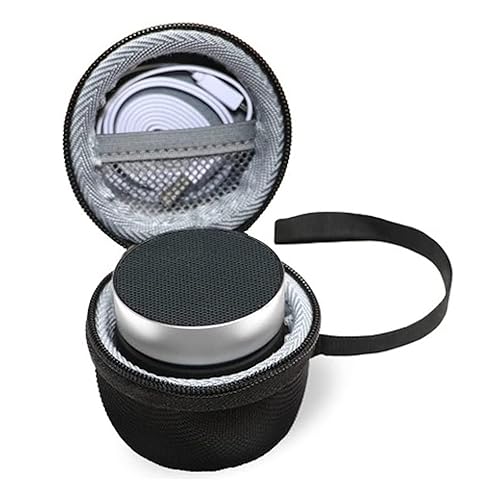
LectroFan Micro2 Sleep Sound Machine
The LectroFan Micro2 is a travel-focused sound machine the size of a large matchbox that runs on a USB-C rechargeable battery for up to 16 hours per charge. It produces 10 non-looping sounds including five fan variations, white noise, and pink noise, plus two ocean sounds. Volume ranges from a whisper to 85 dB — the highest maximum output of any portable unit on this list, sufficient even for noisy hotel rooms or loud family environments. A Bluetooth speaker mode allows phone audio streaming when not in white noise mode. The Micro2 can attach to a stroller handle, car seat, or crib bar via an included hook.
- 85 dB maximum — loudest portable sound machine available
- 16-hour battery — covers overnight on a single charge
- USB-C rechargeable — no disposable batteries
- Attaches to stroller, car seat, or crib
- Doubles as Bluetooth speaker
- Compact enough to fit in a diaper bag pocket
- Only 10 sound options vs. 24 on Dreamegg D1
- $35 is slightly higher than the Dreamegg D1 for home use
- No timer function — continuous or off only
- No night light
The LectroFan Micro2 solves the travel sleep consistency problem. Babies who sleep well at home with consistent white noise often struggle in new environments where there is no white noise machine — a common cause of vacation or family-visit sleep regressions. The Micro2 is small enough to always be in the diaper bag, so the white noise cue travels with the baby rather than being left at home. The 16-hour battery covers any overnight without needing to locate an outlet.
Pros
- 85 dB maximum — effective even in loud environments
- 16-hour battery for full overnight coverage
- Compact enough to keep in diaper bag permanently
- Attaches to stroller and car seat
Cons
- Fewer sound options than home units
- No timer
- No night light function
7. HALO BassiNest Swivel Sleeper — Best Sleep Environment for Newborns
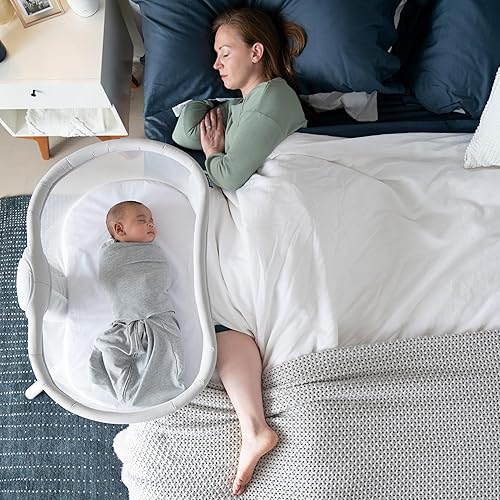
HALO BassiNest Swivel Sleeper Premiere Series
- 20 lb weight limit — transitions to crib around 4–5 months
- No independent motion/rocking
- $200 is toward the premium end for a stationary bassinet
Sleep environment quality matters as much as the sleep products used within it. The BassiNest provides the combination of safe surface, appropriate proximity, and environmental consistency — being in the same room as the parent, on a familiar surface, at a predictable temperature — that supports the longest possible uninterrupted sleep stretches for newborns. The soothing center's sounds pair naturally with a standalone white noise machine for layered environmental consistency.
Pros
- Hospital-standard safe sleep surface
- Bedside position reduces overnight feed effort
- Built-in sounds and vibration
- AAP compliant firm flat sleeping surface
Cons
- 20 lb weight limit
- No independent motion feature
- Premium price for a stationary bassinet
8. Woolino 4 Season Ultimate Baby Sleep Bag — Best Long-Term Sleep Sack
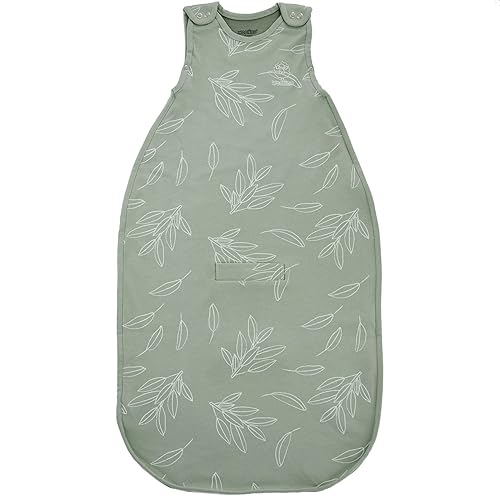
Woolino 4 Season Ultimate Baby Sleep Bag
The Woolino 4 Season Sleep Bag is made from 100% merino wool — a natural fiber that regulates body temperature across a wide range rather than insulating to a fixed temperature. Merino absorbs up to 35% of its weight in moisture before feeling wet, wicks it away from skin, and naturally adjusts thermal properties in response to body heat and ambient temperature. This makes a single Woolino sleep bag appropriate across all four seasons without buying separate TOG-rated versions: the wool responds to the child's thermal needs rather than providing fixed insulation. Fits from 2 months to 2 years in one size. Machine washable. Used and recommended by pediatric sleep consultants for temperature-regulated sleep environments.
- Merino wool self-regulates temperature — one bag for all seasons
- 2 months to 2 years — longest fit of any sleep bag
- Machine washable merino
- No need to buy multiple TOG-rated versions seasonally
- Breathable, moisture-wicking natural fiber
- Pediatric sleep consultant recommended
- $89 is the highest price on this list
- Wool is not suitable for babies with lanolin sensitivity
- Some families prefer synthetic materials for ethical or allergy reasons
- Merino requires gentle machine wash cycle — not as low-maintenance as cotton
The Woolino is the sleep sack parents buy once. At $90 it is more expensive than any synthetic alternative, but when evaluated on a cost-per-month basis — covering 22 months of use from 2 months to 2 years, across all seasons, without seasonal replacements — it is among the most economical options. The temperature self-regulation is the key feature: sleeping rooms vary in temperature seasonally and between houses, and a fixed-TOG cotton sleep sack requires seasonal swapping. The Woolino simply adjusts, keeping the child at the right temperature whether the nursery is 65°F or 75°F.
Pros
- Self-regulating merino wool eliminates seasonal sleep sack swapping
- 22-month size range — longest of any product on this list
- Long-term cost efficiency despite high upfront price
Cons
- $89 upfront cost
- Requires gentle wash cycle
- Not suitable for lanolin sensitivity
Buyer's Guide: Building the Right Sleep Environment
The Three Environmental Controls That Matter
Research on infant sleep consistently identifies three environmental factors that parents can control:
- Sound: Consistent white noise at 50–65 dB masks the household sounds that cause partial arousals. More important than total silence.
- Temperature: 68–72°F is the AAP-recommended nursery temperature range. The right sleep sack TOG rating for the ambient temperature eliminates the need for loose blankets.
- Light: Darkness supports melatonin production. Blackout curtains (not on this list but worth adding) and a dim, warm-toned night light during feeds are the practical implementations.
TOG Rating Guide for Sleep Sacks
TOG (Thermal Overall Grade) measures the thermal resistance of a sleep sack. Higher TOG = warmer. A rough guide for room temperature:
- 0.5 TOG: 75°F+ (warm climate, summer, heated rooms)
- 1.0 TOG: 68–75°F (year-round standard in most homes)
- 2.5 TOG: 61–68°F (cooler climates, winter, older homes without central heating)
Dress baby in a onesie under a 1.0 TOG sack in a 68–72°F room — the most common combination. Add a layer of clothing, not a higher TOG, for slightly cooler rooms.
When to Stop Swaddling
Stop swaddling as soon as your baby shows any of these signs: rolling from back to stomach, pushing up on arms during tummy time, or consistently breaking out of swaddles and sleeping with arms free. Most babies reach this point at 3–4 months. Continuing to swaddle after a baby can roll is dangerous — a swaddled baby who rolls to their stomach cannot reposition safely. The transition path: Halo SleepSack arms-in → Halo arms-out or Love to Dream Swaddle UP → unswaddled sleep sack.
Frequently Asked Questions
Final Verdict
The highest-impact sleep environment combination is: consistent white noise from the Dreamegg D1 or Hatch Rest 2nd Gen, the right sleep sack for the current developmental stage (starting with the Halo SleepSack Swaddle, transitioning through the Love to Dream Swaddle UP or Nested Bean Zen Sack, and settling into the Woolino 4 Season for the long stretch), and a safe sleep surface in the Halo BassiNest for the first four months. These products address the environmental factors you control. The rest of infant sleep development happens on its own schedule — but a consistent environment means fewer disruptions from preventable causes.
Frequently asked questions (continued)
Yes for specific aids - white noise machines, blackout curtains, and consistent sleep sacks have research backing. Other "sleep aids" (lavender lotions, sleep training products, vibrating bassinets) have mixed evidence. The biggest sleep improvements come from establishing a 4-step bedtime routine (bath, story, song, sleep sack) rather than gadgets.