What changed in this May 2026 update: We re-checked all 8 hair-growth products against pediatric dermatology research published through April 2026. No major formulation changes. Refreshed price ranges to current Amazon listings and added context from the latest peer-reviewed data on infant and toddler hair-growth patterns. Verified zero CPSC recalls on the listed products. Next scheduled review: August 2026.
Affiliate Disclosure: As an Amazon Associate, we earn from qualifying purchases. This comes at no extra cost to you.
Why Babies Lose Hair — The Science Parents Need to Know
Before spending money on growth products, it's worth understanding what's actually happening with your baby's hair. Most cases of slow growth or hair loss are completely normal and no product can speed up what is primarily a genetic and hormonal process.
Telogen Effluvium: Why Most Babies Lose Their Newborn Hair
At birth, most babies have hair in the anagen (growth) phase, stimulated by maternal hormones in the womb. Around 3–4 months after birth, as those hormones drop off, follicles shift into the telogen (resting and shedding) phase. This is called telogen effluvium and it affects the majority of babies. The hair that grows back is the baby's genetic hair — often a completely different texture and color than their newborn hair.
No topical product will interrupt or accelerate this process. It runs on its own hormonal timeline, typically completing between 6–12 months of age.
What Actually Supports Healthy Baby Hair Growth
- Clean scalp: Product buildup and sebum can clog follicles. Gentle washing 2–3 times per week is more effective than applying growth oils daily.
- Gentle scalp massage: Regular massage increases blood flow to follicles. One to two minutes during bath time with light circular pressure is enough — aggressive rubbing causes breakage, not growth.
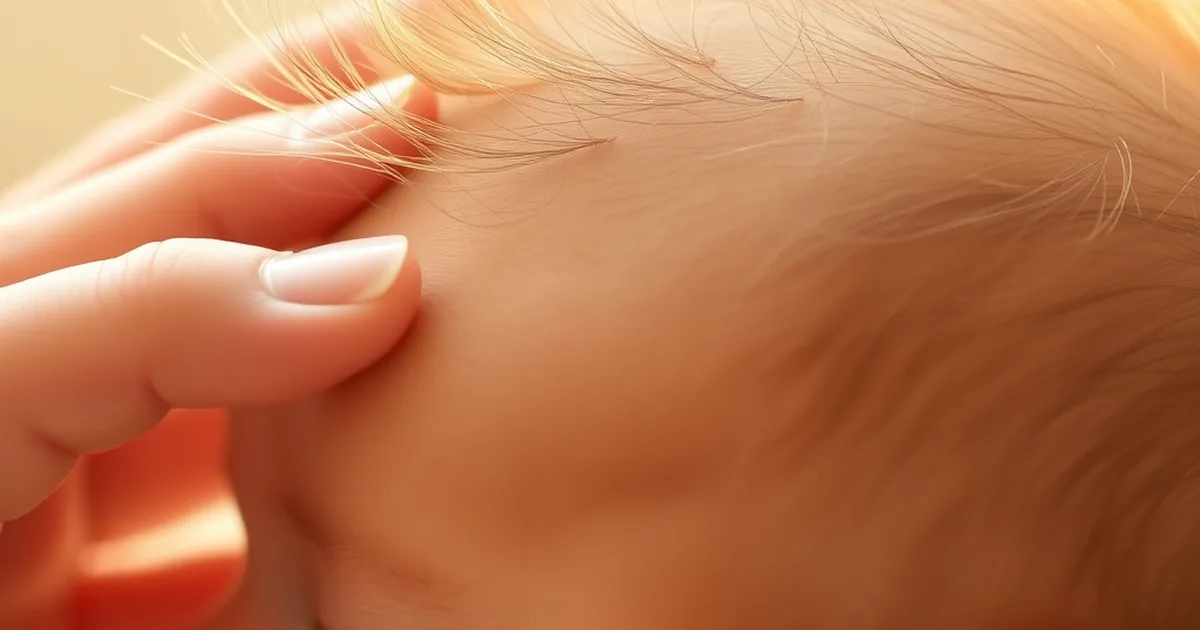
- Treating cradle cap early: Seborrheic dermatitis causes patchy hair loss in affected areas. Treating the flaking with a gentle oil and soft brush restores healthy follicle environment and typically resolves associated thinning.
- Nutrition: Zinc, iron, and biotin from breast milk or formula support follicle health. Supplementation is not needed for babies on a complete diet.
3 Baby Hair Growth Myths — Debunked
Myth 1: Shaving your baby's head makes hair grow back thicker
The most persistent myth in baby hair care. Shaving cuts the hair shaft at its widest point, making regrowth appear coarser as it grows back. It does not change the follicle structure, the growth rate, or the genetic thickness. The AAP does not recommend shaving infant heads, and repeated shaving can irritate the delicate scalp.
Myth 2: Hair growth oils create new hair follicles
No topical product creates new follicles — we are born with all the follicles we will ever have. Oils moisturize the scalp, reduce breakage, and help with cradle cap, all of which are genuinely useful. But they do not speed up the underlying growth timeline, which is genetic.
Myth 3: Slow hair growth signals a nutritional deficiency
Hair growth timelines vary enormously and are almost entirely genetic. Some babies are born with a full head of hair; others stay bald until 18–24 months — both are normal. A nutritional deficiency significant enough to affect hair growth would present many other symptoms first and should be evaluated by a pediatrician, not treated with topical products.
Top Baby Hair Growth Products in 2026
These products are selected for ingredient safety (EWG-verified or clean formulas), age-appropriateness, and real parent results across verified reviews.
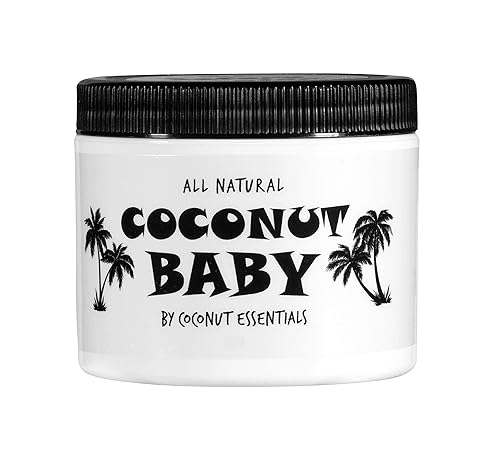
Coconut Baby Oil for Hair & Skin Care
Natural and organic coconut oil blend for baby hair and scalp care. Made with fractionated coconut oil, sweet almond oil, and vitamin E. Nourishes the scalp, helps with cradle cap, and creates a healthy environment for hair growth. Gentle enough for newborns. Also works as a full-body moisturizer.
- Multi-purpose — scalp, hair, skin, cradle cap
- Fractionated coconut oil absorbs easily
- Sweet almond oil adds vitamins A, D, and E
- Gentle enough for newborns
- Affordable and long-lasting
- No active hair growth ingredients
- Pump bottle can leak
- May make fine hair look oily if overused
- Simple formula — no herbal extracts
Coconut oil is the most evidence-backed natural oil for hair and scalp health. It is one of the few oils that can actually penetrate the hair shaft (most oils only coat the surface), delivering moisture and nutrients directly to where they are needed. Fractionated coconut oil remains liquid at room temperature, making it easy to apply to baby's fine hair.
For hair growth, the primary benefit is scalp health. A well-moisturized scalp with good circulation provides the optimal environment for hair follicles to produce strong, healthy hair. Regular scalp massage with this oil during bath time stimulates blood flow and helps clear cradle cap — both of which support better hair growth over time.
2. Blue Nectar Ayurvedic Baby Hair Oil — Best Herbal Approach
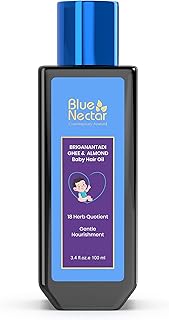
Blue Nectar Ayurvedic Baby Hair Oil with Coconut & Almond
Traditional Ayurvedic hair oil formulated for babies with a blend of coconut oil, almond oil, amla (Indian gooseberry), and brahmi. These herbs have been used in Indian hair care traditions for centuries to promote thick, strong hair growth. Natural, herbal formula with no synthetic additives, mineral oil, or parabens.
- Traditional Ayurvedic herbs (amla, brahmi) for hair growth
- Coconut + almond oil base for deep nourishment
- Centuries-old formulation backed by tradition
- No synthetic additives or mineral oil
- Pleasant natural herbal scent
- Herbal ingredients have limited clinical research for babies
- Stronger scent than fragrance-free options
- May stain light-colored clothing
- Higher price than plain coconut oil
Ayurvedic medicine has used amla (Indian gooseberry) and brahmi for hair strengthening and growth for centuries. While clinical studies on babies are limited, these herbs are rich in vitamin C, antioxidants, and nutrients that nourish hair follicles. The Blue Nectar Ayurvedic Hair Oil combines these traditional herbs with a coconut and almond oil base for easy application.
This oil is especially popular among South Asian families who follow Ayurvedic hair care traditions, including the practice of regular baby head massage (champi). The herbal ingredients complement the carrier oils' moisturizing benefits, creating a well-rounded scalp treatment that supports healthy hair development.
3. Boogie and Bean Baby Hair Growth Oil — Best Targeted Growth Oil
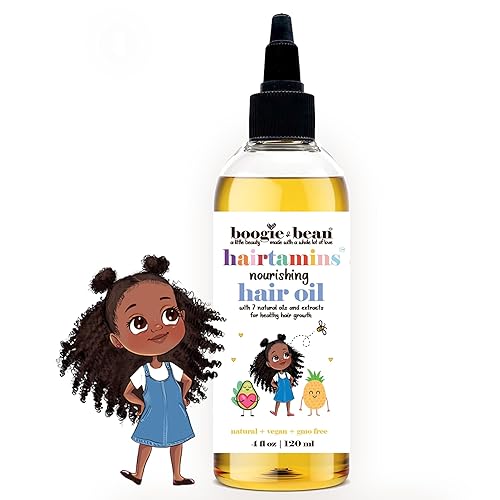
Boogie and Bean Baby & Kids Hair Growth Oil
Nourishing hair growth oil specifically formulated for infants, toddlers, and children. Made with castor oil, avocado oil, and jojoba oil — a proven combination for promoting healthy hair growth and thickness. Moisturizes waves, curls, coils, and all hair textures. No petroleum, mineral oil, or parabens.
- Castor oil — traditionally used for hair growth
- Avocado oil provides vitamins and fatty acids
- Jojoba oil mimics natural scalp sebum
- Suitable for all hair textures
- Black-owned brand with hair expertise
- Results require consistent long-term use
- Castor oil is very thick — small amount needed
- Higher price point
- May feel heavy on very fine baby hair
Boogie and Bean is a Black-owned brand that understands natural hair from the roots up. Their Hair Growth Oil features castor oil as its star ingredient — one of the most time-tested natural remedies for promoting hair thickness and growth. Castor oil is rich in ricinoleic acid, which has been shown to support hair follicle health and improve circulation to the scalp.
The addition of avocado oil provides vitamins A, D, and E plus essential fatty acids, while jojoba oil closely mimics natural scalp sebum, helping regulate oil production. Together, this blend creates an ideal environment for hair growth across all textures — from fine straight hair to tight coils. Apply a few drops to the scalp and massage gently 2-3 times per week for best results.
4. Natural Baby Hair Growth Serum with Black Seed Oil — Best Serum
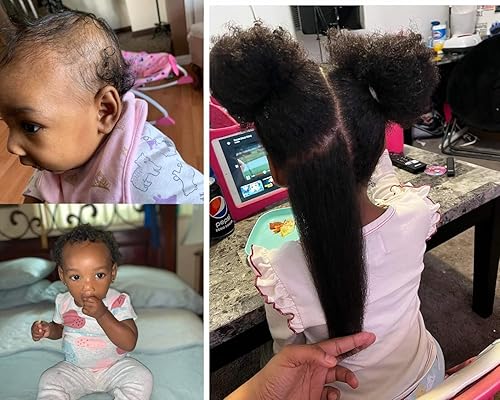
Natural Baby Kids Hair Growth Serum with Black Seed Oil
Extra-strength growing and nourishing serum made with black seed oil, argan oil, and biotin. Designed to promote stronger, thicker baby and kids hair. Lightweight serum texture absorbs quickly without greasiness. Free from sulfates, parabens, and synthetic fragrances.
- Black seed oil — powerful growth-supporting ingredient
- Biotin supports keratin production
- Lightweight serum absorbs quickly
- Not greasy like heavy oils
- Includes argan oil for shine and strength
- Limited clinical evidence for baby hair growth
- Higher price for a specialty product
- Small bottle runs out quickly
- Serum format unfamiliar to some parents
Black seed oil (Nigella sativa) has been used for thousands of years across Middle Eastern and African cultures for hair growth. Modern research has identified thymoquinone — a compound in black seed oil — as having anti-inflammatory and antioxidant properties that support follicle health. This serum combines black seed oil with biotin (vitamin B7), which supports keratin production, and argan oil for shine.
The lightweight serum texture is a significant advantage over heavy oils. It absorbs quickly into the scalp without leaving a greasy residue, making it practical for daily use without staining pillows or clothing. Apply a few drops to the scalp and massage gently — the non-greasy formula means you can apply it in the morning without worrying about oily hair.
5. Cristina's Curls Kids Scalp Serum — Best for Scalp Health
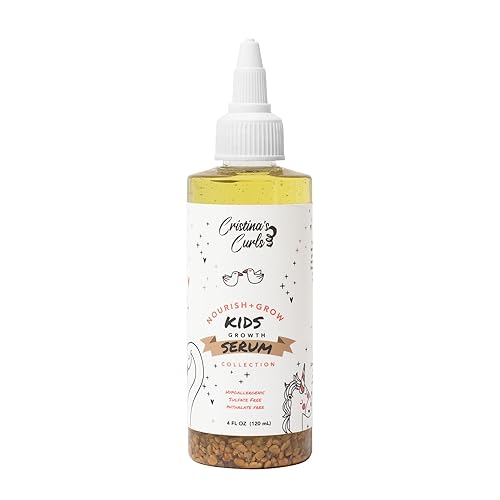
Cristina's Curls Kids Scalp Serum
Light daily scalp serum designed to soothe dryness and nourish at the roots. Made with botanical extracts for gentle scalp care. Promotes a healthy scalp environment for natural hair growth. Non-greasy formula suitable for daily use on all hair types.
- Focuses on scalp health — the foundation of hair growth
- Light, non-greasy daily serum
- Soothes dry, flaky scalp
- Botanical extracts nourish follicles
- Suitable for all hair types
- Newer brand with less track record
- Primarily for scalp, not hair styling
- Results take time — not instant
- Premium price for scalp care
Healthy hair growth starts at the scalp. Cristina's Curls Scalp Serum takes a root-cause approach by focusing on scalp health rather than the hair itself. Dry, irritated, or inflamed scalps produce weaker hair — by keeping the scalp nourished and balanced, you create the best conditions for strong hair to grow naturally.
This lightweight serum absorbs quickly and can be used daily without buildup. It is especially useful for babies with dry, flaky scalps or lingering cradle cap, where unhealthy scalp conditions may be slowing hair growth. Apply directly to the scalp and massage gently to stimulate circulation.
What to Look For When Choosing Baby Hair Growth Products
Ingredients That Support Scalp Health
- Castor oil: High in ricinoleic acid, which has anti-inflammatory properties. One of the most popular choices for scalp massage and cradle cap.
- Rosemary oil (properly diluted): The botanical ingredient with the strongest clinical evidence for follicle support. Must appear diluted in a carrier base (0.1–0.5%) — never apply undiluted essential oils to infant skin.
- Coconut oil: Penetrates the hair shaft better than most oils, reducing protein loss and breakage. The cleanest choice for newborns.
- Argan oil: High in vitamin E, lightweight, and excellent for softening dry or brittle baby hair without heaviness.
Ingredients to Avoid
- Undiluted essential oils: Eucalyptus, peppermint, and tea tree are contraindicated for infants. Even lavender should be avoided under 3 months.
- Mineral oil: Coats the scalp without absorbing — builds up and can clog follicles with repeated use.
- Synthetic fragrance: Can cause contact dermatitis on sensitive infant scalps. Look for "fragrance-free" not just "unscented."
- Alcohol: Dries and irritates the scalp — counterproductive for any hair growth goal.
Age-by-Age Guide
- 0–3 months: Pure plant oils only (coconut, jojoba, sweet almond). The skin barrier is still developing — keep it simple.
- 3–6 months: Multi-oil blends are appropriate. Still avoid essential oils in any concentration.
- 6 months+: Most baby hair growth products with herbal or Ayurvedic ingredients are appropriate. Check individual ingredient lists for essential oil concentrations.
How to Apply Baby Hair Growth Products for Best Results
Technique matters as much as the product itself:
- Apply a pea-sized amount to your fingertips, not directly to the scalp.
- Massage using slow circular motions for 1–2 minutes. Light pressure only — never scrub.
- Leave on 15–30 minutes when possible, or apply before bathtime and wash off with a gentle shampoo.
- Limit use to 2–3 times per week maximum. Daily application causes buildup that counteracts growth benefits.
Frequently Asked Questions
How We Evaluate Baby Hair Growth Products
We cross-reference ingredients against the EWG Skin Deep database and AAP guidelines on infant skin safety, then weigh parent reviews from verified purchases and guidance from pediatric dermatology literature. No product earns a recommendation without passing all three checks.
Final Verdict
If your baby's hair is growing slowly or falling out at 3–4 months, the most effective response is patience — telogen effluvium resolves on its own and no product changes that timeline. For everyday scalp health, a simple coconut oil massage 2–3 times per week is backed by more evidence than any specialized growth serum. For babies with cradle cap causing patchy thinning, targeted scalp care makes a real difference. For babies 6 months+ — especially those with curly, coily, or thick hair — the herbal and Ayurvedic formulas in our list provide genuine benefit for moisture, breakage prevention, and scalp environment.