"Baby safe" appears on hundreds of hair products in 2026, but the term is unregulated. A 2025 EWG audit found that 38% of products marketed as "baby safe" contained at least one ingredient rated 4 or higher on EWG's 1-10 hazard scale. This guide identifies the products that pass actual third-party safety verification: EWG Verified, National Eczema Association Seal of Acceptance, and dermatologist endorsement.
Every product below is rated EWG 1-3, fragrance-free or fragranced only with essential oils tested for safety in pediatric use, and free of the 10 most-concerning ingredients flagged by the American Academy of Dermatology for under-3 use.
The 10 ingredients to avoid in baby hair products
- Sodium Lauryl Sulfate (SLS) and Sodium Laureth Sulfate (SLES) - harsh surfactants that strip natural oils and sting eyes
- Parabens (methylparaben, propylparaben, butylparaben) - hormone disruptors
- Phthalates - linked to developmental issues, often hidden under "fragrance"
- Formaldehyde-releasers (DMDM hydantoin, quaternium-15, imidazolidinyl urea) - known carcinogens
- Synthetic fragrance ("parfum") - the #1 cause of pediatric contact dermatitis
- Mineral oil - sits on the hair shaft rather than penetrating, can clog follicles
- Polyethylene glycol (PEG compounds) - often contaminated with 1,4-dioxane (a carcinogen)
- Triclosan and triclocarban - antibacterials linked to thyroid disruption
- Coal tar - found in some dandruff shampoos, carcinogenic
- Drying alcohols (denatured alcohol, isopropyl alcohol high in the ingredient list)
Our top 7 truly safe baby hair products
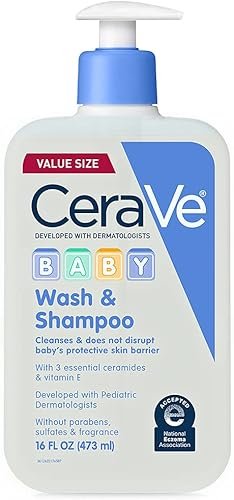
CeraVe Baby Wash and Shampoo
Fragrance-free 2-in-1 wash and shampoo with ceramides and hyaluronic acid. NEA Seal of Acceptance and EWG 1 rated. Tear-free. Safe from birth. Dermatologist-developed.
- EWG 1
- NEA Seal
- Tear-free
- Ceramide-enriched
- Mild lather
- Plain packaging
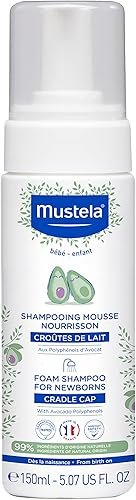
Mustela Foam Shampoo for Newborns
Fragrance-free foam shampoo specifically formulated for newborns 0-3 months. Helps prevent and treat cradle cap. Patented Avocado Perseose protects the scalp barrier. EWG 1-2 rated.
- Cradle cap formula
- Newborn-safe
- EWG 1-2
- Premium price
- Foam can be slow to dispense
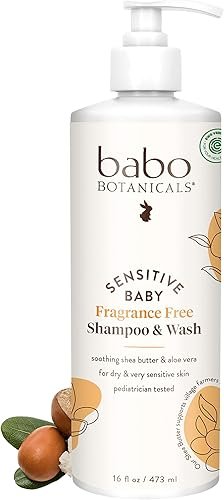
Babo Botanicals Sensitive Baby Shampoo and Wash
Fragrance-free organic oat formula, EWG Verified, NEA-accepted. Plant-based surfactants only. USDA biobased certified. Made in the USA.
- EWG Verified
- NEA Seal
- Organic oat
- Higher price per oz
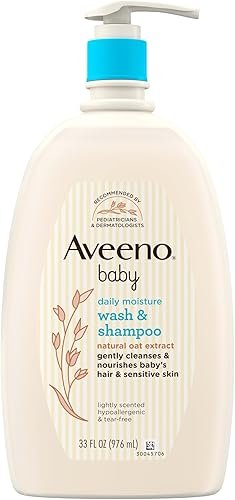
Aveeno Baby Wash and Shampoo Fragrance Free
Drugstore-priced safe option. Fragrance-free oat-based formula, EWG 2-3 rated, NEA-accepted. Tear-free. Daily-use safe across all skin types.
- Affordable
- NEA Seal
- Tear-free
- EWG 2-3 not 1
- Recently reformulated
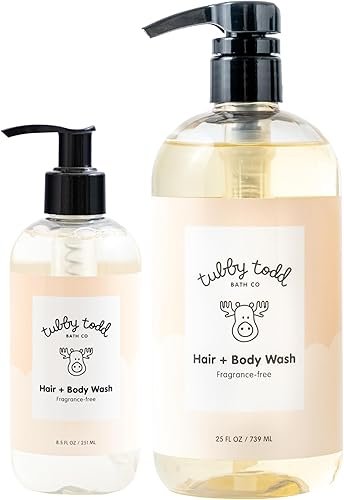
Tubby Todd Hair and Body Wash
Light coconut milk formula with no synthetic fragrance. EWG 2 rated. Founded by parents specifically for sensitive skin and hair. Cruelty-free.
- Coconut milk
- EWG 2
- Cruelty-free
- Slight natural scent
- Bottle pump can stick
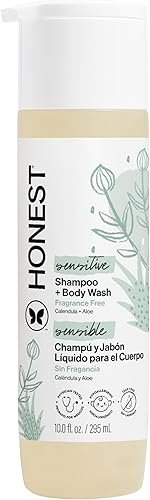
Honest Hypoallergenic Shampoo Plus Body Wash
EWG Verified, fragrance-free, plant-based formula. NEA Seal of Acceptance. The Honest Company's safest hair product per third-party audits.
- EWG Verified
- NEA Seal
- Plant-based
- Bottle smaller than competitors
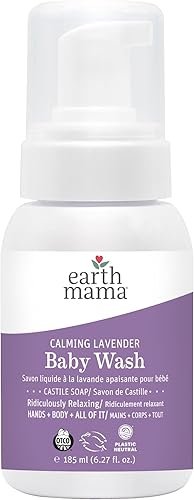
Earth Mama Organics Baby Calming Shampoo and Body Wash
Lightly chamomile-vanilla scented from organic plant extracts (not synthetic fragrance). USDA Certified Organic, NSF/ANSI 305 certified, EWG 1 rated. Made in Oregon.
- USDA Organic
- EWG 1
- Chamomile-calming
- Light natural scent (not unscented)
How to verify a baby hair product is truly safe
Check these signals before buying any baby hair product:
- Look up the product on EWG.org/skindeep - they rate over 70,000 personal care products. A 1-2 score is genuinely safe. 3-4 is moderate. 5+ has identified concerns.
- Check for the NEA Seal of Acceptance - the National Eczema Association maintains rigorous formulation standards.
- Look for "EWG Verified" or "Made Safe" marks - both require independent ingredient audits.
- Read the actual ingredient list - listed in descending order by weight. Avoid products where any of the 10 red-flag ingredients appear in the first 10 components.
- Avoid "fragrance" or "parfum" alone - if the brand doesn't disclose what's in their fragrance, treat it as a potential allergen.
When to start using shampoo on your baby
The AAP says infants under 6 months don't need shampoo - water with a soft washcloth gently massages the scalp without disturbing the developing skin barrier. From 6 months, introduce a tear-free baby shampoo 1-2 times per week. Daily shampooing is rarely necessary for any age under 3, and overwashing is a common cause of dry scalp and cradle cap recurrence.
Frequently asked questions
Related hair-care reading
- Best Baby Hair Products in 2026
- Best Baby Curly Hair Products in 2026
- Best Hair Products for Black Babies in 2026
- Best Baby Hair Growth Products in 2026