What changed in this May 2026 update: We re-checked every monitor against the active CPSC recall list and the latest FCC guidance on baby monitor security. Refreshed price ranges and added context on encryption / Wi-Fi security improvements introduced over the past year. Next scheduled review: August 2026.
Affiliate Disclosure: As an Amazon Associate, we earn from qualifying purchases. This comes at no extra cost to you.
Last updated: April 2026 | Reviewed by the YourHappyBaby editorial team
A baby monitor is one of the most personal decisions in the first year of parenting — it sits at the intersection of safety, privacy, technology preferences, and budget. The market ranges from $25 audio devices to $349 systems with breathing sensors and AI-analyzed sleep reports. What's right for one family is overkill or insufficient for another.
This guide cuts through the noise. We cover every category — audio-only, video, non-WiFi, smart WiFi, and wearable sensor monitors — with honest assessments of who each product is actually for. We also explain the privacy tradeoffs that WiFi monitors introduce, which most review sites skip over entirely.
Quick Comparison Table
| Product | Type | Best For | WiFi Required | Price Range |
|---|---|---|---|---|
| Infant Optics DXR-8 Pro | Video (non-WiFi) | Privacy-conscious families | No | $$$ |
| Nanit Pro | Smart video + analytics | Data-driven parents | Yes | $$$$ |
| Owlet Dream Duo | Camera + pulse oximetry sock | Anxiety about nighttime safety | Yes | $$$$ |
| VTech DM221 | Audio only | Budget-conscious, minimalists | No | $ |
| Eufy SpaceView Pro | Video (non-WiFi) | Large screen, no subscription | No | $$ |
| Hatch Rest 2nd Gen | Sound machine + camera + light | All-in-one nursery device | Yes | $$ |
| Motorola VM855 Connect | Video (WiFi + local) | Flexibility, no subscription | Optional | $$ |
| Summer Infant Baby Pixel Cadet | Video (non-WiFi) | Large display, budget video | No | $$ |
Our Top 8 Baby Monitors in 2026
1. Infant Optics DXR-8 Pro — Best Overall Baby Monitor
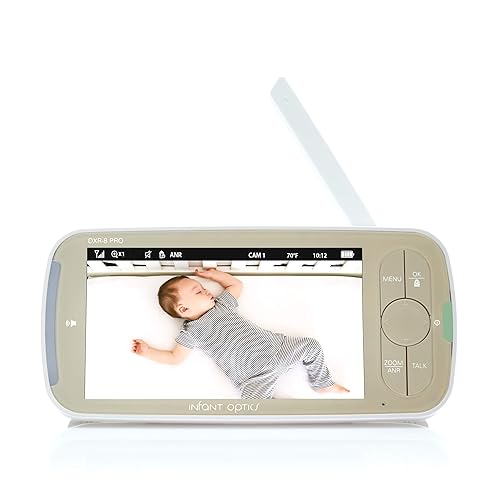
Infant Optics DXR-8 Pro Video Baby Monitor
The Infant Optics DXR-8 Pro operates on a dedicated 2.4GHz FHSS radio frequency — the same technology used by cordless phones and medical devices — not your home WiFi network. This is the single most important feature for many families: because it never connects to the internet, it cannot be accessed remotely, cannot be hacked through your router, and cannot be compromised if Infant Optics' servers go offline. The Pro is the upgraded version of the DXR-8 (one of the best-selling baby monitors in history), with improvements including a 720p camera (up from VGA), reduced background noise through enhanced DSP, and a redesigned parent unit with a 5-inch display. Interchangeable optical zoom and wide-angle lens modules are sold separately, allowing range customization for different room sizes. Battery life on the parent unit exceeds 10 hours in power-saving mode. Two-way audio works reliably at distances up to 800 feet in open air.
- No internet connection — zero remote hacking risk
- 5-inch 720p display with excellent night vision
- 10+ hour battery life on parent unit
- 800-foot range in open air
- Interchangeable optical lenses for range customization
- No subscription fees — ever
- Proven track record from one of the best-selling monitors in history
- 720p is lower resolution than some WiFi competitors at this price
- No smartphone viewing — monitor unit only
- Lens modules are an additional cost if zoom is needed
- No sleep analytics or smart features
The DXR-8 Pro's popularity is not accidental. Baby monitor hacking stories have circulated widely since 2013, when researchers demonstrated they could remotely access and speak through WiFi baby monitors from across the internet. Since then, every WiFi-connected monitor has carried this theoretical risk. The DXR-8 Pro's FHSS radio frequency simply does not have this attack surface — there is no IP address to target, no cloud server to breach, no firmware to exploit remotely.
For parents who want clear video, reliable range, and zero privacy exposure, the DXR-8 Pro remains the definitive choice in 2026. It does exactly what a baby monitor needs to do, nothing more, and does it without the tradeoffs that internet connectivity introduces.
Pros
- Most secure monitor available — zero internet exposure
- Proven reliability from market-leading brand
- No monthly fees, no app, no account required
- Strong night vision in true dark conditions
Cons
- No remote viewing away from home — local only
- 720p resolution vs. 1080p on WiFi competitors
- No smart features or sleep tracking
2. Nanit Pro — Best Smart Baby Monitor
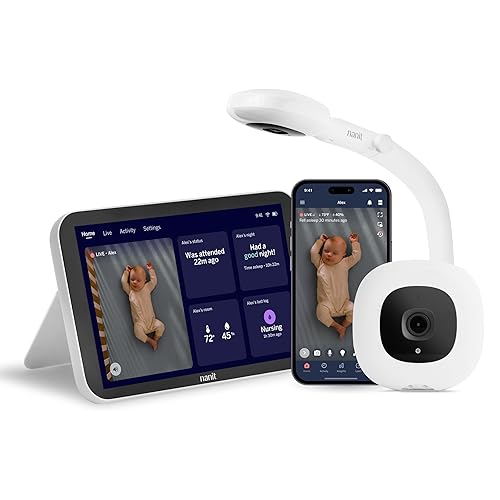
Nanit Pro Complete Monitoring System
The Nanit Pro is the most analytically sophisticated baby monitor available to consumers. The 1080p overhead camera uses computer vision to track every movement in the crib — not just motion detection, but actual body position and movement pattern analysis — and generates nightly sleep reports showing total sleep time, number of wake-ups, and time spent in the crib vs. time standing. The Nanit app integrates with Apple Health and Google Fit, allowing sleep data to be tracked alongside other health metrics over time. The breathing band (sold as part of the Complete Monitoring System) wraps around baby's swaddle or sleep sack and tracks breathing motions, alerting parents if breathing movements stop for a set duration. Setup requires a WiFi connection and a Nanit account. A subscription plan ($100/year) unlocks sleep coaching videos and historical data export, though basic monitoring functions without subscription.
- 1080p overhead view with computer vision sleep analytics
- Breathing motion band included in Complete System
- Nightly sleep reports track patterns over weeks and months
- Remote viewing via smartphone from anywhere
- Two-way audio with crystal-clear sound quality
- Integrates with Apple Health and Google Fit
- Requires WiFi — remote hacking risk exists
- $100/year subscription for full features
- Overhead mount requires drilling — more complex setup
- Breathing band detects movement only, not pulse or oxygen levels
- Higher price point
The Nanit's most useful feature for new parents is the sleep pattern visualization. It's easy to feel, in the fog of the newborn period, that your baby's sleep is random chaos. The Nanit shows you — in a clear overnight graph — that there are actually emerging patterns: a first long stretch from 8–11pm, a reliable wake-up near 2am, and a second stretch until 5am. Seeing this data helps parents identify what's working and when to attempt schedule adjustments with confidence rather than guesswork.
The breathing band provides motion-based breathing detection, which is a comfort feature rather than a medical device. It detects chest rise and fall movements but does not measure oxygen saturation. Parents who want medical-grade pulse oximetry monitoring should consider the Owlet Dream Sock instead.
Pros
- Best sleep analytics of any consumer monitor
- Overhead view captures full crib without blind spots
- Long-term data tracking shows sleep development over months
- Remote access from any smartphone
Cons
- WiFi required — cloud server dependency
- Subscription fee for full feature access
- Overhead drilling mount requires more installation effort
- Breathing band is motion-based, not pulse oximetry
3. Owlet Dream Duo — Best for Peace-of-Mind Monitoring
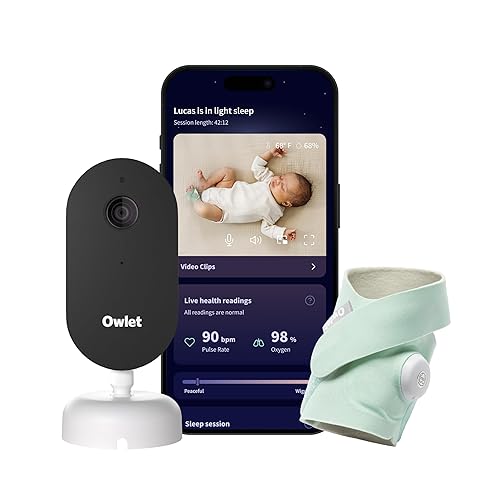
Owlet Dream Duo Baby Monitor
The Owlet Dream Duo combines an HD camera (the Dream Cam) with the Dream Sock — a fabric bootie that wraps around baby's foot and uses clinical pulse oximetry to continuously monitor heart rate and blood oxygen levels. If either metric falls outside preset thresholds, the base station emits an audible alarm and the app sends a push notification. The Dream Sock is the fourth generation of Owlet's pulse oximetry wearable, which has been used by over one million families since 2013. The 1080p camera includes night vision, room temperature display, and two-way audio. The Owlet app provides a live feed of heart rate and oxygen readings alongside the camera view. Requires WiFi and an Owlet account. Monthly subscription ($9.99/month) required for historical trend data; basic live monitoring is included without subscription.
- Clinical pulse oximetry monitors actual blood oxygen levels
- Real-time heart rate tracking with configurable alert thresholds
- HD camera + sensor data in a single app
- Proven track record — over 1 million families since 2013
- Room temperature display on camera unit
- Two-way audio works reliably
The Owlet occupies a unique position in the monitor market: it is the only widely available consumer device that monitors both a live camera view and physiological data simultaneously. For parents whose babies were premature, had NICU time, have cardiac or respiratory conditions, or who simply experience significant nighttime anxiety, the Dream Sock's real-time oxygen and heart rate data provides reassurance that no camera image alone can offer.
A critical clarification: the Owlet Dream Sock is not FDA-cleared as a medical device and should not be used as a substitute for medical monitoring for infants with diagnosed conditions. It is a wellness device that tracks trends and alerts to changes. Families managing actual medical conditions should follow their pediatrician's specific recommendations.
Pros
- Only consumer monitor with real-time pulse oximetry
- Over a decade of real-world use across 1M+ families
- Combined camera + physiological data in one app
- Provides reassurance that camera-only monitors cannot
Cons
- Not a medical device — should not replace doctor-prescribed monitoring
- Sock displacement can trigger false alarms
- WiFi dependency and subscription cost
- Highest price on this list
4. VTech DM221 — Best Budget Baby Monitor
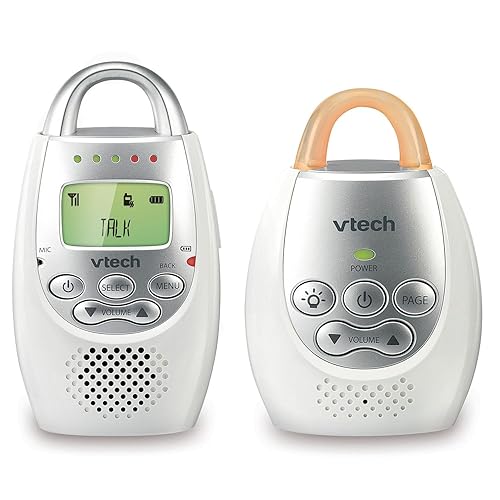
VTech DM221 DECT 6.0 Digital Audio Baby Monitor
The VTech DM221 is a DECT 6.0 digital audio monitor — the same frequency standard used in interference-free cordless phones — with a 1,000-foot open-air range, two-way intercom, belt clip parent unit, and 18-hour battery life. DECT 6.0 operates on the 1.9GHz band, which is not shared with WiFi, Bluetooth, or 2.4GHz baby monitors, meaning zero interference from other home wireless devices. The parent unit displays a sound level indicator that shows audio activity without requiring constant volume. Temperature display on the transmitter provides nursery temperature. Belt clip on parent unit makes it wearable throughout the house. At $30, it is the most affordable reliable baby monitor available. No smartphone required, no account, no subscription.
- DECT 6.0 eliminates wireless interference completely
- 18-hour battery life on parent unit
- Belt clip makes it wearable around the house
- Sound level indicator shows activity without volume blasting
- $30 — lowest cost on this list
- No internet, no account, no subscription required
- Audio only — no video
- No night vision (there is nothing to see — it is audio only)
- Basic temperature display only, no alerts
- Limited feature set compared to video monitors
- No remote viewing away from home
For minimalist parents, parents in smaller homes or apartments where you can hear the baby anyway, and families who want a backup monitor alongside a primary video unit, the VTech DM221 is a genuinely excellent product at a price that makes over-thinking the decision unnecessary.
Audio-only monitors also solve the habit that develops with video monitors: the compulsion to check the screen every few minutes even when there is no sound. Many parents report that video monitors increase, rather than decrease, nighttime anxiety precisely because the constant visual feed encourages checking. An audio monitor only demands attention when there is something to hear.
Pros
- Interference-free DECT 6.0 frequency
- Exceptional battery life at 18 hours
- No internet, no subscription, no setup required
- Belt clip for hands-free carrying throughout the day
Cons
- No video — audio only
- No smartphone connectivity or remote access
- Basic features only — not suitable as sole monitor for large homes
5. Eufy SpaceView Pro — Best Non-WiFi Video Monitor
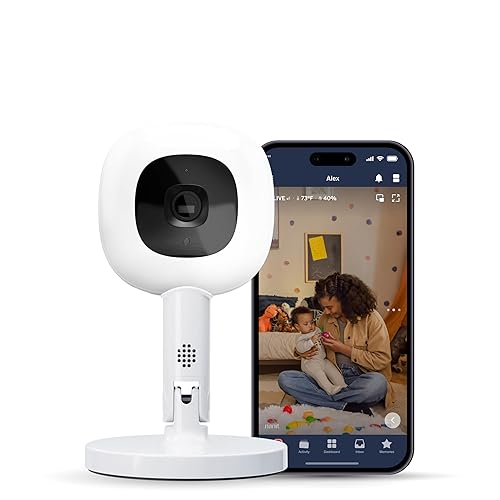
eufy Security SpaceView Pro Baby Monitor
The Eufy SpaceView Pro provides 1080p video with a 5-inch parent unit display and operates entirely on a dedicated 2.4GHz FHSS signal — no WiFi, no internet connection, no cloud servers, no subscription. The parent unit display is notably large and bright for a standalone monitor, and the 720-degree pan and tilt camera covers every corner of a standard nursery. Night vision uses true infrared, delivering clear greyscale images in complete darkness. Two-way audio includes a lullaby player with five built-in songs. Up to four cameras can be connected to a single parent unit, which makes it practical for multi-room monitoring or future use when a second child arrives. Battery life on the parent unit is 8 hours with display on, extending to 20 hours in power-saving mode.
- 1080p with 5-inch display — clear image without smartphone
- 720-degree pan and tilt from parent unit
- No internet connection — private by design
- True infrared night vision works in complete dark
- Four-camera expandable system
- 20-hour battery in power-saving mode
- No subscription fees
- No remote viewing via smartphone
- 8-hour battery with display on is shorter than some competitors
- No sleep analytics or smart features
- 2.4GHz frequency can occasionally experience interference in very dense wireless environments
The SpaceView Pro slots between the budget and premium non-WiFi market: more capable than the VTech audio monitor, similarly secure to the Infant Optics, but at a lower price than the DXR-8 Pro. Its standout feature is the 5-inch display — larger than most standalone monitors — which makes it easier to watch while doing something else, without the phone-checking habit that app-based monitors encourage.
The four-camera expandability is a meaningful advantage for families who anticipate needing monitoring in multiple rooms (nursery + living room) or a second child's room without buying an entirely new system.
Pros
- 1080p video with large 5-inch display
- No WiFi — cannot be hacked remotely
- Expandable to four cameras
- No subscription, no account required
Cons
- No smartphone access — dedicated unit only
- 8 hours with display on is shorter than some competitors
- No smart features or sleep tracking
6. Hatch Rest 2nd Gen — Best All-in-One Nursery Monitor
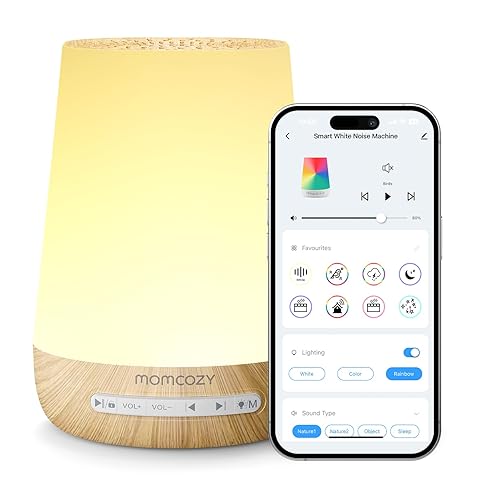
Hatch Rest 2nd Gen Sound Machine, Night Light and Time-to-Rise
The Hatch Rest 2nd Gen is not primarily a baby monitor — it is a sound machine and customizable night light that adds camera-based monitoring as a secondary function. It produces non-looping white noise, nature sounds, and lullabies through a high-quality speaker, displays a fully customizable color night light, and can be programmed with time-to-rise cues (showing a specific color when it is OK for older toddlers to get out of bed). The monitoring camera is 1080p with night vision, accessible through the Hatch Sleep app. What makes the Rest 2nd Gen compelling as a monitor is the convergence: rather than having a separate white noise machine, night light, and camera, all three functions are handled in one device with one power cord and one app. Requires WiFi and a Hatch account. A Hatch+ subscription ($49.99/year) unlocks guided sleep programs and a full content library, though basic sound and light functions work without it.
- Combines sound machine + night light + monitor in one device
- Non-looping sounds for true auditory masking (not distracting loops)
- Fully programmable light colors — works as time-to-rise clock for toddlers
- 1080p camera with night vision
- One power cord, one app for three functions
- Built-in speaker quality is notably better than most monitors
- Works as sound machine without subscription
- WiFi required
- Camera is a secondary feature — not the most capable video monitor
- Subscription unlocks full content library
- No DECT/non-WiFi option available
- Two-way audio present but not emphasized in design
The Rest 2nd Gen makes the most sense for parents who were going to buy a white noise machine and a night light anyway — a combination that costs $40–$80 on its own — and want to add camera monitoring without a third device cluttering the nursery shelf. The all-in-one value is genuine: one outlet, one app, one device that grows from the newborn period (white noise + monitoring) through toddlerhood (time-to-rise light cues).
The sound quality deserves specific mention. The built-in speaker is significantly better than the tinny speakers in most standalone white noise machines at similar prices, producing the kind of continuous, non-looping brown or white noise that genuinely masks household sounds rather than playing a 30-minute "relaxation track" on repeat.
Pros
- Replaces three devices: sound machine + night light + monitor
- Non-looping sounds actually mask household noise
- Programmable time-to-rise light grows with child into toddler years
- High-quality speaker
Cons
- WiFi required — cloud-dependent
- Camera is secondary, not primary feature
- Basic monitoring vs. dedicated monitor functionality
7. Motorola VM855 Connect — Best Flexible Monitor
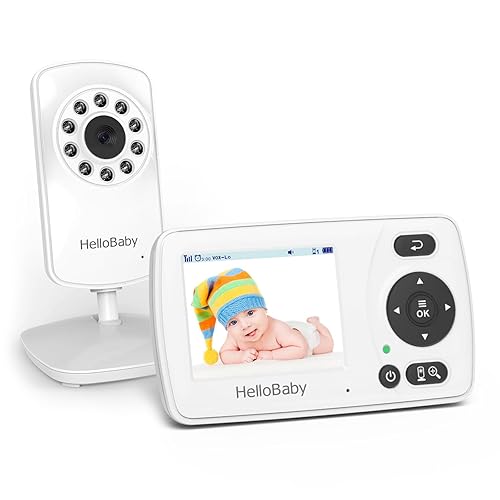
Motorola VM855 Connect Video Baby Monitor
The Motorola VM855 Connect is one of the few monitors that offers both local radio-frequency viewing on the included parent unit AND simultaneous WiFi streaming to smartphones — giving parents the choice to use whichever mode suits the moment. At home, the 5-inch parent unit operates on a local encrypted connection; away from home (or for a second caregiver), the Motorola app provides remote smartphone access. The 1080p camera has 360-degree remote pan/tilt control, digital zoom, and infrared night vision. A room temperature and humidity sensor displays on the parent unit. Two-way audio includes a remote-activated lullaby player. No subscription is required for any feature.
- Local RF viewing + WiFi smartphone access — use both modes
- No subscription fees for any feature
- 5-inch 1080p parent display + remote pan/tilt control
- Temperature and humidity sensor in nursery
- 360-degree pan/tilt coverage of entire room
- Dual-mode means no single point of failure
- WiFi component carries standard cloud-connectivity risks when used
- Parent unit battery life is shorter than non-WiFi competitors
- App experience is functional but not as polished as Nanit or Hatch
- Dual-mode complexity means more initial setup
The VM855 Connect's dual-mode design solves a real problem: the parent who wants local-only security during overnight hours but remote access during the day when one parent is at work and wants to check in. Using the dedicated parent unit at night eliminates the phone-in-bed habit; the app enables daytime check-ins from anywhere. Most monitors force a choice between these modes. The VM855 offers both without a subscription fee — a meaningful combination at its price.
Pros
- Both local RF and remote WiFi access — best of both worlds
- No subscription required
- 1080p with full pan/tilt/zoom control
- Temperature and humidity tracking
Cons
- WiFi mode carries cloud-access tradeoffs
- App not as polished as premium competitors
- Parent unit battery shorter than dedicated non-WiFi monitors
8. Summer Infant Baby Pixel Cadet — Best Budget Video Monitor

Summer Infant Baby Pixel Cadet Video Baby Monitor
The Summer Infant Baby Pixel Cadet provides 720p video on a 5-inch parent unit display using a dedicated non-WiFi connection — no internet, no app, no subscription. Pan and tilt are motorized and controllable from the parent unit, scanning the full room remotely. The camera includes infrared night vision, room temperature display, and a two-way intercom. A built-in lullaby player can be activated remotely from the parent unit. At $100, it is one of the most affordable non-WiFi video monitors with a full-sized display and motorized camera control.
- Non-WiFi dedicated connection — private by design
- 5-inch display with motorized pan/tilt control
- Temperature display in nursery
- No subscription fees
- Competitive price for non-WiFi video with full camera control
- 720p resolution is lower than 1080p competitors
- Parent unit battery life averages 6–8 hours
- Less established brand reputation than Infant Optics or Eufy
- Setup can occasionally require frequency re-pairing after power cycling
For parents who want non-WiFi video monitoring without spending $160 on the Infant Optics DXR-8 Pro, the Baby Pixel Cadet delivers the essential combination of dedicated RF connection, motorized camera control, and a large display at a meaningfully lower price. The 720p resolution is adequate for nighttime monitoring, where the primary function is confirming a sleeping baby rather than examining details.
Pros
- Non-WiFi video at a lower price than Infant Optics
- Motorized pan/tilt from parent unit
- No subscription or account required
Cons
- 720p vs 1080p on pricier options
- Shorter battery life
- Less brand recognition in monitor market
Buyer's Guide: Choosing the Right Baby Monitor
WiFi vs. Non-WiFi: The Privacy Tradeoff
Every WiFi baby monitor has an IP address. If your router, the monitor manufacturer's servers, or your network is compromised, it is theoretically possible for someone to access your camera remotely. This is not a hypothetical: documented cases of baby monitor hacking have been reported since 2013. Non-WiFi monitors using FHSS or DECT radio frequencies do not have this exposure — they cannot be accessed from outside your home because they are not on the internet.
If you want remote smartphone access (viewing your nursery while away from home), WiFi is required. If you only need in-home monitoring, a non-WiFi FHSS or DECT monitor is both more secure and typically more reliable.
Audio Only vs. Video: Do You Actually Need to See?
Audio monitors are often the right choice for parents in smaller homes or apartments where the baby's room is nearby. The evidence is clear that many parents with video monitors develop "monitor checking" behavior — looking at the screen every few minutes even when silent — which increases parental anxiety rather than reducing it. An audio monitor demands attention only when there is sound.
Video monitors are most valuable in larger homes, for parents who are visually reassured by seeing the baby's position, and for parents whose babies have developmental or medical conditions that make position and movement relevant to monitor.
What "Breathing Monitoring" Actually Means
Two different technologies are marketed as "breathing monitoring" for baby monitors. Understanding the difference matters:
- Breathing motion detection (Nanit breathing band): Tracks visible chest rise and fall movement via camera or an attached band. Does not measure oxygen levels. Alerts to cessation of movement, not to hypoxia.
- Pulse oximetry (Owlet Dream Sock): Measures actual blood oxygen saturation using infrared light through the skin, the same clinical technology used in hospitals. Directly measures oxygen levels and heart rate.
Neither is a medical device. Both are consumer wellness products. If your baby has a diagnosed condition requiring medical monitoring, follow your pediatrician's specific guidance.
Subscription Fees: What's Free and What Isn't
Several premium monitors charge recurring fees for full feature access. Here is the current state:
- Nanit: Basic monitoring free; $100/year for sleep coaching content and data export
- Owlet: Live monitoring free; $9.99/month for historical trend data
- Hatch Rest: Sound machine and light free; $49.99/year for guided sleep programs
- Infant Optics, Eufy, VTech, Summer Infant, Motorola: No subscription ever
Frequently Asked Questions
Final Verdict
The Infant Optics DXR-8 Pro is the best baby monitor for most families: secure, reliable, clear video, no recurring costs, and no dependency on internet connections or third-party servers. It is the monitor we would recommend to a friend without knowing anything specific about their situation.
If you want smart analytics and sleep tracking, the Nanit Pro delivers the most sophisticated sleep data available in a consumer product. If physiological monitoring matters to you, the Owlet Dream Duo is in a category of its own. For budget buyers, the VTech DM221 covers all the basics at $30. And for families who want to consolidate nursery devices, the Hatch Rest 2nd Gen earns its place by replacing three devices in one.
Frequently asked questions (continued)
Optional - the AAP doesn't require them for healthy babies. The benefit is convenience: you can hear or see your baby from another room without checking in person. Skip monitors entirely for small homes where the baby's room is within earshot. For multi-floor or larger homes, an audio monitor is sufficient; video adds convenience but isn't safety-critical.