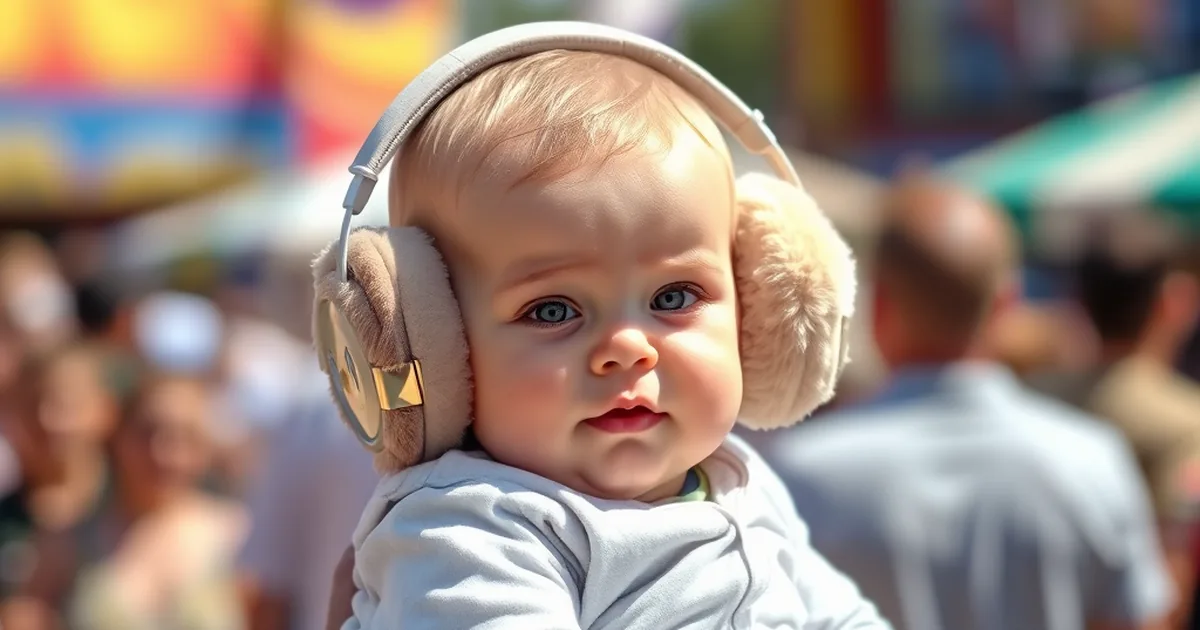
Baby ear muffs have gone from a niche product to a best seller as more parents take infants to fireworks, concerts, sporting events, and on planes. The top-selling pair on Amazon has more than 35,000 ratings. The four below are the best sellers in Amazon's Hearing Protection category for babies and toddlers. All reduce noise by roughly 25 to 30 decibels; they differ in fit, weight, and age range. Here are the best baby ear protection earmuffs of 2026.
Alpine Muffy Baby Ear Muffs
The Alpine Muffy Baby is the best-selling baby ear protection on Amazon, with more than 35,000 ratings. Alpine is a Dutch hearing protection company, and the Muffy Baby is designed specifically for infants rather than scaled down from a child's model.
The key design choice is the headband. Instead of a hard plastic band pressing on a soft skull, the Muffy Baby uses an adjustable fabric headband that holds the cups gently in place and spreads the pressure. There are no hard parts that can hurt, and the band adjusts to fit from newborn to about 4 years, so it grows with the child.
The fabric band can slip on a very active toddler, and the muffs cost more than most. For newborns and young babies, the soft band is the most comfortable option and the reason it leads the category.
Best for: Newborns and infants, thanks to the soft fabric headband.
Age: Birth to about 4 years
Standout feature: Adjustable fabric headband, no hard parts
Price: About $27
BANZ Baby Ear Muffs
BANZ is the brand most often seen on babies at outdoor events, and its infant earmuffs have more than 21,000 ratings and a 4.7-star average. They are rated NRR 26 dB, with plush foam cups that sit around the ears without pressing on them.
At 135 grams, they are light enough for a small baby, and the headband adjusts from newborn to about 36 months. The cups fold inward for a compact shape that fits in a diaper bag, and the shell has a UV guard so the plastic does not degrade in the sun. They come in a wide range of colors.
BANZ uses a conventional padded hard headband, which some newborns tolerate less well than the Alpine's fabric band, and the fit is snug on children at the top of the age range. For the price, it is the best all-round infant earmuff.
Best for: A lightweight, foldable earmuff for babies up to 3 years at a fair price.
Age: Newborn to 36 months
Noise reduction: NRR 26 dB
Price: About $18
BBTKCARE Baby Ear Protection Headphones
BBTKCARE is the budget best seller, with more than 17,000 ratings and a 4.6-star average. These earmuffs are designed for babies from 3 months to 3 years and use soft padded cups that cover the ears fully, in what the brand describes as a zero-pressure fit.
They are light, adjustable, and fold for storage, and they are commonly bought for fireworks, sporting events, and flights. Many parents also use them for naps in noisy places, since the muffs dampen the general din enough for a baby to sleep in a stroller at a loud event.
The materials and finish are simpler than Alpine or BANZ, and the lowest age is 3 months rather than birth. As a first pair for a few events a year, they do the job at the lowest cost.
Best for: Occasional use at the lowest price.
Age: 3 months to 3 years
Standout feature: Soft padded cups, folds flat
Price: About $11
Mumba Baby Ear Protection Earmuffs
Mumba earmuffs are the highest-rated for noise reduction on this list, at NRR 31 dB, and have more than 7,000 ratings. They are built with a thicker noise-dampening foam and padded leather-feel cups, and are sized for babies and toddlers from about 3 to 24 months and beyond.
The higher rating makes them the pick for the loudest environments, such as motorsports, air shows, and front-row fireworks. The headband adjusts and the cups are soft enough for extended wear.
They are a little heavier than the BANZ because of the thicker padding, and the leather-feel material can get warm on a hot day. For parents who want the most noise reduction available for a baby, this is it.
Best for: The loudest events, where maximum noise reduction matters most.
Age: 3 to 24 months and up
Noise reduction: NRR 31 dB
Price: About $25
How to Choose Baby Ear Protection
Understand the noise rating
NRR, the Noise Reduction Rating, is the US measure of how many decibels a muff blocks under lab conditions. Anything from 22 to 31 dB is effective for babies; real-world reduction is lower because of fit, so a good seal around the ear matters more than a few extra decibels.
Fit for the age
Newborns do best with a soft fabric headband. Older babies and toddlers can wear a padded hard band. Check that the cups fully surround the ear and the band is not tight enough to leave marks.
Know when they are needed
Sustained noise above about 85 decibels can damage hearing, and a baby's ear canal amplifies sound more than an adult's. Fireworks, concerts, sporting events, parades, and loud restaurants are all situations where ear muffs make sense.
Frequently Asked Questions
Do babies need ear protection on airplanes?
Cabin noise is around 80 to 85 decibels, borderline for extended exposure. Ear muffs are not essential but help many babies sleep on a flight, and they take the edge off engine noise during takeoff.
Can newborns wear ear muffs?
Yes, with a model designed for infants, such as the Alpine Muffy Baby or BANZ, which adjust small enough and have soft padding. Avoid muffs sized for older children, which press too hard or slip off.
How long can a baby wear ear muffs?
For the duration of the loud event. Check the skin around the ears every hour or so for redness or sweat, and take the muffs off during quiet periods so the ears can breathe.