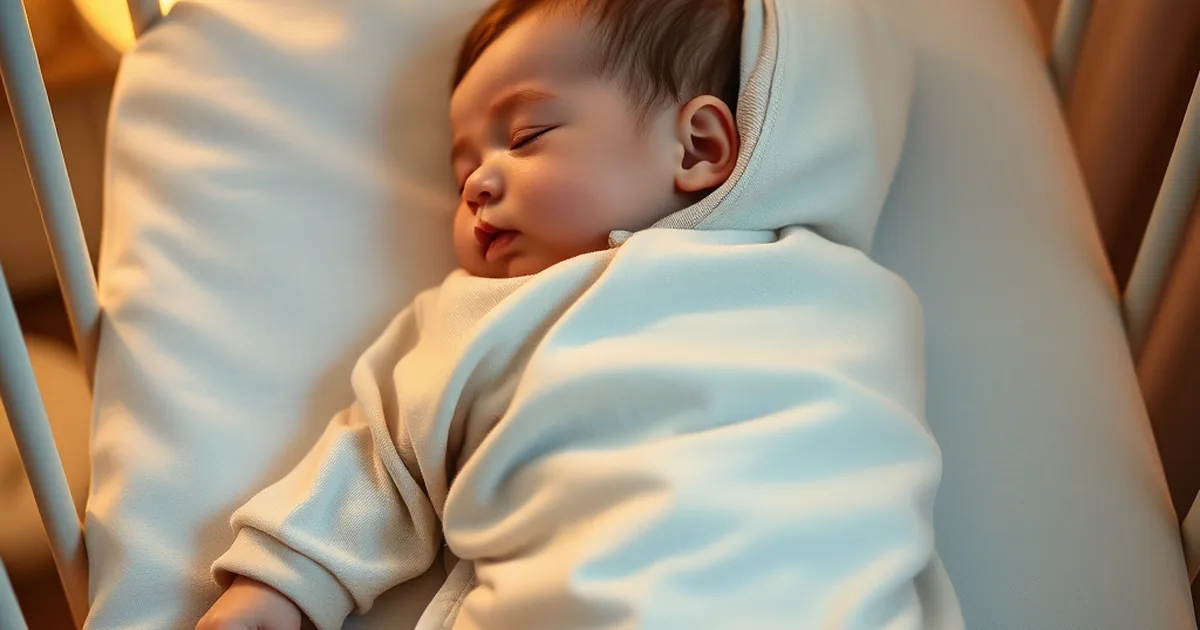
A sleep sack is a wearable blanket that keeps a baby warm without loose bedding in the crib, which is why the American Academy of Pediatrics recommends them over blankets. They are also a repeat purchase as babies grow through sizes and seasons, so they sell in huge volume. The four below are top sellers in Amazon's Baby Bedding category, including a transition piece for babies coming out of a swaddle. Here are the best baby sleep sacks of 2026.
HALO SleepSack Wearable Blanket
The HALO SleepSack is the best-selling wearable blanket on Amazon, with more than 23,000 ratings and a 4.8-star average, and the one many hospitals use in their nurseries. It is a sleeveless cotton sack that zips over regular sleepwear, with a bottom-opening zipper for diaper changes without unzipping the whole thing.
The 100 percent cotton version is rated 0.5 TOG, a light weight suited to rooms in the 69 to 74 degree range. A zipper cover at the neck prevents scratches, and the roomy sack is approved as hip healthy by the International Hip Dysplasia Institute. It comes in five sizes from newborn to 24 months.
HALO's sizing runs generous, and the 0.5 TOG is too light for a cool room in winter, where the brand's fleece or 1.5 TOG versions fit better. As the default sleep sack, it has earned its place.
Best for: The standard, safe-sleep sack for most nurseries.
Material and warmth: 100% cotton, 0.5 TOG
Sizes: Newborn to 24 months
Price: About $30
Burt's Bees Baby Beekeeper Wearable Blanket
The Burt's Bees Baby Beekeeper is the best-selling organic sleep sack, with more than 31,000 ratings. It is made from 100 percent organic cotton that is noticeably soft, and it comes in two weights: a lightweight 0.5 TOG and a medium 1.5 TOG for cooler rooms.
The zipper runs from the bottom for diaper changes, with an interior zipper guard and a cover over the pull to protect the chin. Sizes run from 0-6 months up to 18-24 months. The prints and solid colors are among the nicest in the category, which is part of why it is a common gift.
Organic cotton costs a little more than conventional, and the Beekeeper is cut slimmer than the HALO, so babies at the top of a size range may need to size up sooner. For families who prioritize organic fabrics, it is the clear choice.
Best for: Organic cotton in a choice of two warmth levels.
Material and warmth: 100% organic cotton, 0.5 or 1.5 TOG
Sizes: 0-6 months to 18-24 months
Price: About $20
Yoofoss Organic Cotton Sleep Sack
Yoofoss has become a best seller by offering a GOTS-certified organic cotton sleep sack at a lower price than the big brands, and it is rated 4.8 stars by more than 9,000 parents. It is a 0.5 TOG sack for warmer rooms and summer.
Its best feature is a two-way zipper that opens from the top or the bottom, so a diaper change needs only the lower half unzipped. An interior zipper guard and a top zipper cover protect the skin. The arm and neck openings are sized to fit snugly so the sack cannot ride up over the face, while the lower section leaves plenty of leg room.
Yoofoss is a newer brand with a smaller size range than HALO. For a well-made organic sack at the lowest price here, it is the value pick, and many families buy two.
Best for: An organic cotton sack with a two-way zipper at a budget price.
Material and warmth: 100% GOTS organic cotton, 0.5 TOG
Sizes: 0-6 months and up
Price: About $20
SleepingBaby Zipadee-Zip Transition Swaddle
When a baby starts rolling, swaddling has to stop, and many babies who slept well swaddled suddenly do not. The Zipadee-Zip is the best-selling solution to that specific problem, with more than 8,500 ratings. It is a wearable blanket shaped like a starfish: the baby's arms are enclosed in wide, loose wings, so they can move freely and bring their hands to their mouth to self-soothe, but the fabric dampens the startle reflex that wakes them.
It is designed around AAP safe sleep guidance for rolling babies, has a roomy lower section for healthy hip movement, and zips open for diaper changes. Many families use it from the end of swaddling until the toddler years.
It is more expensive than a standard sleep sack and its rating, 4.3 stars, reflects that it does not work for every baby. For a swaddle-dependent baby who has started to roll, it is the product parents talk about.
Best for: Babies transitioning out of a swaddle who still startle awake.
Material and warmth: Cotton blend, light to medium
Sizes: Small (3-6 months) to toddler
Price: About $40
How to Choose a Baby Sleep Sack
Understand TOG
TOG measures warmth. 0.5 TOG suits rooms around 69 to 74 degrees Fahrenheit with light sleepwear underneath; 1.0 TOG suits 65 to 70 degrees; 1.5 to 2.5 TOG suits cooler rooms. Adjust what the baby wears underneath rather than overheating with the sack.
Fit at the neck and arms
A sleep sack should be snug enough at the neck and armholes that it cannot slide up over the baby's face, with a loose, roomy bottom for hips and legs. Size by weight, not age.
Swaddle, transition, or sack?
Swaddles with the arms in are for newborns who cannot roll. Once a baby shows signs of rolling, usually by 2 to 4 months, switch to an arms-free sleep sack or a transition product like the Zipadee-Zip.
Frequently Asked Questions
Are sleep sacks safe for newborns?
Yes. The AAP recommends wearable blankets instead of loose blankets for babies under 12 months. Choose the right size so the neck opening is snug, and never add a blanket on top.
How many sleep sacks does a baby need?
Two or three in the current size is enough: one in use, one in the wash, and one spare for a blowout at 3 a.m. Buy the next size as the baby approaches the top of the weight range.
What should a baby wear under a sleep sack?
In a 0.5 TOG sack at normal room temperature, a short-sleeve bodysuit or light pajamas. In a 1.5 TOG sack or a cooler room, long-sleeve pajamas. Check the back of the neck: it should feel warm, not sweaty.