Owlet Dream Sock vs Dream Duo is a simple question with a $100 answer: do you want the camera? The Dream Sock is the FDA-cleared sock that tracks pulse rate and oxygen. The Dream Duo is the same sock bundled with Owlet's HD camera. Here is what the camera adds, what it does not, and whether the bundle is worth it over buying the sock and a separate monitor.
Quick Verdict
Buy the Dream Duo if you want vitals and video in one app and one base station, and you do not already own a camera monitor. The bundle costs less than buying the sock and the Owlet Cam separately. Buy the Dream Sock alone if you already have a camera you like, or if what you want is the vital sign monitoring and nothing else. Nanit owners, for example, usually add just the sock.
Dream Sock vs Dream Duo at a Glance
| Owlet Dream Sock | Owlet Dream Duo 2 | |
|---|---|---|
| Price | About $300 | About $400 |
| Includes | Dream Sock, base station, 3 sock sizes | Dream Sock, base station, sock sizes, plus Owlet Cam 2 |
| Monitors | Pulse rate, oxygen, wakings, sleep trends | All of the above plus 1080p video, audio, room temperature and humidity |
| FDA cleared | Yes, pulse rate and oxygen | Yes, same sock |
| Age range | 1 to 18 months, 6 to 30 lb | Sock 1 to 18 months; camera any age |
| Camera | None | 1080p HD, 130-degree view, night vision, two-way audio |
| App | Owlet Dream app | Same app, video and vitals on one screen |
| Amazon rating | 4.0 stars, 5,300+ ratings | 4.0 stars, 1,300+ ratings |
What the Sock Does
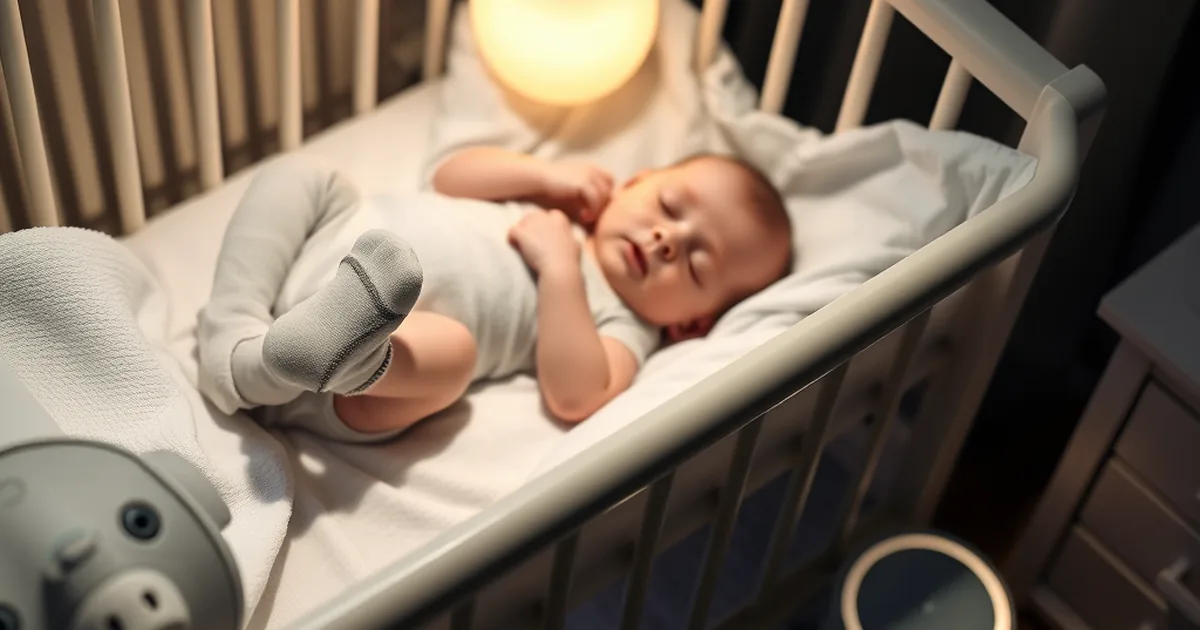
The Dream Sock wraps around the baby's foot and uses pulse oximetry to read pulse rate and oxygen saturation while the baby sleeps. The base station glows green when readings are in range and alerts with light and sound if they fall outside preset limits. The app shows live readings, sleep state, and trends. In 2023 it became the first consumer baby monitor cleared by the FDA for this purpose, which is the main reason parents choose Owlet over other monitors. The sock fits babies from about 1 to 18 months.
What the Camera Adds
The Owlet Cam 2 in the Dream Duo is a wall-mounted 1080p camera with a wide 130-degree lens, night vision, two-way audio, and sensors for room temperature and humidity. Its real advantage is integration: in the Owlet app, video and vitals appear together, and the base station alerts cover both. It also keeps working after the sock is outgrown, as an ordinary video monitor into the toddler years.
The camera is good but not exceptional. It mounts at an angle like a conventional monitor rather than overhead, and it has none of the sleep analytics of a Nanit. Parents who care most about video quality sometimes pair the Dream Sock with a Nanit instead.
Price
The Dream Duo costs about $100 more than the Dream Sock, and the Owlet Cam 2 bought separately costs more than that. If you want Owlet's camera, the bundle is the cheaper way to get it. If you already own a camera, the sock alone saves the money.
Lifespan
The sock is used for the first year to 18 months. The camera in the Dream Duo lasts as long as a child sleeps in a crib or bed, so the Duo's extra cost is spread over several years rather than one.
Who Should Buy the Dream Sock
Parents who already have a camera monitor, parents who only want vital sign monitoring, and anyone pairing Owlet with a Nanit.
Check Owlet Dream Sock Price on Amazon
Who Should Buy the Dream Duo
Parents starting from scratch who want vitals and video in one system, and anyone who wants a monitor that stays useful after the sock is outgrown.
Check Owlet Dream Duo Price on Amazon
Frequently Asked Questions
Can the Owlet Cam be added to a Dream Sock later?
Yes. The Owlet Cam 2 is sold separately and pairs with the same app and account. Buying them separately costs more than the Dream Duo bundle.
Does the Dream Sock need Wi-Fi?
The base station alerts work without Wi-Fi, but live readings, history, and phone notifications require the base station to be connected to home Wi-Fi.
Does Owlet prevent SIDS?
No, and Owlet says so. It monitors readings and alerts when they fall outside limits. Safe sleep practices remain the primary protection; the monitor is a supplement.