Walk into any baby store or scroll Amazon for ten minutes and you will hit decision fatigue fast. There are over 10,000 baby products sold in the US, and most of the "best of" lists you find are written by people earning commission, not by parents weighing real trade-offs. This guide gives you a framework instead of a wish list.
The good news: only about 25 product categories actually matter in the first year. The other 9,975 are nice-to-have, gimmicks, or duplicates. We will walk through how to evaluate any baby product across five rules - safety, ingredient quality, age fit, true necessity, and value-for-life-span - then look at the categories that earn the most parent regret if you get them wrong.
The 5-rule framework for choosing any baby product
1. Safety: check the certifications, not the marketing
"Safe", "non-toxic", and "hypoallergenic" are unregulated marketing words in the United States. Any brand can use them without proof. The certifications that actually mean something are:
- JPMA Certified - the Juvenile Products Manufacturers Association independently tests cribs, car seats, strollers, and high chairs to ASTM standards.
- GREENGUARD Gold - verifies low VOC emissions on mattresses, furniture, and changing pads. Critical for sleep and play spaces.
- EWG Verified - every ingredient scores 1-2 in EWG's database, and disclosure is third-party audited.
- National Eczema Association Seal of Acceptance - for skincare, this is the gold standard.
- USDA Organic and GOTS - for food and textiles respectively.
If a baby product makes safety claims without one of these marks, treat the claim as marketing.
2. Ingredients: read the label, not the front of the package
Ingredients on personal care products are listed in descending order by weight. The first 5-7 ingredients make up the bulk of the formula. For baby skincare, look for water/aqua, glycerin or shea butter, ceramides, and gentle preservatives like phenoxyethanol or sodium benzoate at the top of the list. Avoid products where fragrance (parfum), sulfates (SLS, SLES), parabens, formaldehyde-releasers (DMDM hydantoin, quaternium-15), or chemical sunscreen actives (oxybenzone, octinoxate) appear in the top 7.
For toys and feeding gear, prioritize medical-grade silicone, glass, stainless steel, and solid hardwoods. Avoid PVC, vinyl, and unlabeled plastics. BPA-free is the bare minimum; many BPA-free plastics replace BPA with BPS or BPF, which show similar hormone-disrupting effects in 2019 Endocrinology research.
3. Age fit: match the product to the developmental stage
Most baby gear has narrow usable windows. A bassinet works for 4-6 months, an infant car seat for 6-12 months, a swing or bouncer for 4-8 months. Always check the manufacturer's weight and developmental limits - "outgrown" usually happens long before the weight cap because rolling or sitting milestones come first.
For products you buy in advance, plan around real stages: newborn (0-3 months), sit-up (4-6 months), crawler (7-12 months), early toddler (12-24 months). Buy the next stage about 4 weeks before you expect to need it, not earlier.
4. True necessity: separate need from nice-to-have
The AAP's first-year essential list is shorter than most retailer "must-have" registries. Genuine needs in month one: a car seat, a safe sleep surface, 8-12 onesies, 4-6 swaddles or sleep sacks, 200+ diapers, wipes, fragrance-free baby wash, a moisturizing cream, a thermometer, a nasal aspirator, and a feeding setup (breast pump if pumping or bottles and formula if not). Everything else - bouncer, swing, playmat, white noise machine, baby monitor - can wait until you see what your baby responds to.
5. Value-for-lifespan: cost per month of actual use
A $400 stroller used daily for 3 years costs about $11 per month. A $30 bouncer used for 4 months costs $7.50 per month. The bouncer is "cheaper" but the per-month math flips for high-use gear. Calculate monthly cost on big-ticket items before committing - it stops registry sticker shock and rewards investing in the items you will use every day for years.
The categories that matter most (and what we recommend in each)
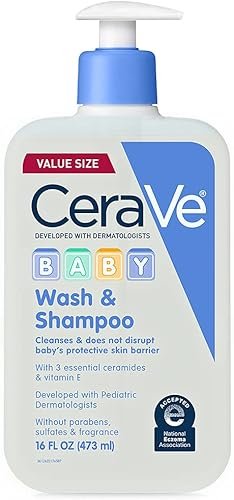
CeraVe Baby Wash and Shampoo
Fragrance-free 2-in-1 wash and shampoo with ceramides and hyaluronic acid. NEA Seal of Acceptance and EWG 1 rated. Tear-free formula safe from birth. Our default daily wash recommendation across all baby skin types.
- EWG 1-rated
- NEA Seal of Acceptance
- Tear-free
- Affordable
- Larger bottle would be nice
- Mild lather can feel sparse
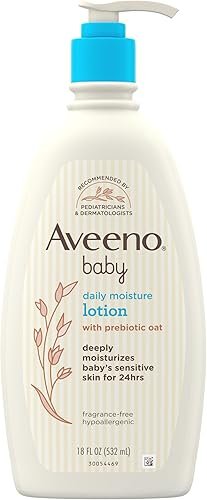
Aveeno Baby Daily Moisture Lotion Fragrance Free
Fragrance-free oat-based daily moisturizer. Clinically proven to moisturize for 24 hours. NEA-accepted and rated EWG 1-2. Top dermatologist pick for newborns and sensitive-skin babies in the first year.
- Fragrance-free
- 24-hour moisture
- Pediatrician-recommended
- Pump can clog after a few months
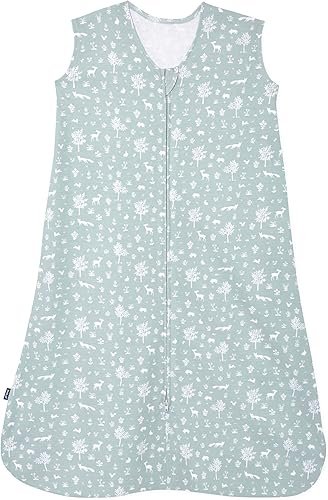
Halo SleepSack Wearable Blanket Cotton
AAP-recommended sleep sack replacing loose blankets in the crib. 100% cotton at 0.5 TOG for warmer rooms. Inverted zipper for diaper changes without unzipping all the way. Sizes from newborn through 24 months.
- AAP-recommended
- Hip-healthy design
- Inverted zipper
- Tag location can rub on sensitive skin
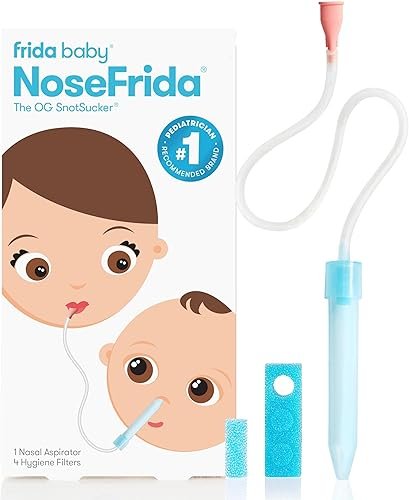
Frida Baby NoseFrida Snotsucker
Pediatrician-recommended nasal aspirator that uses parent suction with a one-way filter (no backflow). More effective than bulb syringes. Stays cleaner because every part disassembles for washing. The #1 newborn-essentials pick across 2024-2026 parent surveys.
- Doctor-recommended
- Filter prevents backflow
- Easy to clean
- Visual is unusual at first
- Spare filters cost extra
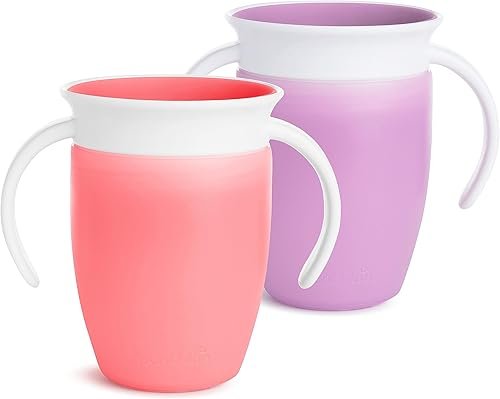
Munchkin Miracle 360 Trainer Cup
Spoutless 360-degree trainer cup recommended by the American Academy of Pediatric Dentistry. No spout to encourage tongue thrust, no straw to mold. Drinks like a regular glass once your baby learns the lip-press technique. Best starter cup at 6-9 months.
- AAPD-recommended
- Dishwasher safe
- No spout/straw issues
- Slight initial learning curve
- Can drip if shaken
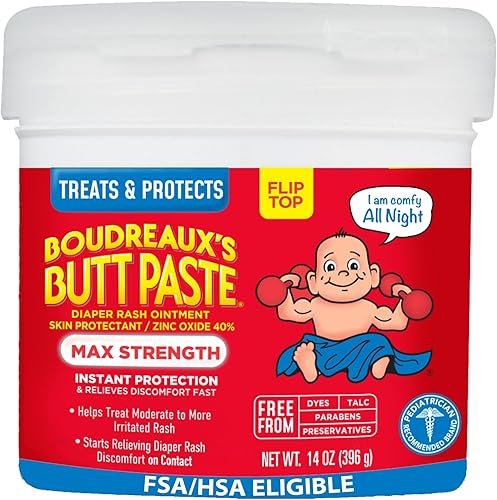
Boudreaux's Butt Paste Maximum Strength
40% zinc oxide diaper rash cream, the highest concentration available over-the-counter. Pediatrician-trusted for moderate rashes that don't respond to gentler creams. Apply liberally at every change until rash clears (usually 24-48 hours).
- 40% zinc oxide
- Pediatrician-trusted
- Effective on tough rashes
- Thick consistency takes practice
- Smell is distinctive
The 8 most-regretted baby purchases (skip these)
Based on 2024-2026 parent surveys across Babylist, Babycenter, and Reddit r/BabyBumps, the products parents most often say they wasted money on are:
- Wipe warmer (cold wipes don't bother most babies)
- Bottle warmer (a mug of hot water heats faster)
- Baby food maker (any blender or food processor works)
- Diaper Genie alternatives in metro apartments (a small trash can with a lid plus a daily walk to the dumpster works)
- Newborn shoes (cute but useless before walking)
- Crib bumpers (banned by AAP in 2022 for safety)
- Bath thermometer toys (your wrist is the same accuracy)
- Specialty newborn outfits that snap behind the neck (impossible during nighttime diaper changes)
Where to research before you buy
The four most-trusted independent sources for baby product research in 2026 are Consumer Reports, Babylist Editors' Picks, the AAP's HealthyChildren.org, and The Strategist by New York Magazine. Avoid sponsored "best of" blog roundups unless they disclose their affiliate relationships transparently and explain how products were tested. The AAP also maintains a current safety bulletin list for any active baby product recalls.
Frequently asked questions
Related reading from Your Happy Baby
- Must-Have Baby Products: The 2026 Registry Checklist
- Newborn Essentials Checklist: What You Actually Need in the First 12 Weeks
- Baby Care Products Explained: A Complete Guide for New Parents
- Best Baby Feeding Products of 2026: Bottles, Pumps & More