Affiliate Disclosure: As an Amazon Associate, we earn from qualifying purchases. This comes at no extra cost to you.
Last updated: May 2026 | Reviewed by Sarah Mitchell, former CPSC researcher
If you have a Flexible Spending Account or Health Savings Account and a baby on the way, you are sitting on money that was literally designed to cover a significant portion of your first-year baby supply list. The IRS qualifies hundreds of over-the-counter health products for FSA and HSA spending, and many of the most practical baby products fall squarely in that category.
The challenge is that most FSA eligible product lists are written for adults. They mention cold medicine and contact solution, not nasal aspirators and lanolin cream. This guide is written specifically for parents: here are the ten best FSA eligible baby products available on Amazon right now, organized by category, with a clear explanation of why each one qualifies.
Quick Comparison: Best FSA Eligible Baby Products
| Product | Category | FSA/HSA Eligible | Price Range |
|---|---|---|---|
| Braun ThermoScan 7 | Thermometer | Yes | $$$$ |
| NoseFrida Nasal Aspirator | Nasal care | Yes | $ |
| NailFrida SnipperClipper Set | Nail care | Yes | $ |
| Lansinoh HPA Lanolin Cream | Nipple care | Yes | $ |
| Lansinoh Nursing Pads | Breastfeeding | Yes | $ |
| Medela Breast Milk Storage Bags | Breastfeeding | Yes | $ |
| Desitin Maximum Strength | Diaper rash | Yes | $ |
| Little Remedies Gas Drops | Digestive relief | Yes | $ |
| Aquaphor Baby Healing Ointment | Skin care | Yes | $ |
| Neutrogena Baby Sunscreen SPF 50 | Sun protection | Yes | $ |
What Baby Products Are FSA and HSA Eligible?
The IRS defines FSA and HSA eligible expenses as products and services used for the diagnosis, cure, mitigation, treatment, or prevention of disease. For babies, this covers a wider range of products than most parents realize. The CARES Act of 2020 permanently expanded OTC eligibility, removing the requirement to get a doctor's prescription for hundreds of over-the-counter health items.
Eligible categories for babies include:
- Thermometers - ear, rectal, forehead, and temporal thermometers all qualify
- Nasal aspirators - manual bulb aspirators and powered devices like NoseFrida
- Baby nail care - nail clippers and scissors designed for infant safety
- Breastfeeding supplies - nipple cream, nursing pads, breast milk storage bags, and breast pumps
- Diaper rash treatments - zinc oxide creams and ointments are medicated OTC products
- Gas and colic relief - simethicone drops (like Mylicon and Little Remedies) qualify as OTC medicine
- Healing ointments - products like Aquaphor used for wound care and skin protection
- Baby sunscreen - any sunscreen with SPF 15 or higher is FSA eligible
- Saline nasal drops - qualify as a medical supply
- Baby pain relievers - infant acetaminophen (Tylenol) and ibuprofen (Motrin) for babies 6 months+
What Is NOT FSA Eligible for Babies
Knowing what does not qualify is just as important, because these are the products parents most commonly try to use FSA funds for and get denied:
- Diapers - regular diapers are not FSA eligible (incontinence products for older children with a medical condition may qualify with a letter of medical necessity)
- Baby wipes - general hygiene products do not qualify
- Baby bottles and nipples - not classified as medical devices
- Baby formula - does not qualify unless prescribed by a physician for a diagnosed medical condition (severe reflux, allergies, failure to thrive)
- Baby swings, bouncers, and rockers - comfort items, not medical equipment
- Car seats - safety equipment, but not classified as medical
- Baby monitors - standard audio/video monitors do not qualify (medical-grade pulse oximetry monitors like the Owlet may qualify with a letter of medical necessity)
- Baby clothes and shoes - not eligible
- Baby food and purees - food items do not qualify
The rule of thumb: if the product treats, prevents, or monitors a health condition, it likely qualifies. If it is primarily for comfort, convenience, or general use, it probably does not.
The 10 Best FSA Eligible Baby Products
1. Best Thermometer: Braun ThermoScan 7 Ear Thermometer
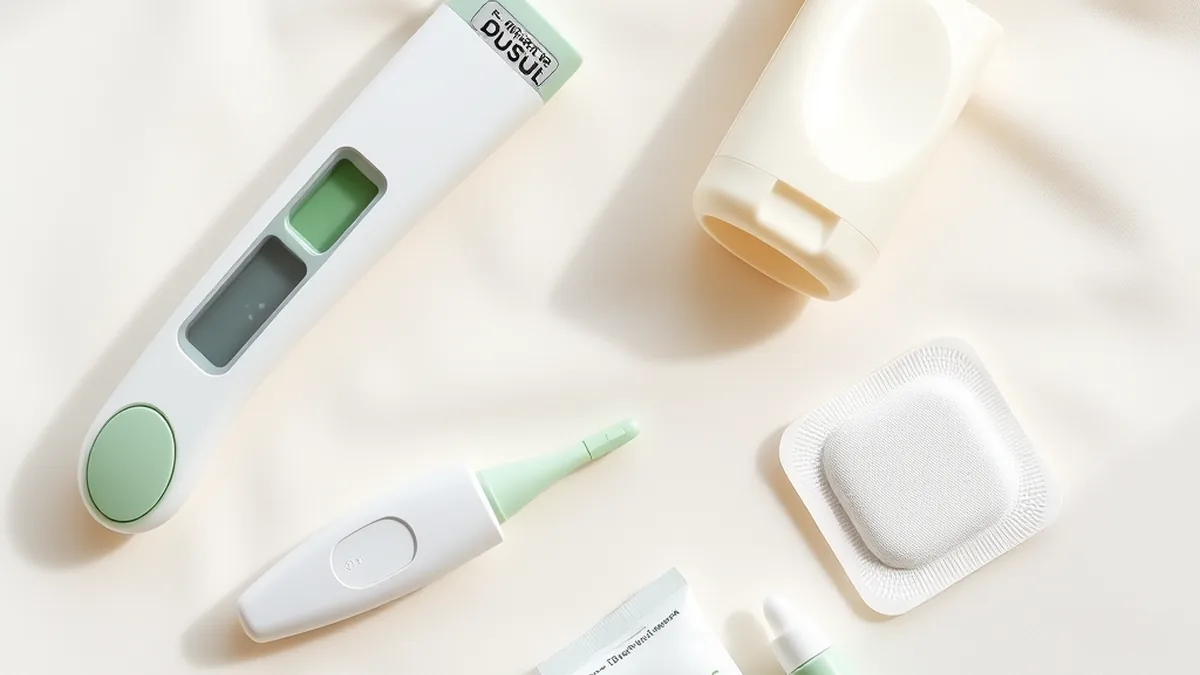
The ThermoScan 7 is the thermometer recommended by more pediatricians than any other. It reads temperature from the ear canal in about two seconds, uses Age Precision technology to interpret the reading against normal ranges for infants vs. toddlers vs. adults, and stores the last nine readings for trend tracking. For parents who take temperature frequently in the first year, accuracy at 3 AM matters more than anything else, and the ThermoScan 7 consistently outperforms forehead strips and infrared temporal scanners in clinical accuracy.

Braun ThermoScan 7 Ear Thermometer with Age Precision
The ThermoScan 7 measures temperature from the ear canal in under two seconds using ExacTemp technology that confirms correct ear canal positioning before the measurement is taken. Age Precision lets you set the device to infant, child, or adult mode, and the LED display color-codes the result: green for normal, yellow for elevated, red for fever. Nine-reading memory lets you track trends over time without keeping a separate log. The pre-warmed tip reduces the temperature-lowering effect of a cold probe tip against warm ear skin, improving reading accuracy. The device ships with 21 disposable probe covers; replacement covers are available on Amazon. At $60, this is the most expensive item on this list, but it is the one medical device on this list that a pediatrician would choose for their own child.
- Age Precision interprets reading for infant vs. child vs. adult
- ExacTemp positioning confirmation before reading
- Color-coded LED display — green/yellow/red fever indication
- Pre-warmed tip for accurate readings
- Nine-reading memory for trend tracking
- 2-second measurement time
- More expensive than forehead thermometers
- Requires disposable probe covers (ongoing cost)
- Ear canal reading can be inaccurate if ear is blocked by wax or infection
- Not ideal for newborns under 3 months (rectal is more accurate for that age group)
2. Best Nasal Aspirator: Frida Baby NoseFrida The Snotsucker
Stuffy noses are the most common reason newborns struggle to feed, and the NoseFrida is the most effective tool for clearing them. The parent places the tube tip at the nostril opening (not inside), creates suction with their mouth, and the mucus travels into the collection chamber, stopped by a hygienic filter before it reaches the tube. Parents universally report it works far better than bulb aspirators, which are hard to clean and lose suction over time. The filter is dishwasher safe, the collection chamber is BPA-free, and replacement filters are sold in multipacks on Amazon. This is FSA eligible as a medical device for respiratory care.

Frida Baby NoseFrida The Snotsucker Nasal Aspirator
The NoseFrida uses oral suction to clear infant nasal passages more effectively than any bulb aspirator. The tip sits at the nostril entrance, not inside the nose, making it comfortable for newborns and infants who resist the internal pressure of traditional bulb aspirators. A hygienic foam filter sits inside the tube, preventing any mucus from reaching the parent's mouth regardless of how hard you suction. The collection chamber pops apart for easy cleaning under running water or in the dishwasher. Replacement filters (a three-pack) are available on Amazon. Pediatricians recommend this specifically for newborns who struggle to breathe through their nose during feeding.
- Oral suction is far more effective than bulb aspirators
- Tip sits outside the nostril — no internal pressure
- Hygienic foam filter keeps the tube clean
- Collection chamber is dishwasher safe
- FSA eligible as a respiratory care medical device
- Widely recommended by pediatricians
- Some parents find the oral suction method uncomfortable psychologically (though no cross-contamination occurs)
- Replacement filters are an ongoing cost
- Not as convenient for quick middle-of-the-night use as a powered aspirator
3. Best Nail Care: Frida Baby NailFrida SnipperClipper Set
Newborn nails are paper-thin and grow fast, and standard adult nail clippers are dangerous for infant fingertips. The NailFrida set includes a clipper with a spy hole so you can see exactly where you are cutting, a file for smoothing edges after clipping, and a case. The spy hole design is the key feature: it eliminates the guesswork that causes most nail-clipping injuries in infants. This qualifies as FSA eligible as a baby safety nail care device. A comparable option is the electric Baby Trend nail file, though parents of newborns generally prefer the visibility and control of the NailFrida.

Frida Baby NailFrida The SnipperClipper Set
The NailFrida clipper features a spy hole opening that lets you see the nail through the clipper before you cut, eliminating the biggest source of anxiety in newborn nail care: not knowing exactly how much you are cutting. The blades are micro-ground for precision on thin newborn nails that would split or tear with standard clipper pressure. The set includes a nail file for smoothing sharp edges after clipping, and a carrying case keeps both items together in the diaper bag. The handles are ergonomic for one-handed use while holding the baby's hand steady with the other. FSA eligible as a medical baby care device.
- Spy hole shows exactly where the blade is positioned before cutting
- Micro-ground blades for thin newborn nails
- Nail file included for smoothing
- Carrying case keeps set together
- One-handed ergonomic grip
- Some parents find the spy hole takes a few uses to get used to
- Does not include an electric filing option for parents who prefer that method
4. Best Nipple Cream: Lansinoh HPA Lanolin Nipple Cream
Breastfeeding products qualified for FSA reimbursement under the CARES Act, and nipple cream was specifically included. Lansinoh HPA Lanolin is the standard pediatrician and lactation consultant recommendation. It is 100% natural lanolin, ultra-purified to remove pesticide residues and allergens, safe for babies without wiping off before feeding, and effective within 24 hours of regular application. At $14 for a 1.41 oz tube, it is one of the best-value FSA purchases on this list.

Lansinoh HPA Lanolin Nipple Cream for Breastfeeding
Lansinoh HPA Lanolin is the most recommended nipple cream by lactation consultants and OB-GYNs in the US. It is made from 100% natural wool-derived lanolin that has been hyper-purified (HPA) to remove pesticide residues, allergens, and irritants. The cream creates a moist wound-healing environment that significantly speeds recovery from sore, cracked nipples. Safe for baby during breastfeeding: no need to wipe off before feeding. The thick consistency means a very small amount goes a long way. FSA eligible as a breastfeeding medical supply. One tube typically lasts 4-6 weeks of regular use during the newborn period.
- 100% natural lanolin — no synthetic ingredients
- HPA ultra-purified — allergen and pesticide residues removed
- Safe for baby without wiping off before feeding
- Creates moist healing environment for cracks and soreness
- Lactation consultant standard recommendation
- FSA eligible under breastfeeding supplies
- Thick consistency can feel heavy for some users
- Wool-derived — not suitable for those with lanolin sensitivity
- Does not address underlying latch issues causing soreness
5. Best Nursing Pads: Lansinoh Stay Dry Disposable Nursing Pads
Nursing pads are FSA eligible as breastfeeding supplies. Lansinoh's Stay Dry pads are the bestselling disposable nursing pads in the US, using a three-layer design: a soft inner layer that pulls moisture away from skin, a super-absorbent core, and a waterproof outer layer. They contour to fit most nursing bras and have a two-adhesive-strip backing to prevent shifting. For mothers in the early weeks when leaking is frequent and unpredictable, the 100-count pack gives about two weeks of supply.
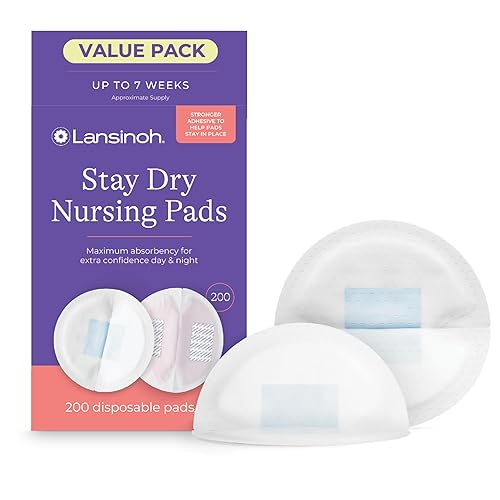
Lansinoh Stay Dry Disposable Nursing Pads, 100 Count
Lansinoh Stay Dry nursing pads feature a three-layer design: a soft non-woven inner layer that wicks milk away from the nipple immediately, a super-absorbent cellulose core that holds the moisture, and a waterproof outer shell that prevents bleed-through. The contoured shape fits naturally into nursing bras without visible bulge, and two adhesive strips on the back keep the pad from shifting during movement. Individually wrapped for diaper bag use. The 100-count pack provides roughly two weeks of pads at the standard recommended change schedule (with each feeding). FSA eligible as a breastfeeding supply.
- Three-layer stay-dry technology draws moisture away immediately
- Contoured shape fits nursing bra naturally
- Two adhesive strips prevent pad shifting
- Individually wrapped pads for portability
- 100-count pack lasts approximately two weeks
- FSA eligible under breastfeeding supplies
- Disposable — ongoing cost compared to reusable pads
- Adhesive strips can stick to nursing bra fabric if removed quickly
- Not the best choice for mothers with very heavy let-down
6. Best Milk Storage: Medela Breast Milk Storage Bags
Breast milk storage bags are FSA eligible as breastfeeding supplies. Medela's storage bags are pre-sterilized, BPA- and BPS-free, designed to connect directly to Medela pump flanges without a transfer step. The double-sealed zipper prevents leaks, and the bags lie flat for compact freezer storage and faster thawing. The self-standing base allows hands-free filling and measuring. At 100 bags per pack, this covers the full first month of pumping for most mothers.
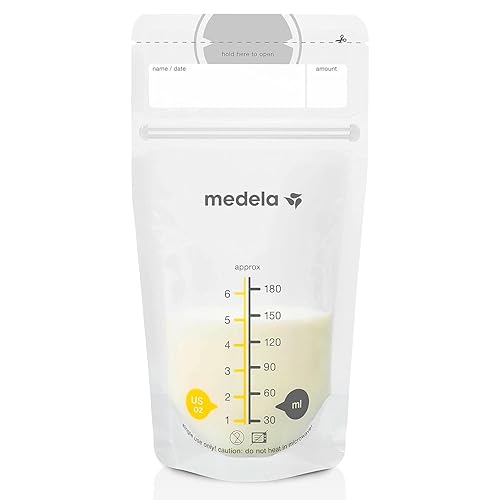
Medela Breast Milk Storage Bags, 100 Count, Ready to Use
Medela breast milk storage bags are pre-sterilized, eliminating the need to sterilize before first use. The BPA- and BPS-free construction is safe for contact with breast milk. The bags attach directly to Medela pump connectors, allowing pumping directly into the bag without transferring from a bottle, which reduces both handling time and the risk of contamination. Double-sealed closure prevents leaks during transport or freezer storage. The self-standing base enables hands-free filling. Bags lay completely flat when full for efficient freezer stacking — up to 30% more bags fit in the same freezer space compared to upright storage. FSA eligible as a breastfeeding supply.
- Pre-sterilized — ready to use immediately
- BPA- and BPS-free
- Connects directly to Medela pump flanges — no transfer step
- Double-sealed leak-proof closure
- Lay-flat design maximizes freezer space
- Self-standing base for hands-free filling
- Medela-specific connector design — not universal for all pump brands
- Single-use only
- Seams can occasionally fail under pressure if bags are overfilled past the fill line
7. Best Diaper Rash Treatment: Desitin Maximum Strength Original Paste
Diaper rash cream is FSA eligible as an OTC medicated product. Desitin Maximum Strength contains 40% zinc oxide, the highest concentration available OTC, which creates a thick physical barrier over inflamed skin and heals moderate to severe rash within 24 hours in most cases. It is the recommendation for established rash, while the Desitin Rapid Relief (13% zinc oxide) is better for prevention. The pediatrician standard protocol is Desitin Maximum Strength at every diaper change until the rash clears.
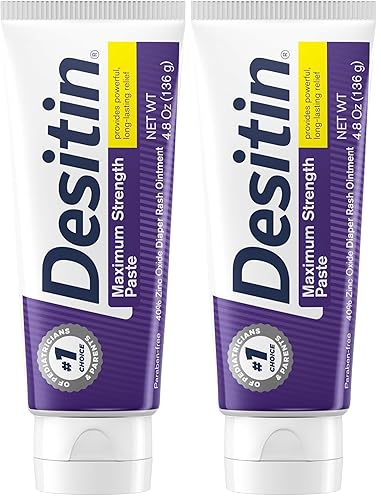
Desitin Maximum Strength Baby Diaper Rash Cream
Desitin Maximum Strength contains 40% zinc oxide — the maximum concentration available without a prescription — which provides an immediate physical barrier over irritated skin, blocks additional moisture and waste from contact with the rash, and supports skin recovery. The thick paste consistency stays in place through multiple wet diapers. It is fragrance-free and formulated to be gentle on the thin skin of the diaper area. Visible improvement in rash severity typically occurs within one to two diaper changes for mild to moderate rash. For severe rash with open skin, the thick paste provides additional comfort by preventing air from reaching the wound. FSA eligible as an OTC medicated product.
- 40% zinc oxide — maximum OTC concentration
- Creates immediate physical barrier over irritated skin
- Fragrance-free — safe for sensitive skin
- Thick paste stays in place through wet diapers
- Pediatrician-recommended for established rash
- FSA eligible as an OTC medicated treatment
- Very thick consistency is difficult to spread with fingers — use a spatula or gauze pad
- White paste is visible through thin diaper covers
- Not ideal for prevention use — Desitin Rapid Relief or Aquaphor is better for daily preventive application
8. Best Gas Relief: Little Remedies Gas Relief Drops
Simethicone gas drops are FSA eligible as OTC medicine. Little Remedies Gas Relief Drops contain simethicone, which works by breaking down gas bubbles in the digestive tract so they can pass more easily. Unlike gripe water (which contains various herbal ingredients with variable evidence), simethicone has a well-established safety profile for newborns from day one. The standard dose is 0.3 mL per feeding, with no flavor additives that could cause additional gas. These drops are gluten-free, dye-free, and alcohol-free.

Little Remedies Gas Relief Drops for Infants
Little Remedies Gas Relief Drops contain simethicone as the sole active ingredient, which acts physically to break down gas bubbles rather than being absorbed into the bloodstream — making it safe from day one without accumulation or systemic effects. The liquid is colorless and nearly tasteless, with no added dyes, artificial sweeteners, or alcohol that could cause additional digestive disturbance. The dropper measures in 0.3 mL increments matching the standard pediatric dose. Safe to use at every feeding during the gassy newborn period. FSA eligible as an OTC medicine.
- Simethicone only — no alcohol, dyes, or artificial sweeteners
- Safe from birth
- Tasteless — no flavor resistance from babies
- Works physically (not absorbed) — safe for all ages
- Standard 0.3 mL pediatric dosing dropper
- FSA eligible as OTC medicine
- Simethicone prevents passing of existing gas — it does not address overfeeding or latch issues causing excess swallowing
- Works best given during feeding, not after
- Results vary — some babies respond significantly, others minimally
9. Best Healing Ointment: Aquaphor Baby Healing Ointment
Aquaphor Baby is FSA eligible as a healing ointment and multi-purpose skin protectant. The active ingredient is 41% petrolatum, which creates an occlusive barrier that locks in moisture and protects broken skin. The formula also contains panthenol (pro-vitamin B5) and glycerin, which support skin repair. Aquaphor Baby is a four-in-one product for baby: it treats dry skin, protects against diaper rash (used preventively), soothes chapped lips, and helps heal minor cuts and scratches. The large tub lasts months of regular use.

Aquaphor Baby Healing Ointment for Diaper Rash and Dry Skin
Aquaphor Baby Healing Ointment creates a semi-occlusive barrier that locks in the skin's natural moisture while still allowing breathability. The 41% petrolatum base is the maximum concentration in OTC healing products and clinically proven to accelerate wound healing by maintaining a moist environment. Panthenol (pro-vitamin B5) supports cell regeneration, while glycerin draws additional moisture to the skin surface. Fragrance-free, preservative-free, and dermatologist-tested for sensitive baby skin. Use cases include: daily application to prevent diaper rash, dry patch treatment on cheeks and chin, lip balm for chapping, and wound covering for minor scratches. FSA eligible as a healing ointment.
- 41% petrolatum for maximum OTC wound-healing protection
- Semi-occlusive — breathable despite thick consistency
- Fragrance-free, preservative-free
- Multi-purpose: diaper rash prevention, dry skin, lips, minor cuts
- Dermatologist-tested for baby skin
- Long-lasting — tub lasts months of regular use
- FSA eligible as healing ointment
- Petroleum-based — some parents prefer non-petroleum alternatives
- Heavy consistency can transfer to clothing and bedding
- Less effective for established moderate-severe rash than medicated zinc oxide paste
10. Best Sunscreen: Neutrogena Baby Sunscreen SPF 50
Baby sunscreen with SPF 15 or higher is FSA eligible as a sun care health product. Neutrogena Baby Sunscreen SPF 50 uses 100% mineral protection with zinc oxide and titanium dioxide, leaving no chemical UV filters on baby's skin. It is hypoallergenic, fragrance-free, and pediatrician-recommended. The formula is water-resistant for 80 minutes. Note that sunscreen is not typically recommended for babies under 6 months, who should be kept out of direct sun; this is the right product from 6 months onward.

Neutrogena Baby Mineral Sunscreen with Broad Spectrum SPF 50
Neutrogena Baby Sunscreen uses 100% mineral UV protection through zinc oxide and titanium dioxide, providing both UVA and UVB coverage without chemical UV absorbers. The formula is hypoallergenic, fragrance-free, and free from parabens, PABA, and oxybenzone. Water-resistant for 80 minutes — practical for pool and beach use without constant reapplication. Dermatologist-tested and pediatrician-recommended for use from 6 months of age. The gentle lotion formula rubs in more completely than typical white-cast mineral formulas while still delivering full broad-spectrum SPF 50 coverage. FSA eligible as a sunscreen product with SPF 15 or higher.
- 100% mineral protection — no chemical UV absorbers
- Hypoallergenic and fragrance-free
- Free from parabens, PABA, and oxybenzone
- 80-minute water resistance
- Rubs in more completely than most mineral formulas
- Pediatrician-recommended
- FSA eligible under sun care
- Still leaves some white cast on darker skin tones
- Not recommended for babies under 6 months
- Requires thorough shake before use to distribute zinc oxide evenly
FSA vs HSA for Baby Products: Which Is Better?
Both FSA (Flexible Spending Account) and HSA (Health Savings Account) funds can be used for the same eligible baby products. The key differences are in how the accounts work:
FSA: Employer-sponsored. You elect an annual contribution amount, and the full amount is available on January 1 (before you have contributed it). FSA funds typically expire at the end of the plan year with limited rollover (usually $640). If you have a baby expected in the spring, load up your FSA with your maximum contribution in January and spend it immediately on eligible baby products.
HSA: Paired with a high-deductible health plan (HDHP). Funds roll over indefinitely, earn interest, and can be invested. HSA is the better long-term vehicle, but you must have an HDHP to contribute. The 2026 HSA contribution limits are $4,300 for individuals and $8,550 for families.
Strategy for new parents: If you have both FSA and HSA available through your employer, use your FSA for predictable first-year baby medical purchases (thermometer, breastfeeding supplies, sunscreen) before December 31 to avoid losing unused FSA funds. Let HSA funds accumulate for larger medical expenses.
How to Buy FSA Eligible Baby Products on Amazon
Amazon makes FSA and HSA purchases straightforward through two methods:
Amazon FSA Store: Amazon maintains a dedicated FSA/HSA eligible store (amazon.com/fsa) that shows only pre-verified eligible products. You can add a qualifying FSA/HSA card as a payment method, and eligible items are paid directly with your FSA card. This is the easiest method because Amazon pre-filters eligible products and handles the payment seamlessly.
Reimbursement method: If your FSA administrator does not have a direct-pay integration with Amazon, purchase the products normally and then submit your Amazon receipt for reimbursement through your FSA portal. Keep the order confirmation email, which lists the product name, price, and date.
For HSA accounts: the same methods apply. Most HSA providers also issue a debit card that works directly on Amazon like a standard card.
Frequently Asked Questions
[faq_item question="Are diapers FSA eligible?" answer="No. Standard diapers are not FSA eligible because they are general hygiene products, not medical treatments. The exception is if a child has a diagnosed incontinence condition and a physician writes a letter of medical necessity — in that case, diapers may qualify. Regular newborn and infant diapers do not qualify."]
[faq_item question="Is baby formula FSA eligible?" answer="Generally no. Baby formula is considered a food product, not a medical treatment, and does not qualify for FSA or HSA reimbursement under standard IRS rules. The exception is specialty medical formula prescribed by a physician for a specific medical condition such as severe reflux, food protein-induced enterocolitis syndrome (FPIES), or failure to thrive. If a doctor prescribes formula, save the prescription and the receipt for reimbursement."]
[faq_item question="Are breast pumps FSA eligible?" answer="Yes. Breast pumps are FSA and HSA eligible under the CARES Act and the Affordable Care Act. Additionally, the ACA requires most health insurance plans to cover breast pumps entirely, so check your health insurance first — you may be able to get a breast pump at no cost through your insurance before spending FSA funds on one. Breast pump accessories (flanges, tubing, membranes, storage bags) also qualify for FSA reimbursement."]
[faq_item question="Is baby sunscreen FSA eligible?" answer="Yes. Any sunscreen with SPF 15 or higher is FSA and HSA eligible as a preventive health care product. This has been the case since the IRS updated its guidance to include OTC sunscreen as a qualified medical expense. Baby-specific mineral sunscreens like Neutrogena Baby SPF 50 qualify. Note that self-tanner products and cosmetic products with incidental SPF do not qualify."]
[faq_item question="Can I use FSA funds for baby wipes?" answer="No. Baby wipes are a general hygiene product and are not FSA eligible. Medicated wipes that contain an active drug ingredient (such as medicated witch hazel pads) may qualify in some cases, but standard baby wipes do not."]
[faq_item question="Are baby nail clippers FSA eligible?" answer="Yes. Baby nail clippers are FSA eligible as a medical safety device for infant nail care. Products like the Frida Baby NailFrida SnipperClipper qualify. Standard adult nail clippers are also FSA eligible, but baby-specific clippers with safety features are more commonly purchased through FSA funds for newborns."]
[faq_item question="How do I submit FSA claims for Amazon purchases?" answer="If you used your FSA debit card directly on Amazon (through Amazon's FSA store or by adding the card as a payment method), no additional action is needed. If you paid with a regular credit card and need reimbursement, log into your FSA administrator's portal, submit a claim, and attach your Amazon order confirmation email as the receipt. Include the product name, amount, date of purchase, and your name. Most administrators accept email receipts."]
[faq_item question="Does FSA cover gas drops for babies?" answer="Yes. Gas drops containing simethicone (such as Little Remedies Gas Relief Drops, Mylicon, or Infants' Mylicon) are FSA eligible as OTC medicine under the CARES Act, which permanently removed the prescription requirement for OTC medications. Simethicone is the active ingredient that breaks down gas bubbles, and the IRS classifies OTC medicines as qualified medical expenses."]
Related Reading
- Frida Baby Products Review: NoseFrida, NailFrida, and More
- Best Baby Products for Newborns: The Complete First-Year List
- Best Non-Toxic Baby Products for Health-Conscious Parents
Final Thoughts
Your FSA or HSA is a tax-advantaged account that can meaningfully offset the cost of the first year of parenting. The ten products above represent the categories where parents spend real money and where FSA eligibility gives you a 20-40% effective discount (depending on your tax bracket).
The most strategic purchase on this list is the Braun ThermoScan 7, because it is the most expensive item, it is used hundreds of times in the first year, and pediatricians universally recommend it. The most overlooked FSA category is breastfeeding supplies: nipple cream, nursing pads, and storage bags are all eligible, and the total cost for a month's supply across all three is only about $45.
If you have FSA funds approaching expiration at year end, use the comparison table above to identify what you still need, and stock up before January 1.