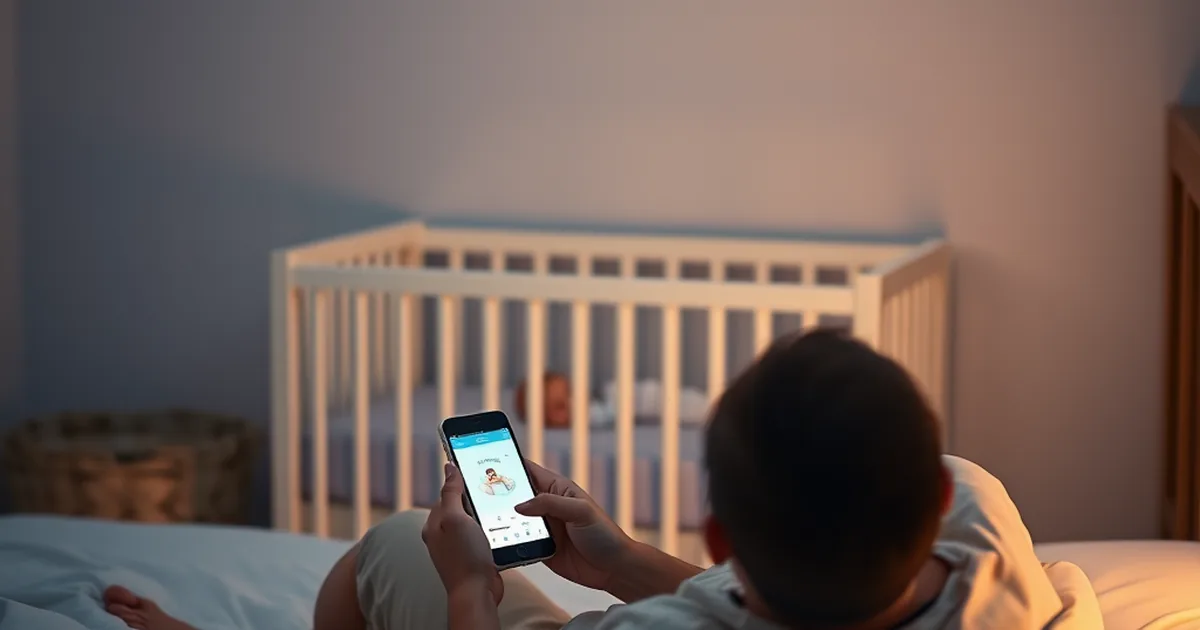
Nanit vs Owlet is the smart baby monitor question, and the two products answer different worries. Nanit is a camera that watches sleep from above and turns it into data. Owlet is a sock that measures the baby's pulse rate and oxygen level. Many families end up with both, which says a lot about how different they are. Here is how Nanit and Owlet compare and which one fits what keeps you up at night.
Quick Verdict
Buy Nanit if you want the best video and sleep tracking: a crisp overhead view, breathing motion monitoring without a wearable, and sleep analytics that help with schedules. Buy Owlet if what you want is reassurance about vital signs: the Dream Sock is the only consumer baby monitor cleared by the FDA to track pulse rate and oxygen. If you want both video and vitals, the Owlet Dream Duo bundles the sock with a camera.
Nanit vs Owlet at a Glance
| Nanit Pro | Owlet Dream Sock | |
|---|---|---|
| What it monitors | Video, sound, room climate, breathing motion with Breathing Wear, sleep patterns | Pulse rate, oxygen level, sleep state, wakings |
| Camera | 1080p overhead camera, night vision, two-way audio | None on the sock; Dream Duo adds a camera |
| Wearable | Optional breathing band or swaddle | Fabric sock with sensor, ages 1 to 18 months |
| FDA status | Not a medical device | FDA cleared for pulse rate and oxygen monitoring |
| Alerts | Sound, motion, breathing motion | Base station lights and sounds for readings outside range |
| Subscription | Insights plan after the included period | Optional; core monitoring is free |
| Price | About $300 for the camera | About $300 for the sock; about $400 for Dream Duo |
| Amazon rating | 4.4 stars | 4.0 stars |
What Each One Actually Monitors
Nanit's camera mounts on the wall or a floor stand above the crib and gives a bird's-eye view that no other monitor matches. With the Breathing Wear band or swaddle, which has a printed pattern the camera reads, Nanit tracks breathing motion and alerts if it stops detecting it. It also records sleep onset, wakings, and total sleep, and turns them into nightly summaries and trends.
Owlet's Dream Sock wraps around the baby's foot and uses pulse oximetry, the same technology as a hospital finger clip, to read pulse rate and oxygen saturation. A base station glows green when readings are in range and alerts with light and sound if they fall outside preset limits. The app shows live readings and sleep quality. Owlet received FDA clearance for the Dream Sock in 2023, which no other consumer baby monitor has.
Video Quality and Night Use
Nanit wins outright on video. The overhead angle shows the whole crib, the 1080p image is sharp in night vision, and the app streams reliably over Wi-Fi with background audio. The Owlet Cam included in the Dream Duo is a good 1080p camera, but it mounts on the wall at an angle like a conventional monitor and lacks Nanit's analytics.
Peace of Mind vs Data
Parents who worry about breathing and heart rate, including parents of preemies or babies with health concerns, usually find the Owlet more reassuring, because it measures vitals directly. Parents who want to understand and improve sleep usually prefer Nanit, because it shows what is happening and when. Neither device prevents SIDS, and both companies say so; safe sleep practices come first.
Ongoing Costs
Nanit includes a period of its Insights subscription with the camera, after which sleep analytics, history, and some features require a monthly or annual plan; basic video and audio keep working without it. Owlet's core monitoring and alerts are free, with an optional subscription for extended history and extras.
Who Should Buy Nanit
Parents who want the best camera view, sleep tracking, and breathing motion monitoring without a wearable, and families who plan to use the monitor through the toddler years.
Who Should Buy Owlet
Parents who want vital sign monitoring with FDA clearance, especially in the first year, and anyone who wants alerts based on measurements rather than video. Choose the Dream Duo to add a camera.
Check Owlet Dream Sock Price on Amazon
Frequently Asked Questions
Can you use Nanit and Owlet together?
Yes, and many families do: Nanit for video and sleep tracking, Owlet for vitals. They use separate apps and do not conflict.
Does Owlet give false alarms?
Occasionally, usually when the sock is loose or placed incorrectly. Correct fit and sizing cut false alerts dramatically. Owlet includes multiple sock sizes for growth.
How long does each one stay useful?
The Owlet Dream Sock fits babies from about 1 to 18 months. Nanit works as a camera and sound monitor for as long as a child sleeps in a crib or bed, and many families use it to age 3 or 4.