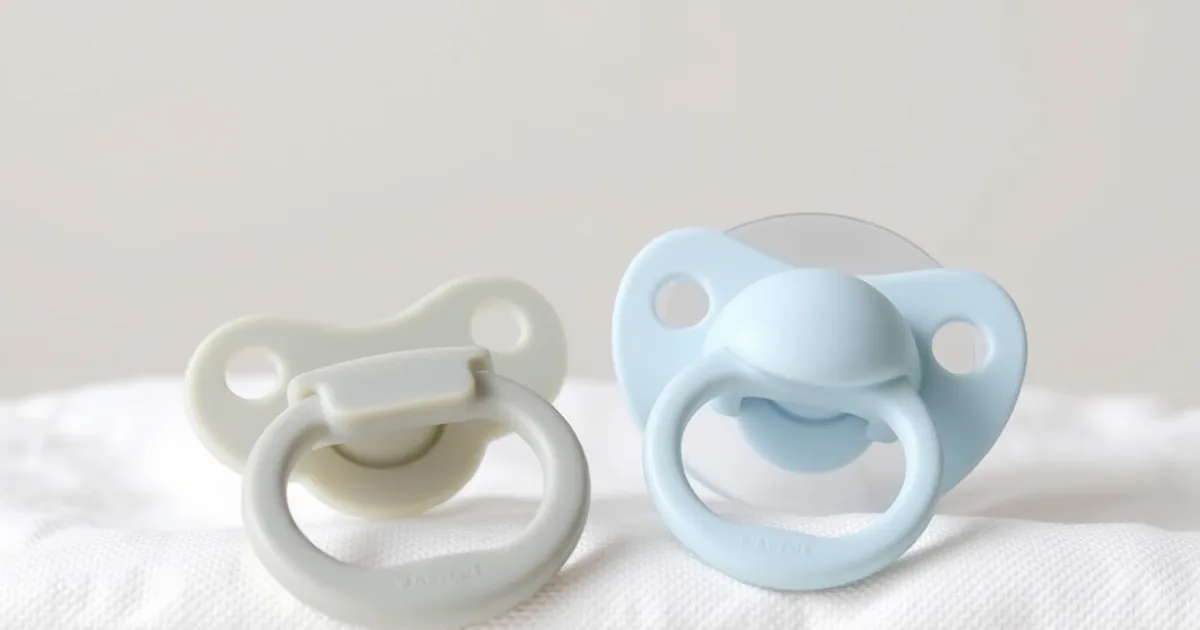
MAM vs Avent pacifier is the two-way race at the top of Amazon's pacifier list, and the two could not be more different. The Philips Avent Soothie is a one-piece lump of medical-grade silicone that hospitals hand out at birth. The MAM Original is a multi-piece pacifier with a thin, skin-soft nipple and a curved shield, designed with orthodontists. Babies usually have a strong opinion. Here is how they compare and how to guess which your baby will take.
Quick Verdict
Start with the Avent Soothie for a newborn, especially one who had it in the hospital: it is the simplest, most hygienic pacifier and the easiest to keep clean. Try the MAM Original if your baby spits the Soothie out, is breastfed and prefers a softer, thinner nipple, or if the Soothie's round shield leaves marks. MAM's acceptance rate is high for a reason, and the glow-in-the-dark version solves 3 a.m. searches.
MAM Original vs Avent Soothie at a Glance
| MAM Original | Philips Avent Soothie | |
|---|---|---|
| Construction | Multi-piece: silicone nipple, plastic shield | One-piece medical-grade silicone |
| Nipple | Symmetrical, thin SkinSoft textured silicone | Round, firm, symmetrical |
| Shield | Curved, large air holes, inner dimples | Flat round shield, close to face |
| Ages | 0-6 months, 6-16 months, 16+ months | 0-3 months, 3-18 months |
| Cleaning | Dishwasher safe; sterilizing case included | Boil, steam, dishwasher; nothing to trap water |
| Extras | Glow-in-the-dark version | Open back for a finger to help latch |
| Amazon rating | 4.8 stars, 22,000+ ratings | 4.8 stars, 21,500+ ratings |
| Price | About $16 for 4 | About $10 for 4 |
Nipple Shape and Acceptance
The Soothie's nipple is round and relatively firm, with a shape modeled on a bottle nipple. Newborns who started on it in the hospital take it readily. Some breastfed babies find it too firm and push it out. The MAM's nipple is thin and textured to feel closer to skin, and symmetrical so it works either way up; MAM reports that 94 percent of babies accept it, and parents of pacifier refusers often report success after trying it.
Shield and Comfort
The Soothie's shield is a flat disc that sits against the face, which some babies leave a red ring from after long use. The MAM's shield curves away from the face, has large holes for airflow, and has small dimples on the inside to reduce contact, so skin stays drier. For a baby who uses a pacifier for long stretches, the MAM is the more comfortable shield.
Cleaning and Hygiene
The Soothie wins. It is one piece with no seams, so there is nowhere for milk or moisture to hide, and it withstands boiling and hospital sterilizers. The MAM's nipple can draw water inside during washing; squeeze it out and let it dry. MAM includes a case that doubles as a microwave sterilizer, which offsets this.
Price
The Soothie costs less per pacifier. Given how many pacifiers get lost, that adds up, though both are inexpensive.
Who Should Buy the Avent Soothie
Newborns, especially hospital Soothie babies, and parents who prioritize the easiest cleaning.
Check Avent Soothie Price on Amazon
Who Should Buy the MAM Original
Babies who reject firmer pacifiers, breastfed babies, and parents who want a curved shield and a glow-in-the-dark option.
Check MAM Original Price on Amazon
Frequently Asked Questions
Which pacifier is better for breastfed babies?
Many lactation consultants suggest the Soothie because of its simple round shape, but in practice the MAM's soft thin nipple is accepted by more breastfed babies who refuse the Soothie. The American Academy of Pediatrics advises waiting until breastfeeding is established, around 3 to 4 weeks, before offering either.
Do pacifiers reduce the risk of SIDS?
The AAP recommends offering a pacifier at nap and bedtime because studies associate it with lower SIDS risk. It does not need to be replaced if it falls out during sleep.
When should pacifiers be replaced?
Every one to two months, or sooner if the nipple is torn, sticky, or discolored. Move up a size as the pack indicates so the shield stays wide enough for the baby's mouth.