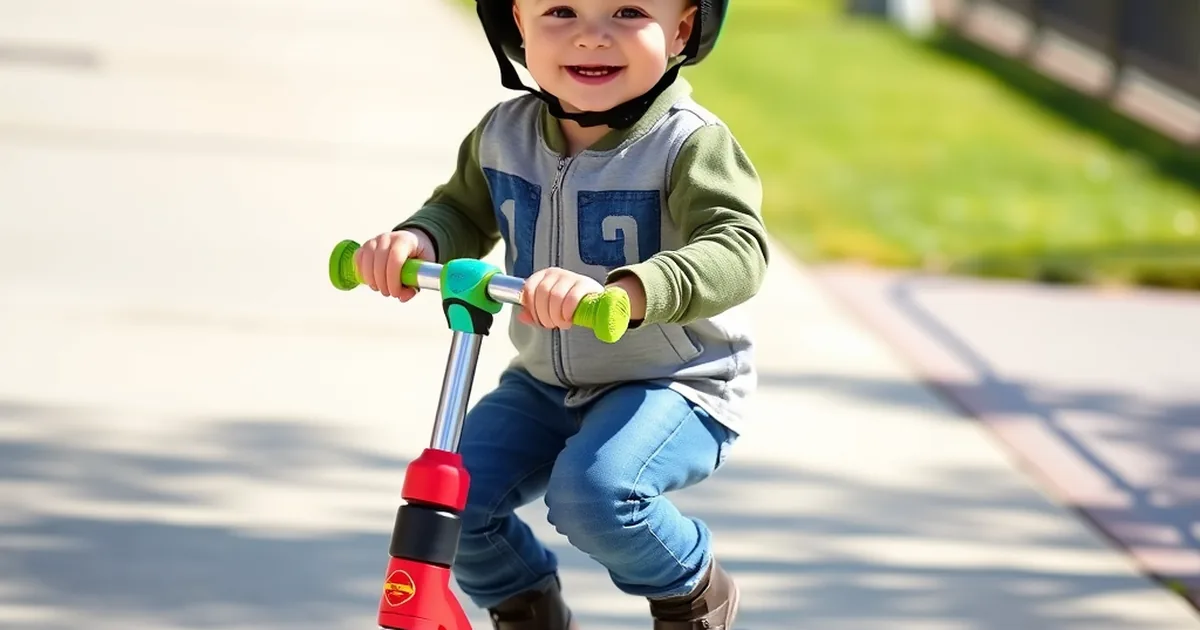
Toddler scooters develop balance, coordination, and outdoor physical activity from approximately 2 years through early elementary school. The best models offer weight-appropriate stability for young riders, intuitive lean-to-steer mechanics that children can master quickly, and construction quality that lasts through the learning phase and the confident riding phase that follows. Here are the four best toddler scooters of 2026.
Micro Mini 3-in-1 Deluxe Kick Scooter
The Micro Mini 3-in-1 Deluxe is the best toddler scooter on this list for the widest age range, beginning with a seated tricycle ride-on mode at 12 months and converting to a two-wheel kick scooter with handlebar support at 2-3 years, then adjusting to a fully freestanding kick scooter configuration as the child gains confidence. This three-stage conversion covers a 5-year span of use from the first ride to confident scootering, and the Swiss-engineered quality of the Micro brand means the scooter withstands each transition without structural degradation.
The Micro Mini uses the brand's signature lean-to-steer mechanism: the child leans their body left or right to direct the front wheel, which is physically intuitive and develops the balance and weight-shifting skills that transfer to cycling. Traditional handlebar-turn steering requires fine motor coordination that most children under 3 have not fully developed; lean-to-steer allows a toddler to navigate by body weight alone from their first rides. The Micro Mini's lean-to-steer response is calibrated specifically for the weight distribution of children 2-5 years old.
The scooter uses Micro's polyurethane wheels in a 120mm front, 80mm rear configuration. The larger front wheel rolls smoothly over pavement cracks, sidewalk joints, and small obstacles that stop smaller-wheeled scooters, which reduces frustration during the learning phase when minor obstacles can cause falls. The deck is low (3 inches from the ground) for easy foot-down correction. Weight capacity is 44 lb, appropriate through approximately age 5 at average weight.
At $159.99, the Micro Mini 3-in-1 Deluxe is the most expensive scooter on this list. The price reflects Swiss engineering quality and the 3-in-1 conversion system that covers the full early childhood riding period. For families who want one scooter that transitions from 12 months through 5 years without replacement, the Micro Mini delivers the longest useful product life on this list.
Best for: Families who want one scooter covering ages 12 months through 5 years in three configurations, with lean-to-steer mechanics optimized for toddler weight distribution.
Age range: 12 months to 5 years (3 configurations)
Steering: Lean-to-steer (body weight controlled)
Price: $159.99
Globber Primo 3-Wheel Scooter
The Globber Primo is the best toddler scooter for children who need extra initial stability during the learning phase. The Primo uses a 3-wheel configuration (two rear wheels, one front wheel) that prevents the side-fall that a 2-wheel lean-to-steer scooter produces during low-speed turns. For children 2-3 years who are new to scootering and whose parents want the most stable platform possible for the first months of riding, the three-wheel design eliminates the most common cause of early falls and allows the child to build confidence before the balance demands increase.
The Globber Primo steering mechanism includes a handlebar lock button that fixes the handlebar in the straight-forward position for the earliest riding phase, preventing unintended turning before the child is ready to practice directional control. Once the child is comfortable with forward motion, the lock releases and standard handlebar steering engages. This graduated introduction - locked forward first, then steering introduced - reduces the cognitive load of the first riding sessions for young children.
The deck height adjusts from 15 to 20 inches as the child grows. The polyurethane wheels are 121mm front and 80mm rear. The scooter supports up to 44 lb and folds to a compact profile for transport. The Globber Primo is available in several color options and uses a one-button fold mechanism. The handlebars have a foam grip surface that is comfortable for small hands and warm enough to use in light-glove conditions.
At $99.99, the Globber Primo is mid-range on this list. The three-wheel stability and the handlebar lock for the earliest learning phase make it the most beginner-friendly scooter design. For 2-year-olds starting their first scooter experience, the Primo's extra initial stability reduces the early frustration that causes many children to abandon scootering before developing genuine competence.
Best for: Children 2-3 years beginning their first scooter experience who need maximum initial stability from three wheels and a handlebar lock for directional training.
Wheel configuration: 3-wheel (two rear, one front)
Handlebar lock: Yes (locks straight for initial learning phase)
Price: $99.99
Yvolution Y Fliker C2 Wiggle Scooter
The Yvolution Y Fliker C2 is the most kinetically distinctive scooter on this list, using a propulsion mechanism that requires no foot pushing: the rider propels forward by shifting their weight side to side on a split deck that drives the rear wheels. This wiggle-and-propel mechanic is physically different from standard kick scootering and develops core body coordination and balance in a way that conventional foot-push scooters do not. For children 5-9 years who have already mastered standard kick scooters and want a more physically demanding challenge, the Fliker offers a fundamentally different riding experience.
The Y Fliker C2 uses two 76mm rear wheels on independent swivel axes that provide propulsion from the lateral deck movement, and a single 100mm front wheel for steering. The maximum speed is approximately 6 mph for a child riding on flat pavement with good technique. The learning curve for the propulsion mechanic is approximately 30-60 minutes for children who already have balance development from conventional scooters, but can be frustrating for children without prior scooter experience who have not yet developed the body-weight shift intuition.
The aluminum frame is lightweight at 4.4 lb and supports up to 110 lb, covering older elementary-age children. The handlebars adjust in height from 28 to 34 inches. The Yvolution Y Fliker is not appropriate for children under 5 years due to the coordination demands of the wiggle propulsion mechanic. For the target age range of 5-9 years, it is one of the most engaging scooter products available at a family-friendly price.
At $129.99, the Yvolution Y Fliker C2 is the second-most expensive scooter on this list. Its higher age range and unique propulsion mechanic make it a poor first scooter but an excellent second scooter for a child who has outgrown the developmental purpose of a standard kick scooter and wants increased physical challenge from an outdoor activity product.
Best for: Children 5-9 years who have already mastered kick scooters and want the increased physical challenge of wiggle-propulsion mechanics for core coordination development.
Age range: 5 to 9 years (not appropriate for beginners under 5)
Propulsion: Lateral weight-shift (no foot-push required)
Price: $129.99
Razor A2 Kick Scooter
The Razor A2 Kick Scooter is the best value entry-level scooter on this list and the product that most children in the 5-12 year range are riding. Razor introduced the aluminum folding kick scooter to the US market in 2000, and the A-series design has been refined over 25 years into one of the most durable and widely serviced scooter platforms available. The A2 upgrades the original Razor A with slightly wider deck, improved wheel quality, and a more refined folding mechanism while maintaining the accessible price point that made the original a household product.
The A2 uses 98mm polyurethane wheels on precision ABEC-5 bearings, which roll more smoothly and with less friction than the standard bearings in entry-level budget scooters. The deck is aircraft-grade aluminum at 4.5mm thickness, which provides the stiffness needed for jump and trick use while remaining light enough for a child to carry. The folding mechanism uses Razor's patented t-tube fold that allows the handlebars and deck to collapse to a 28-inch profile in seconds for car storage, stroller transport, and carrying into school.
The rear fender brake is the A2's braking system, which requires the child to press the fender down against the rear wheel to slow. This is the standard rear-fender braking mechanism used across the Razor A series and is the first braking concept most children learn on scooters. Weight capacity is 143 lb, covering children through the early teen years. Handlebar height adjusts from 26 to 31 inches in three positions without tools.
At $49.99, the Razor A2 is the most affordable quality scooter on this list by a significant margin. For children 5+ years who are ready for a standard 2-wheel kick scooter at a price that makes it an appropriate gift or holiday purchase, the A2 has earned its position as the bestselling scooter in the US market through consistent quality at a price that is accessible to every family.
Best for: Children 5+ years ready for a standard aluminum kick scooter at the most accessible price, with a 25-year-refined folding design and ABEC-5 bearings.
Age range: 5 years and up
Deck material: Aircraft-grade aluminum
Price: $49.99
How to Choose a Toddler Scooter
At what age can a child start riding a scooter?
Children can begin with a 3-wheel scooter or ride-on scooter as early as 12-18 months with adult supervision, using the Micro Mini 3-in-1's ride-on seat configuration. Standard 2-wheel kick scooters require balance that most children develop between 2-3 years, with wide individual variation. The Globber Primo's 3-wheel configuration is appropriate for earlier starts when the child wants to begin scootering before 2-wheel balance has developed. Standard aluminum kick scooters like the Razor A2 are typically appropriate from 5 years when coordination and foot-braking skill are reliable.
Should a toddler use lean-to-steer or handlebar-turn steering?
Lean-to-steer scooters (Micro Mini) are better suited for children under 4 years who do not yet have the fine motor coordination for precise handlebar inputs at scooter speeds. Lean-to-steer transfers the steering input to body weight, which is physically intuitive and develops the balance skills that transfer directly to cycling. Traditional handlebar steering (Razor A2, Globber Primo with lock disengaged) is appropriate from 4-5 years when children have the coordination to steer with their hands. Many developmental specialists recommend lean-to-steer as a first scooter for under-3 children for this reason.
What protective gear does a child need for a scooter?
A properly fitted bicycle helmet is the minimum required gear for any child riding a scooter. Knee pads and wrist guards are recommended for children in the learning phase (first 2-4 weeks) and for any child attempting tricks or riding in traffic areas. CPSC-certified helmets (marked with the CPSC certification label) are the standard for US consumer safety. Helmet fit: the helmet should sit level on the head (not tilted back), with the front edge one to two finger widths above the eyebrows, and the chin strap snug enough to admit only one finger beneath it.
Frequently Asked Questions
How do I teach a toddler to ride a scooter?
Start on a smooth flat surface (driveway, quiet sidewalk) with the child wearing a helmet. For a 2-wheel scooter, have the child practice standing with both feet on the deck and gliding by pushing once and balancing. Do not rush to foot-kicking before the glide balance is established. Foot-pushing follows naturally from gliding within 1-3 sessions as the child gains confidence. For 3-wheel scooters, the initial sessions focus on pushing forward and learning to stop - the stability of three wheels means balance is not the initial challenge. Most children develop consistent riding confidence within 3-7 sessions of 20-30 minutes each.
How long do toddler scooters last?
Premium scooters (Micro Mini) are designed to last through multiple children with normal use. The wheels and bearings are the components that wear first; both are replaceable on the Micro and Razor platforms. Budget plastic scooters typically last 1-2 years of daily use before deck cracking or wheel degradation. Aluminum frame scooters (Razor A2) do not rust or corrode and can last 5-10 years with replacement of consumable wheel and grip components. For families with multiple children spaced close together, an aluminum platform scooter provides better long-term value than repeated budget replacements.
What is the weight limit for a toddler scooter?
The Micro Mini 3-in-1 supports 44 lb (approximately age 5 average weight). The Globber Primo supports 44 lb. The Yvolution Y Fliker C2 supports 110 lb. The Razor A2 supports 143 lb. For children approaching or exceeding the weight limit of a scooter, the structural warranty is voided and the deck and wheel components are under greater stress. Toddler and youth scooters have progressively higher weight limits by design to match the age range they serve.