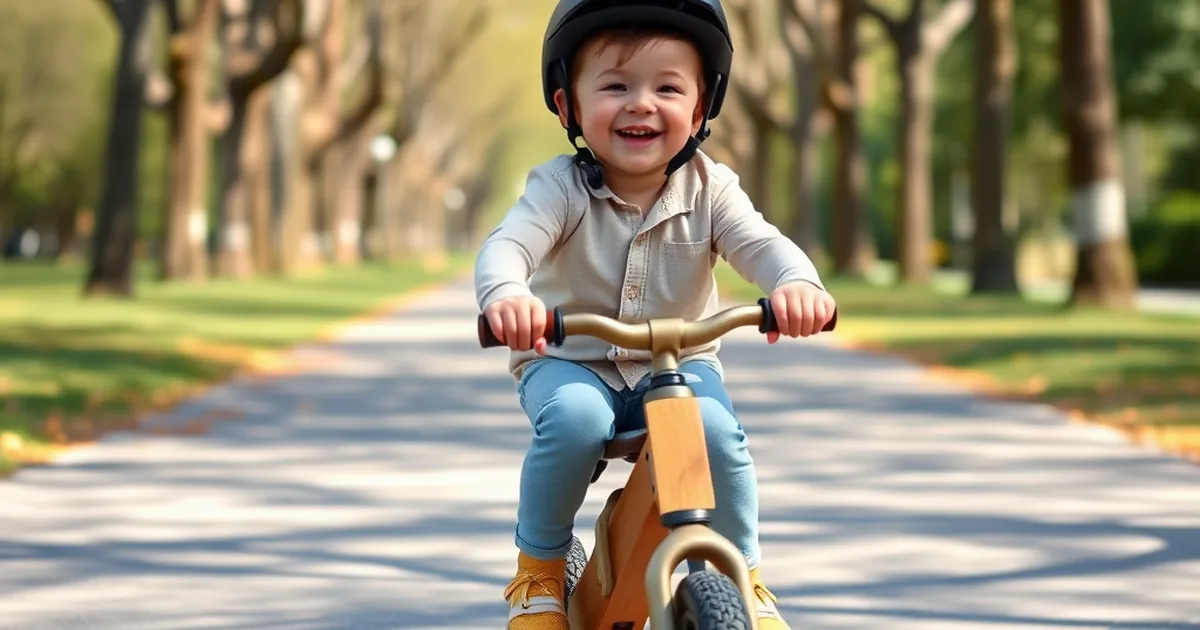
Balance bikes have replaced training wheels as the preferred method for teaching toddlers to ride. Instead of pedaling with training wheel support, children learn to balance first by gliding with their feet, which research consistently shows leads to a faster transition to a pedal bike. The best balance bikes are lightweight, properly sized, and durable enough to survive years of toddler crashes. Here are the four best toddler balance bikes of 2026.
WOOM 2 Balance Bike
WOOM builds the most pediatrician-recommended balance bike in the world, and the WOOM 2 is the model responsible for that reputation. At 5.5 lb, it is one of the lightest 14-inch balance bikes available. Children develop balance and steering control fastest on light bikes because they can maneuver the bike rather than fight its weight, and WOOM understands this principle at the engineering level.
The frame is aircraft-grade aluminum with a low step-through design that lets small children mount and dismount independently. The ergonomic handlebar grips are children-specific: narrower diameter than adult grips to fit small hands without fatigue. The saddle is extra padded and adjusts from 13.8" to 17.3" seat height, covering children from roughly 2.5 to 4.5 years in most cases.
The rear drum brake is WOOM's signature feature and what separates it from most competitors. A hand-operated rear brake teaches children proper braking technique before they transition to a pedal bike. Most children can learn to use the brake effectively within a few sessions, which builds the muscle memory they will need on a pedal bike. The brake also prevents the runaway-downhill problem common on brakeless balance bikes.
At $299.00, WOOM 2 costs more than most balance bikes. But it is noticeably lighter, better-built, and more ergonomically designed than bikes at half the price, and WOOM's customer service is genuinely responsive. For families who plan to hand the bike down to a second child, the durability justifies the premium.
Best for: Parents who want the lightest, best-engineered balance bike with a hand brake for proper technique development.
Weight: 5.5 lb
Seat height range: 13.8-17.3"
Age range: 2.5-4.5 years (18" minimum inseam)
Price: $299.00
Cleary Gecko 12" Balance Bike
The Cleary Gecko is the best balance bike for the youngest riders, sized specifically for children 18 months to 3 years with a 10-14" inseam. Most 12-inch balance bikes on the market are repainted department store bikes with poorly adjusted geometry. The Cleary Gecko is purpose-engineered for small riders with a low standover height, short wheelbase for easy steering at low speeds, and a saddle that adjusts from 11" to 13.5" seat height.
The aluminum frame keeps the Gecko at 5.6 lb, which is under the benchmark that allows most toddlers to maneuver the bike with confidence. The steel handlebar has 25-degree sweep, which positions small arms at a natural angle without requiring the elbow flare that causes fatigue on flat-bar bikes. Footpegs are included for coasting practice as children advance.
Cleary uses sealed bearings in the headset and wheel hubs, which means the bike rolls smoothly even after months of use in dusty, dirty conditions without maintenance. The air-filled 12" tires absorb small curb drops and rough sidewalk cracks that solid rubber tires transmit directly to the rider's hands and seat.
At $275.00, the Cleary Gecko is premium for a 12-inch balance bike. But for parents with children under 2.5 years who are too small for a 14-inch bike, it is the most appropriate entry point into balance biking with properly engineered geometry rather than scaled-up adult bike proportions.
Best for: The youngest riders (18 months to 3 years) who are too small for 14-inch balance bikes and need proper toddler-specific geometry.
Weight: 5.6 lb
Seat height range: 11-13.5"
Age range: 18 months to 3 years
Price: $275.00
Prevelo Alpha One 12" Balance Bike
The Prevelo Alpha One is the alternative to the Cleary Gecko for parents who want a children's-specific 12-inch balance bike at a similar price point with slightly different geometry. Prevelo builds bikes from a two-wheel cycling education philosophy: their geometry prioritizes head tube angle and wheelbase for age-appropriate handling, not simply scaled-down adult proportions.
The Alpha One weighs 5.2 lb, which ties the WOOM 2 as the lightest bike on this list per wheel size. The aluminum frame has a low bottom bracket that keeps the center of gravity closer to the ground for stability during learning phases. The handlebars are capped with children-specific grips and have a rotation limiter that prevents the bars from turning so far that the front wheel can turn into the child's leg at low speeds.
Adjustable seat height runs from 11" to 14", and the saddle is narrower than most balance bike seats, which positions young children with better hip angle and less inner-thigh chafing during extended rides. No brake is included on the Alpha One (as is common for youngest-rider balance bikes), keeping the controls simple for 2-year-olds still learning directional steering.
At $279.00, the Prevelo Alpha One competes directly with the Cleary Gecko. Families who have ridden both tend to split preferences between the two based on geometry feel. If possible, try both at a local bike shop with your child to see which steering feel clicks faster.
Best for: Young riders (2-4 years) whose parents want a lighter alternative to the Cleary Gecko with Prevelo's steering limiter safety feature.
Weight: 5.2 lb
Seat height range: 11-14"
Age range: 2-4 years
Price: $279.00
Strider 12 Sport Balance Bike
The Strider 12 Sport is the most popular balance bike in the world and the pick for parents who want a proven, durable, no-frills option at the most accessible price point. It has introduced more children to balance biking than any other brand, and its simplicity is a deliberate design choice: fewer parts means less maintenance, lower weight, and a lower price.
At 5.0 lb, the Strider 12 Sport is the lightest bike on this list. The steel frame is simple and durable, the saddle adjusts from 11" to 16" seat height covering ages 18 months to 5 years, and the footrests on the frame allow coasting practice. There are no hand brakes, no gears, and no cables - just a frame, wheels, seat, and handlebars.
The Strider community is genuine and active. Strider runs sanctioned racing events (Strider Cup) in cities across the US, and children who start on a Strider often find themselves in friendly competition before age 3. The brand's accessories ecosystem (knee pads, helmets, balance bike number plates) is the most developed in the category.
At $109.99, the Strider 12 Sport is the most affordable quality balance bike available. It does not have the hand brake of the WOOM 2, the sealed bearings of the Cleary Gecko, or the steering limiter of the Prevelo. But it outperforms every department store balance bike by a wide margin and has introduced more children to cycling than any other single product. For first-time balance bike buyers who are not sure how much riding their child will do, the Strider 12 Sport is the right starting point.
Best for: First-time buyers who want a proven, lightweight, community-supported balance bike at the most accessible price point.
Weight: 5.0 lb
Seat height range: 11-16"
Age range: 18 months to 5 years
Price: $109.99
How to Choose the Right Balance Bike
How to size a balance bike correctly
The most important measurement is inseam, not age. Measure from the floor to your child's crotch while wearing shoes. The saddle should adjust to 1-2 inches below this measurement, so both feet can flat-foot the ground. Most 12-inch bikes fit a 10-14" inseam. Most 14-inch bikes fit a 14-18" inseam. Using a bike that is too tall is the single most common fitting mistake and significantly slows learning.
Should a balance bike have a hand brake?
For children under 2.5 years, hand brakes add complexity without meaningful benefit, as most young children do not yet have the hand strength to operate them effectively. For children 3 and older who will transition to a pedal bike within the next year, a hand brake (like the WOOM 2's rear brake) builds the muscle memory needed for proper braking on a pedal bike. For families planning a long balance bike phase before a pedal bike, a hand brake is worth the premium.
12-inch vs. 14-inch balance bikes
12-inch bikes (Cleary Gecko, Prevelo Alpha One, Strider 12 Sport) are for children 18 months to 3 years with an inseam under 14". 14-inch bikes (WOOM 2) are for children 2.5 to 4.5 years with an inseam of 14" or more. If your child is between sizes, err toward the smaller bike so they can flat-foot comfortably. A child who can barely touch the ground does not feel safe and will not learn quickly.
Frequently Asked Questions
At what age should my child start a balance bike?
Most children are ready for a balance bike between 18 months and 2 years old, once they can walk steadily and have enough leg length to touch the ground from a lowered saddle. There is no upper age limit - children who start balance bikes at 4 or 5 typically transition to pedal bikes within weeks, even if they have never ridden before.
How long does it take to learn on a balance bike?
Most children progress from walking the bike to gliding with feet off the ground within 2-8 weeks of regular use (a few sessions per week). The rate depends on the child's confidence, the fit of the bike, and the terrain. Starting on a slight downhill slope in a safe area accelerates learning significantly.
How do I transition from a balance bike to a pedal bike?
When a child can glide with feet off the ground for 3-5 seconds consistently on a balance bike, they are ready for a pedal bike. Remove the pedals from a pedal bike, lower the saddle, and let them glide on it first. Most children who have mastered balance biking add pedaling within a single session. Training wheels are typically not needed.
Are balance bikes safe for toddlers?
Yes, balance bikes are generally considered safer than training wheel bikes because they are lower to the ground (children can self-rescue by touching feet to the ground), go slower, and the child learns balance control rather than relying on wheels. Always use a properly fitted helmet and knee/elbow pads when learning.
Do balance bikes need air-filled tires?
Air-filled (pneumatic) tires absorb bumps and provide better traction than foam-filled or solid rubber tires. The Cleary Gecko uses air-filled tires; the Strider 12 Sport uses foam-filled tires that never need inflation. For smooth sidewalks and driveways, foam tires are adequate. For trails, gravel, and uneven surfaces, air-filled tires provide a meaningfully smoother ride.
Can balance bikes be used indoors?
Yes, balance bikes work on smooth indoor floors. Some families use them in hallways or large open rooms during winter months. Rubber tires leave fewer marks than plastic-wheeled toys. For indoor use, the lighter the bike, the easier it is for children to maneuver in confined spaces. The Strider 12 Sport at 5 lb is particularly manageable indoors.
What safety gear does my child need for a balance bike?
A properly fitted bicycle helmet is required. Knee pads and elbow pads are recommended for beginners. Closed-toe shoes with rubber soles provide better foot grip than sandals or bare feet. Wrist guards are optional. As children gain confidence, they naturally reduce knee and elbow pad use, though a helmet should be worn for every ride.
When should I buy a pedal bike instead of a balance bike?
If your child is 5 years or older and has never ridden a bike, starting directly on a pedal bike (with pedals removed for balance learning first) is also effective. For children under 4, a balance bike is the best choice. For children 4-5, either approach works, and a convertible bike (balance to pedal) can be a good compromise for older starters.