Smart bassinets promise something that exhausted new parents desperately want: a machine that soothes a crying baby back to sleep so you do not have to get out of bed at 2 a.m. The technology has matured significantly over the past few years, and the best models genuinely work. Here are the four best smart bassinets of 2026, compared honestly on what they do, what they cost, and who they are right for.
SNOO Smart Sleeper by Happiest Baby
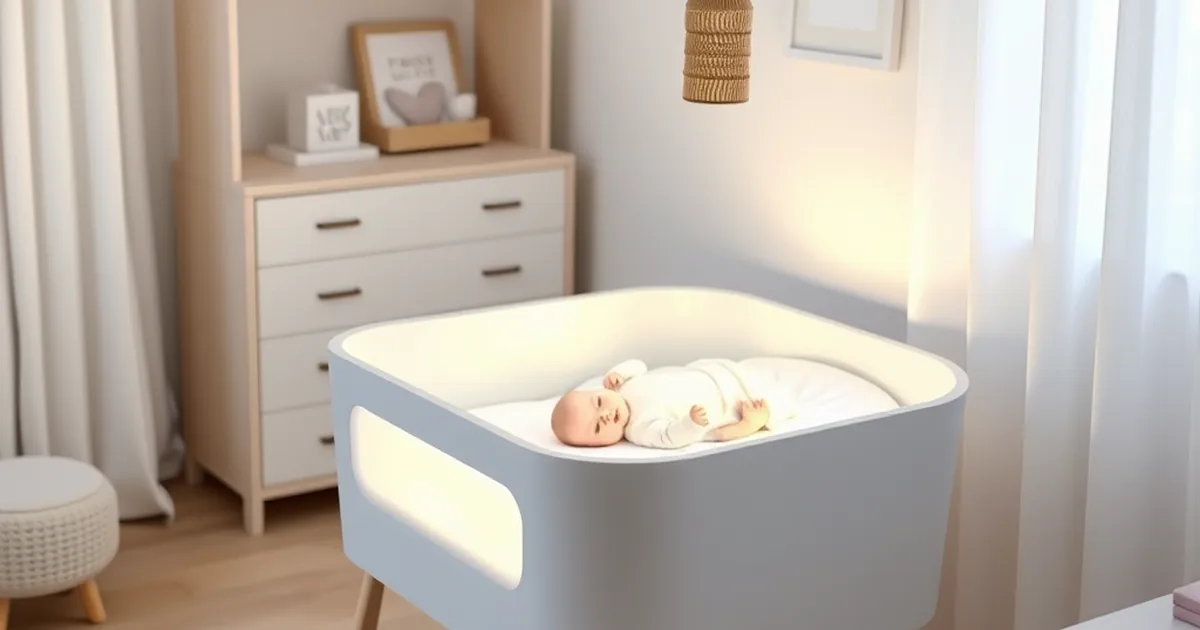
The SNOO is the original smart bassinet and still the most clinically studied. It combines a swaddling system, responsive white noise, and gentle rocking motion that responds automatically to a baby's cries. When the SNOO detects crying, it increases motion and sound to match the intensity of the baby's distress. For most newborns, this is enough to resettle without a parent lifting the baby.
The Happiest Baby app gives you a detailed sleep log, motion level controls, and a weaning mode that gradually reduces responsiveness in the final weeks before transition to a crib. The built-in swaddle bands secure the baby to prevent rolling to the side or stomach, which is a genuine safety feature backed by multiple peer-reviewed studies.
The quality of the hardware matches the price. The frame is aircraft-grade aluminum, the mesh breathable on all four sides, and the motor is whisper-quiet. SNOO is also rented through Happiest Baby directly for around $199/month, which dramatically lowers the barrier if you only want it for the first few months.
At $1,695, the SNOO is the most expensive bassinet on the market by a wide margin. But for parents of colicky or high-needs newborns, or for parents who had a third child and genuinely cannot function on no sleep, many families report recovering the cost in one month of better sleep alone.
Best for: Parents of high-needs newborns or anyone who wants the most studied, clinically validated smart bassinet.
Age range: Birth to 6 months (or when baby can push up on hands and knees)
Rental option: Yes, ~$199/month through Happiest Baby
Price: $1,695.00
4moms MamaRoo Sleep Bassinet
The 4moms MamaRoo Sleep combines the brand's signature five-motion technology (car ride, kangaroo, tree swing, rock-a-bye, and wave) with white noise and an app-controlled interface. It is the second-most-researched smart bassinet and the most popular among families who want responsive soothing without the SNOO's price tag.
The Bluetooth-connected app lets you start, stop, and adjust motion and sound from your phone without walking to the nursery. The MamaRoo Sleep supports babies up to 25 lb, which is longer than the SNOO's 6-month limit by weight, though the American Academy of Pediatrics recommends transitioning to a crib when the baby can roll.
The mesh sides allow airflow and visibility, the mattress is firm and flat per safe sleep guidelines, and the frame is stable even on carpet. One meaningful limitation: the MamaRoo Sleep does not respond automatically to crying the way the SNOO does. You must start the motion manually via the app or the button on the bassinet. For some families this is fine; for others, the manual step defeats the purpose of a smart bassinet.
At $599.99, the MamaRoo Sleep is a strong value compared to the SNOO. You get app control, five distinct motions, white noise, and a well-made frame at roughly one-third the price of the SNOO.
Best for: Parents who want app-controlled smart features at a significantly lower price than the SNOO.
Age range: Birth to 25 lb
Auto-response to crying: No (manual control via app or button)
Price: $599.99
Halo Bassinest Luxe Swivel Sleeper
The Halo Bassinest Luxe takes a different approach to smart bassinet design. Instead of automatic soothing, it focuses on bedside access and convenience. The bassinet swivels 360 degrees and lowers to nearly bed height, letting you feed and resettle a baby without fully sitting up. For parents recovering from C-sections or with mobility challenges, this design is genuinely transformative.
The Luxe edition adds a vibration setting with four intensity levels, a built-in nightlight with four color options, and white noise through the base speaker. The controls are on the base rail and easy to reach from bed in the dark without fumbling with a phone app. The mesh sides are breathable on three sides with a firm, JPMA-certified mattress.
The swivel feature is the standout. Most bassinets sit stationary at bedside, meaning you must lean or stand to reach the baby. The Halo's swivel pulls the baby directly to you, reduces reach distance by more than half, and makes middle-of-the-night feeding dramatically easier. It also moves easily out of the way when you need to get out of bed.
At $649.99, the Luxe is priced between the MamaRoo Sleep and the SNOO. It does not offer the responsive auto-soothing of either, but for parents who want the highest-end version of bedside access with convenient vibration and sound features, the Luxe is the most practical option for parents who want to minimize nighttime effort.
Best for: Parents who prioritize bedside access and ease of nighttime feeding over automated soothing.
Age range: Birth to 5 months or 20 lb
Swivel range: 360 degrees
Price: $649.99
Graco Sense2Soothe Bassinet with CalmingSurges Technology
The Graco Sense2Soothe is the accessible entry point into responsive smart bassinets. It uses CalmingSurges technology to detect crying and automatically respond with vibration, sound, or a combination of both. Unlike the SNOO (which also rocks), the Sense2Soothe responds through vibration and white noise, which is gentler and appropriate for lighter sleepers.
The five preset soothing programs cover a range of fussiness levels, and the auto-response mode kicks in within seconds of detecting crying. The bassinet also includes a nightlight and a storage shelf underneath for diapers and wipes, making it the most practical option for small bedrooms or parents who want everything within arm's reach.
Build quality is solid Graco, which means it is sturdy, passes all safety certifications, and will be recognizable to anyone who has used Graco's car seats or strollers. The mattress is firm, flat, and covered in breathable fabric. At 18 lb, it is the lightest bassinet on this list and easy to move between rooms.
At $179.99, the Graco Sense2Soothe is by far the most affordable smart bassinet available. It does not offer the SNOO's clinical track record or the Halo's swivel convenience, but for parents who want a bassinet that reacts to crying without manual intervention at a price that does not require a financial decision meeting, this is an excellent choice.
Best for: Budget-conscious parents who want auto-responsive soothing without spending $600 or more.
Age range: Birth to 20 lb
Auto-response to crying: Yes (vibration and sound)
Price: $179.99
Smart Bassinet Comparison: Which Features Actually Matter?
Auto-response to crying
The SNOO and the Graco Sense2Soothe respond automatically to crying. The 4moms MamaRoo Sleep and Halo Bassinest Luxe require manual activation. If auto-response is your primary goal, SNOO is the gold standard and the Graco Sense2Soothe is the budget alternative. If you do not mind opening an app, the MamaRoo Sleep is the best mid-range option.
Type of motion
SNOO: responsive rocking that increases with crying intensity. 4moms MamaRoo Sleep: five distinct motions mimicking car rides, kangaroo bouncing, and tree swings. Halo Bassinest Luxe: vibration only (no rocking). Graco Sense2Soothe: vibration only. If your baby is soothed primarily by motion, the SNOO or MamaRoo Sleep will be more effective than vibration-only models.
Safe sleep compliance
All four bassinets meet ASTM and CPSC safe sleep standards with firm, flat mattresses and breathable sides. The SNOO's swaddle system is an additional safety layer that prevents babies from rolling. The American Academy of Pediatrics recommends transitioning to a separate sleep surface in the room when the baby shows signs of rolling.
Frequently Asked Questions
Do smart bassinets actually help babies sleep longer?
Yes, with caveats. Clinical studies on the SNOO show it adds an average of 1-2 hours of sleep per night for newborns. The MamaRoo Sleep and Graco Sense2Soothe do not have the same level of published research, but parents consistently report fewer self-soothing interventions needed. Results vary significantly by baby temperament.
Are smart bassinets safe?
All bassinets on this list meet CPSC and ASTM safety standards. The SNOO's swaddle bands add a layer of roll-prevention safety. As with any bassinet, follow AAP safe sleep guidelines: firm flat mattress, no loose bedding, room temperature between 68-72 degrees, and transition to crib when baby shows signs of rolling.
What age should I stop using a bassinet?
Most bassinets are rated to 5-6 months or a specific weight (typically 15-25 lb). The SNOO specifically recommends stopping when the baby can push up on hands and knees. The AAP recommends transitioning to a separate firm sleep surface in the same room for the first year.
Is it worth renting the SNOO instead of buying?
Renting makes sense if you only plan to use it for 3-4 months, if you are unsure whether it will work for your baby, or if $1,695 is not in the budget. The rental rate of about $199/month means you break even on buying versus renting at approximately 8-9 months of use. Most parents use the SNOO for 4-6 months, making rental a financially sound choice.
Can I use a smart bassinet if I do not have a smartphone?
The Graco Sense2Soothe has physical controls on the unit and does not require a smartphone. The SNOO can be used without the app at a fixed setting. The 4moms MamaRoo Sleep and Halo Bassinest Luxe also have on-unit controls for basic functions, though the apps add meaningful convenience.
Do smart bassinets help with colic?
The SNOO has the strongest evidence for reducing colicky crying. Its combination of swaddling, white noise, and responsive motion addresses multiple components of colic simultaneously. For severe colic, a pediatrician consultation is recommended before relying solely on a bassinet solution.
What is the difference between a bassinet and a bedside sleeper?
A bedside sleeper attaches to the side of the parents' bed and allows feeding access without the baby leaving the adult sleep surface. A bassinet stands independently. The Halo Bassinest is technically a bedside sleeper that functions as a bassinet. The SNOO, MamaRoo Sleep, and Graco Sense2Soothe are freestanding bassinets.
When should I transition my baby from a smart bassinet to a crib?
Most manufacturers recommend transitioning at 5-6 months or when the baby shows signs of rolling. The SNOO includes a weaning mode that gradually reduces responsiveness to help babies learn to self-soothe. Transitioning gradually (reducing motion and sound over 2-3 weeks) typically results in an easier crib adjustment than a sudden switch.