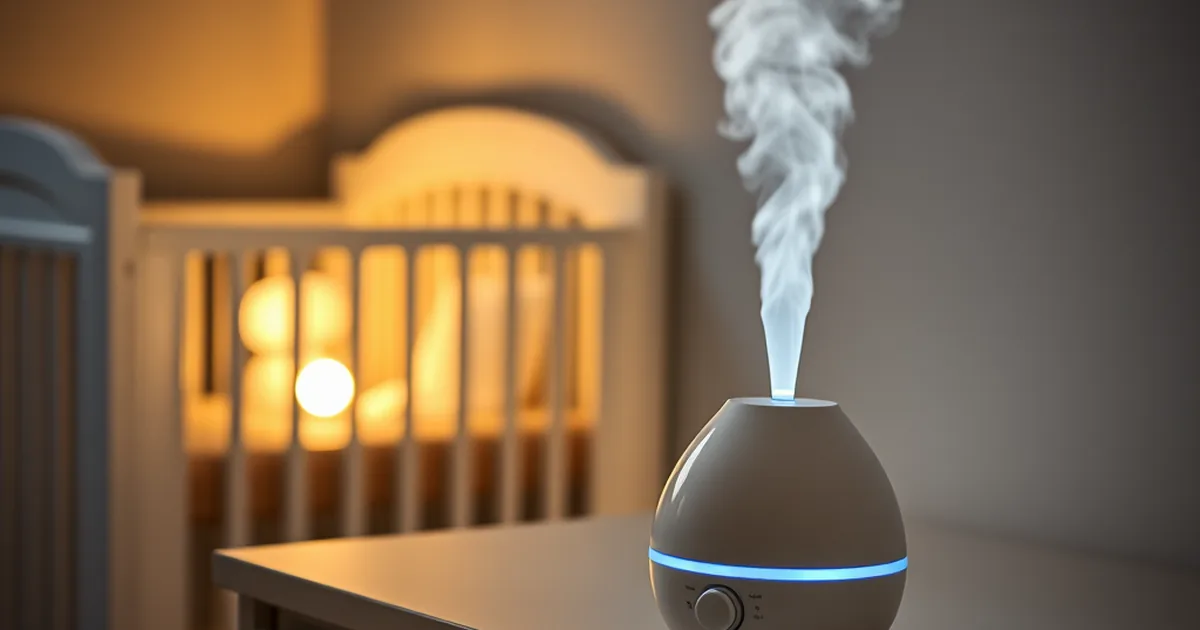
Nursery humidifiers add moisture to dry indoor air during heating season, easing congestion, dry skin, and the nighttime coughing that wakes babies during colds. The best models run quietly through the night, are easy to fill and clean without mold buildup, and use cool mist rather than warm steam to eliminate burn risk near a crib. Here are the four best nursery humidifiers of 2026.
Levoit LV600S Smart Hybrid Ultrasonic Humidifier
The Levoit LV600S is the most capable humidifier on this list and the correct choice for larger nurseries or for parents who want the humidity level managed automatically rather than checked by hand. It has a 6-liter tank that runs up to 60 hours on low, a built-in humidity sensor that holds the room at a target level set through the app or the control panel, and a remote. The auto mode is the feature that matters most for a nursery: it maintains the target humidity (45-50 percent is the pediatric recommendation) and shuts off when the room reaches it, so the room does not become oversaturated overnight and grow mold on the window sills.
The LV600S is a hybrid: it produces cool mist by default and can switch to warm mist, which raises output and is useful during a bad cold. Most parents leave it on cool mist for safety and use the warm setting only during a congestion episode, with the humidifier positioned well out of the baby's reach. The top-fill tank lifts off and fills at the sink or under a faucet without inverting, which is the design detail that makes the difference between a humidifier that gets refilled nightly and one that gets abandoned by week three.
Noise is under 30 dB on low, quiet enough that most parents cannot hear it over a sound machine. The mist nozzle rotates 360 degrees so the output can be aimed away from the crib and furniture. The tank and base are dishwasher-safe on the top rack. The Levoit app allows scheduling and remote shutoff, and works with Alexa and Google Home for voice control.
At $89.99, the LV600S is the most expensive humidifier on this list. For a nursery larger than 300 square feet, for parents who want automatic humidity management, or for anyone who has struggled to keep a smaller humidifier running through the night, the tank capacity and auto mode justify the premium.
Best for: Larger nurseries and parents who want automatic humidity control with a 6-liter top-fill tank that runs up to 60 hours.
Tank: 6 liters, top-fill
Mist: Cool and warm (hybrid), auto humidity mode
Price: $89.99
Honeywell HCM-350 Germ Free Cool Mist Humidifier
The Honeywell HCM-350 is the best evaporative humidifier on this list and the one most frequently recommended by pediatric allergists, for a specific reason: evaporative humidifiers cannot oversaturate a room. An ultrasonic humidifier will keep pumping mist until the tank is empty regardless of the room's humidity, but an evaporative unit uses a fan to blow air through a wet wick, and the evaporation rate naturally slows as the room approaches saturation. This self-regulation means the HCM-350 never leaves condensation on the windows or wets the floor around the crib, which is the most common cause of mold complaints with nursery humidifiers.
The HCM-350 also does not produce the fine white mineral dust that ultrasonic humidifiers deposit on surfaces when run with tap water. Evaporation leaves minerals in the wick rather than aerosolizing them, so the HCM-350 runs on ordinary tap water without leaving a film on the crib and dresser. The UV light in the water path treats the water before it reaches the wick, which reduces bacterial growth in the reservoir between cleanings.
The trade-off is noise: the fan produces approximately 40 dB on low, which is audible but similar in character to a white noise machine and many parents find it a useful sleep sound in itself. The 1-gallon tank runs approximately 24 hours on low. The wick filter needs replacing every 1-2 months during heating season at approximately $10 each. The tank is dishwasher-safe.
At $79.99, the HCM-350 is the second most expensive option on this list. For parents concerned about oversaturation and mold, for homes with hard tap water, and for families with a child who has allergies or asthma where an allergist has specifically recommended evaporative over ultrasonic, the HCM-350 is the most reliable long-term nursery humidifier.
Best for: Parents who want a self-regulating evaporative humidifier that cannot oversaturate the room and produces no white mineral dust.
Type: Evaporative with UV water treatment
Tank: 1 gallon, approximately 24 hours on low
Price: $79.99
Crane Drop Ultrasonic Cool Mist Humidifier
The Crane Drop is the most widely owned nursery humidifier in the US and the one most parents picture when they think of a baby humidifier: the teardrop-shaped body in a dozen colors that matches nursery decor rather than looking like a piece of HVAC equipment. Crane has sold the Drop since 2005 with modest updates, and its longevity is the result of doing the essential job at a reasonable price without features that add failure points. It is a 1-gallon ultrasonic cool-mist humidifier with a dial for output, a 360-degree nozzle, and an auto-shutoff when the tank empties.
The Drop runs up to 24 hours on low and is nearly silent on any setting, which makes it the quietest humidifier on this list. Ultrasonic operation means it will produce mineral dust with hard tap water; Crane recommends distilled water or the company's demineralization cartridge, which fits in the tank cap. Because the Drop has no humidity sensor, it should be set to low or medium in a standard nursery and run for a few nights while checking the windows in the morning for condensation, then adjusted.
The current Drop model has a wider tank opening than earlier versions, which makes cleaning the interior practical with a bottle brush. The tank fills from the bottom by inverting, which is less convenient than top-fill designs but manageable with a 1-gallon volume. Crane sells a vapor pad tray for menthol pads, which should not be used with infants under 2.
At $49.99, the Crane Drop is the best-value humidifier on this list. For a standard nursery under 250 square feet where the parent will manage the setting manually and use distilled water, the Drop does the job quietly at half the price of the Levoit.
Best for: Standard nurseries where a quiet, simple, decor-matching ultrasonic humidifier at a mid-range price is enough.
Type: Ultrasonic cool mist
Tank: 1 gallon, up to 24 hours on low
Price: $49.99
Vicks Filter-Free Ultrasonic Cool Mist Humidifier
The Vicks Filter-Free is the best budget nursery humidifier on this list and the easiest to maintain over a full heating season. It is a 1.2-gallon ultrasonic cool-mist unit with no wick, no filter, and no consumable parts, so the only ongoing cost is water. The tank is translucent, which shows the water level at a glance from across the room, and the unit has a nightlight function that many parents use in place of a separate nursery light. The Vicks brand name reflects the built-in scent pad slot, which accepts VapoPads; those should not be used for children under 2, and the humidifier works fine with the slot empty.
Output is adjustable through a single dial with a low setting quiet enough for a nursery. The tank runs approximately 30 hours on low. Auto-shutoff triggers when the tank runs dry. The nozzle rotates to direct mist away from the crib. As with all ultrasonic units, distilled water prevents mineral dust on surfaces; with hard tap water, the Vicks will leave a fine white film within a few days.
The tank fills by inverting, and the opening is wide enough for a bottle brush. The base has a small water channel that should be wiped weekly to prevent pink biofilm, which is the most common complaint with any ultrasonic humidifier and is addressed by the weekly cleaning routine described below rather than by any design difference between units.
At $44.99, the Vicks Filter-Free is the most affordable humidifier on this list. For parents who want a no-consumables humidifier with a built-in nightlight at the lowest price, and who will use distilled water and clean weekly, the Vicks delivers the core function for a full season for less than a single bottle of the more expensive units' replacement filters.
Best for: Budget-focused parents who want a no-filter, no-consumables ultrasonic humidifier with a built-in nightlight.
Type: Ultrasonic cool mist, filter-free
Tank: 1.2 gallons, approximately 30 hours on low
Price: $44.99
How to Choose a Nursery Humidifier
Ultrasonic vs. evaporative: which is better for a nursery?
Ultrasonic humidifiers (Levoit, Crane, Vicks) are nearly silent and produce visible cool mist, but they aerosolize whatever is in the water, including minerals and any bacteria in a dirty tank, and they can oversaturate a room without a sensor. Evaporative humidifiers (Honeywell) are self-regulating and leave minerals in the wick, but they use a fan that produces audible noise and require wick replacement. For allergy-prone families and hard-water areas, evaporative is the safer choice. For silence and decor, ultrasonic wins, with distilled water and weekly cleaning as the conditions.
Cool mist or warm mist?
The AAP recommends cool mist humidifiers in children's rooms. Warm mist units heat water to boiling, and a tipped unit or a curious toddler at the steam outlet can cause burns. Cool mist provides the same humidity benefit without the hazard. The Levoit LV600S offers a warm mode, which should be used only with the unit well out of reach, and most parents never need it.
What humidity level should the nursery be?
Between 40 and 50 percent relative humidity. Below 30 percent, dry air irritates nasal passages and skin. Above 60 percent, dust mites and mold thrive. A $10 hygrometer placed across the room from the humidifier tells you where the room actually is, and in a nursery it is worth having one regardless of which humidifier is chosen. Humidifiers with a built-in sensor (Levoit) read the humidity at the unit itself, which is always higher than the room average, so an external hygrometer is still useful.
Frequently Asked Questions
How often should a nursery humidifier be cleaned?
Rinse and refill the tank daily; do not top off standing water. Clean the tank and base weekly with a solution of one part white vinegar to one part water, let it sit for 30 minutes, scrub with a bottle brush, and rinse thoroughly. Disinfect monthly with a diluted bleach solution (one teaspoon per gallon), rinse until no odor remains, and air-dry completely before refilling. A dirty humidifier aerosolizes bacteria and mold into the air the baby breathes, which is worse than dry air. If the humidifier will not be used for more than two days, empty and dry it.
Does a humidifier help with baby congestion?
Yes. Moist air thins nasal mucus and reduces the swelling of nasal passages, which is why pediatricians recommend a cool mist humidifier as a first-line measure for a baby with a cold. Infants breathe primarily through the nose for the first several months, so nasal congestion disrupts feeding and sleep more than it does for older children. A humidifier combined with saline drops and a nasal aspirator is the standard non-medication approach for infant colds.
Where should the humidifier be placed in the nursery?
At least 3 feet from the crib, on a flat surface off the floor (a dresser or side table), with the mist directed into the open room rather than toward walls, curtains, or the crib. Placing it too close to the crib can dampen bedding. Placing it on carpet or near a wall causes moisture buildup on those surfaces. Keep the cord routed away from the crib and out of reach of a standing toddler.