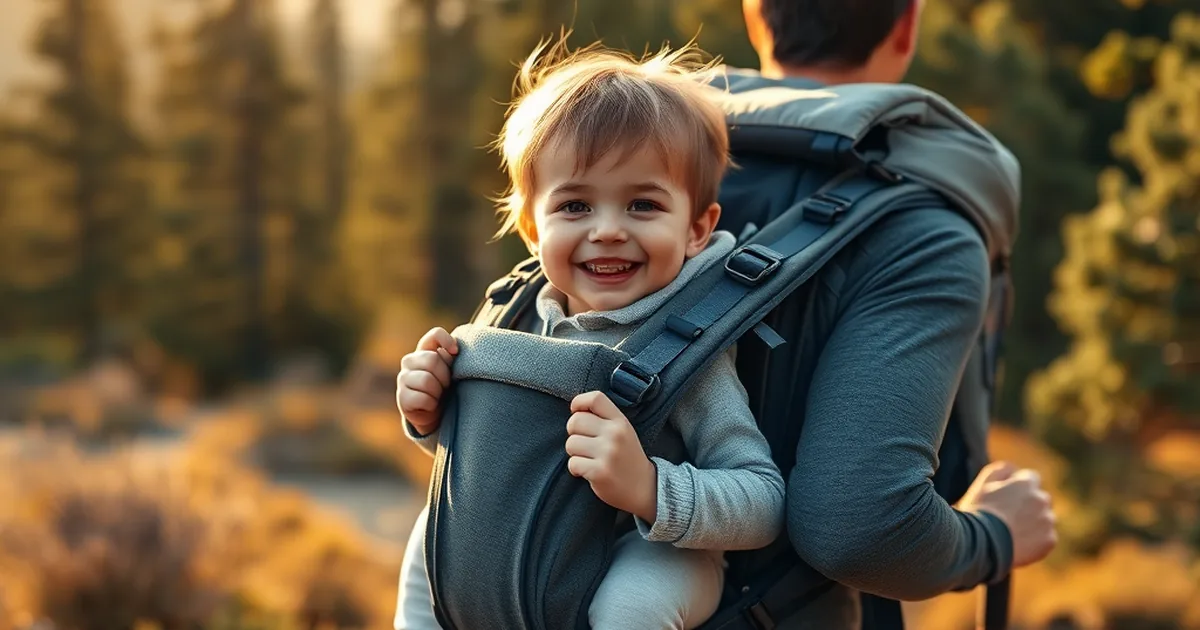
Hiking baby carriers, also called frame carriers or child hiking backpacks, let you take babies and toddlers on trails that a stroller cannot reach. Unlike soft-structured carriers designed for urban use, frame carriers support children up to 48 lb on extended hikes, with padded seats, sunshades, hydration system compatibility, and suspension systems that transfer weight to your hips rather than your back. Here are the four best hiking baby carriers of 2026.
Osprey Poco Plus Child Carrier
Osprey makes some of the most respected backpacking packs in the world, and that reputation extends to the Poco Plus. The carrier fits children from 6 months to 48 lb with a padded, adjustable seat that positions the child at a comfortable viewing height. The AirSpeed suspended mesh back panel allows airflow between the carrier and the wearer's back, which dramatically reduces sweat on hot trails.
The Poco Plus includes a detachable day pack that attaches to the front of the frame, a kickstand for freestanding stability when loading, a sunshade with UPF 50+, and a child-facing mirror in the back panel so the baby can see forward. Storage includes a hip belt pocket, a large main compartment behind the child, and external attachment points for trekking poles.
The harness fits torso lengths from 16" to 22" and adjusts without removing the child. Hip belt padding is generous and the load transfer is excellent, distributing most of the child's weight to the wearer's hips rather than the shoulders. At 7.9 lb empty, the Poco Plus is heavier than soft-structured carriers but appropriate for a full hiking pack.
At $229.95, the Osprey Poco Plus is a top-tier value in the frame carrier category. It includes features that cost extra on competing brands and has the Osprey all-mighty guarantee: if the product breaks for any reason, Osprey repairs or replaces it.
Best for: Active hikers who want a full-featured carrier with excellent ventilation and Osprey's lifetime warranty.
Child weight limit: 48.5 lb
Torso adjustment: 16-22"
Price: $229.95
Deuter Kid Comfort Active Child Carrier
Deuter's Kid Comfort Active is the choice for parents who want a lighter, simpler frame carrier focused on hiking performance rather than feature count. At 6.4 lb empty, it is noticeably lighter than the Osprey Poco Plus, and the streamlined design reduces catch points on brush and branches. The frame is aluminum, the seat is adjustable, and the torso fit system accommodates wearers from 15" to 20" torso length.
The Active version removes the detachable day pack in favor of a lighter, more minimalist design. Storage includes a single compartment behind the child with enough space for a day hike's worth of snacks, diapers, and a water bottle. Hip belt pockets are included, and a hydration sleeve accepts a standard 2L reservoir.
Deuter designed the Kid Comfort seat to grow with the child using a three-position height adjustment and a width adjustment that keeps babies positioned with a healthy hip angle. The sunshield is included and rolls down from the top hood. A kickstand locks into position for loading, and the entire carrier is machine washable.
At $239.95, the Kid Comfort Active is competitively priced and offers German engineering quality. It is the right choice for parents who prioritize weight savings and do not need the extensive accessory ecosystem that comes with the Osprey.
Best for: Weight-conscious hikers who want a lighter frame carrier with clean design and Deuter's European engineering.
Child weight limit: 48.5 lb
Carrier weight: 6.4 lb
Price: $239.95
Ergobaby Evolve 3-in-1 Carrier
The Ergobaby Evolve is the versatile choice for families who want a single carrier that works for both trail hiking and everyday urban use. It functions as a soft-structured front carry carrier for younger babies, a hip carry carrier for older toddlers, and a back carrier for hiking with toddlers up to 45 lb. This three-in-one design means you do not need to own separate carriers for different situations.
The Evolve's ergonomic design positions babies in the M-position seat, which the International Hip Dysplasia Institute recommends for healthy hip development. The lumbar support panel on the wearer's side and the wide padded waistband distribute weight effectively for carries up to a few hours. The SoftFlex mesh on the body panel improves airflow compared to standard structured carrier fabric.
The transition from front carry to back carry takes about 2 minutes on first attempt and becomes faster with practice. There is no frame or kickstand, so loading for back carry requires a second person or a park bench. This is the main limitation compared to true frame carriers for serious trail use.
At $169.95, the Ergobaby Evolve is the most affordable option on this list and the best choice for families who want a carrier that handles city life, short hikes, and travel without needing multiple products. For serious day hikers planning full-day outings on technical trails, the Osprey or Deuter frame carriers offer better load distribution.
Best for: Families who want one carrier that handles everyday use and light-to-moderate hiking without a frame carrier investment.
Child weight limit: 45 lb
Carry positions: Front, hip, and back
Price: $169.95
Kelty Journey PerfectFIT Signature Child Carrier
The Kelty Journey PerfectFIT is the most adaptable frame carrier on this list, with a torso adjustment system that fits wearers from 15" to 21.5" and a child seat that accommodates children from 6 months to 48 lb. The PerfectFIT name refers to the fit system, which adjusts in fewer steps than competitors and allows parents of different heights to share the carrier without lengthy re-fitting.
Storage is generous for a frame carrier: a large main compartment behind the child seat, a front panel pocket for quick-access items, two hip belt pockets, and an integrated rain cover that stows in a bottom zip pocket. The sunshade extends 270 degrees and folds away cleanly. A built-in kickstand deploys with one hand for stable freestanding loading.
The suspension system uses Kelty's TorsoFit torso length adjustment that can be made while wearing the loaded carrier, which is a practical advantage when two parents of different heights share the pack during a long hike. The shoulder harnesses are padded and contoured for a secure fit without pressure points.
At $309.95, the Kelty Journey PerfectFIT is the premium option on this list. The enhanced fit system, generous storage, and included rain cover justify the price for parents who plan to use this carrier on full-day hikes with shared carrying duties between two adults.
Best for: Couples who share carrying duties and need easy torso adjustment without removing the child from the carrier.
Child weight limit: 48.5 lb
Torso adjustment range: 15-21.5"
Price: $309.95
How to Choose a Hiking Baby Carrier
Frame carrier vs. soft-structured carrier for hiking
Frame carriers (Osprey, Deuter, Kelty) are designed for hikes of 3+ hours with toddlers 20 lb or more. Their rigid aluminum frames transfer weight to a hip belt, protecting the wearer's back and shoulders. Soft-structured carriers (Ergobaby Evolve) work well for babies under 20 lb and hikes under 2 hours. For full-day hikes on technical trails, a frame carrier is the right tool.
What age can babies start in a hiking carrier?
All four carriers on this list require the child to have adequate head and neck control, typically at 6 months or older. For younger babies, a front-facing soft-structured carrier with a head support insert is more appropriate. Babies under 6 months should not be placed in a frame carrier's back-carry position.
How long can you hike with a child in a carrier?
For infants, limit hikes to 1-2 hours with breaks to remove the baby from the carrier. Toddlers can ride comfortably for 4-6 hours with regular breaks. Monitor for signs of discomfort, overheating, or sleepiness. Always carry sunscreen, water, and extra layers for unpredictable mountain weather.
Frequently Asked Questions
At what age can my baby ride in a hiking frame carrier?
Most frame carriers require a minimum of 6 months of age and the ability to hold the head upright independently. Check the specific manufacturer's guidelines, as some require a minimum weight of 16-17 lb in addition to the age requirement. For younger babies, a front-carry soft-structured carrier is the safer choice.
How do I safely load a baby into a frame carrier by myself?
All four carriers on this list have kickstands for freestanding stability. Set the carrier upright on flat ground, place the child in the seat, secure the harness, then swing the carrier onto your back using a one-arm swing or a table height assist. Practice the swing technique with a sandbag or stuffed animal before trying it with your child.
Do hiking carriers work for tall parents?
Frame carriers fit torso lengths from approximately 15" to 22". The Kelty PerfectFIT has the widest adjustment range. If you are 6'2" or taller with an exceptionally long torso, try on carriers at an outdoor retailer before purchasing. Short parents (5'2" and under) typically fit all carriers well.
What should I pack in a hiking carrier for a day hike with a toddler?
Essentials: water (hydration reservoir plus a sippy cup for the child), sunscreen, snacks for both child and wearer, diapers and wipes, a thin extra layer for temperature changes, a sunshade if not included, and a first aid kit. The Osprey Poco Plus and Kelty PerfectFIT have the most storage for full-day gear.
Are hiking carriers allowed on airplane carry-ons?
Frame carriers are generally too large for overhead bins and must be checked. Soft-structured carriers like the Ergobaby Evolve can be packed in a carry-on bag or worn through the airport. When checking a frame carrier, pad the frame points and use a large duffel bag or a specialized carrier travel bag to prevent damage.
How do I keep my baby cool in a hiking carrier?
Choose a carrier with mesh back panels for airflow (all four on this list qualify). Dress your baby in lightweight, moisture-wicking fabrics. Avoid peak afternoon sun. Use the included sunshade. Offer water frequently for babies over 6 months on warm days, and monitor for signs of overheating including flushed skin and excessive sweating.
What is the weight limit for hiking baby carriers?
Most frame carriers are rated to 48-50 lb. The Osprey Poco Plus, Deuter Kid Comfort Active, and Kelty PerfectFIT are all rated to 48.5 lb. The Ergobaby Evolve is rated to 45 lb. Most children outgrow the desire to be carried before they hit these weight limits, typically around 3-4 years old on longer hikes.
Do I need a separate baby carrier for hiking if I already have a soft-structured carrier?
If your hikes are typically under 2 hours and your child is under 25 lb, your existing soft carrier may be adequate. For hikes over 3 hours, children over 25 lb, or trails with significant elevation change, a frame carrier's hip belt suspension makes a meaningful difference in wearer comfort and safety.