Best Baby Monitors 2026: 5 Top Picks for Every Budget
A good baby monitor gives you peace of mind the moment you leave the nursery. Whether you want real-time breathing alerts, crystal-clear night vision, or a simple no-WiFi camera that just works - the right monitor depends on your setup, your anxiety level, and your budget.
I spent weeks reviewing the most popular options on Amazon, reading thousands of parent reviews, and comparing specs side by side. Here are the five best baby monitors of 2026, covering every category from premium smart monitors to reliable no-WiFi picks.
Quick Navigation
Our Top 5 Baby Monitors for 2026
Nanit Smart Baby Video Monitor System

- Breathing motion monitoring via Breathing Wear
- 1080p HD camera with wide-angle lens
- Real-time alerts to your phone via app
- Sleep analytics with personalized insights
- Two-way audio and night vision
- Breathing Wear sold separately
- Full sleep tracking requires a subscription
- WiFi dependent (no offline mode)
The Nanit is the monitor anxious new parents reach for - and for good reason. Its 1080p wide-angle camera captures the entire crib clearly, and when paired with the Breathing Wear (a swaddle or sleep sack with a pattern Nanit's camera tracks), you get real-time breathing motion monitoring that alerts your phone if breathing becomes irregular.
Setup takes about 10 minutes and the app is genuinely intuitive. You get a live stream from anywhere, two-way audio so you can soothe your baby remotely, and sleep tracking that shows wake windows, sleep totals, and nap patterns over time. The night vision is excellent - you can clearly see your baby's face even in complete darkness.
The main limitation is the subscription model. Basic live streaming is free, but the full sleep analytics dashboard requires a Nanit Insights plan (around $10/month or $100/year). If you just want a reliable camera with app access and breathing tracking, the core experience is solid even without a subscription.
Best for: Parents who want smart sleep tracking and peace of mind from breathing alerts.
Owlet Dream Duo 3 Smart Baby Monitor
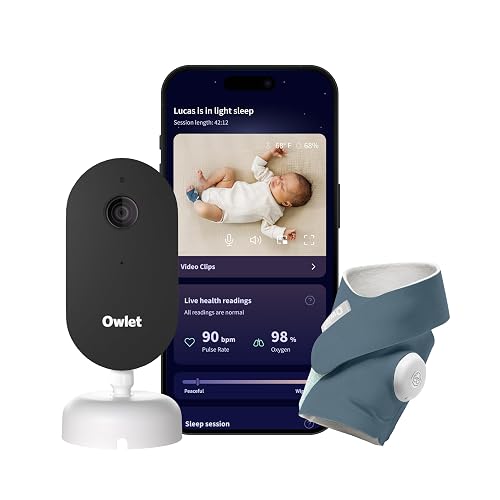
- Dream Sock tracks heart rate and oxygen levels
- 1080p HD camera included in the bundle
- Real-time alerts for abnormal readings
- Fits babies 0 to 18 months (up to 30 lbs)
- Detailed sleep reports via the Owlet app
- Owlet+ subscription required for full features
- Sock can come off smaller newborns
- Some parents find alerts trigger frequently
The Owlet Dream Duo 3 takes a different approach from camera-only monitors. The bundle includes both the HD camera and the Dream Sock - a wearable that clips to your baby's foot and tracks heart rate and blood oxygen levels in real time. If readings fall outside normal ranges, the sock sends an alert to the base station (which lights up and sounds an alarm) and to your phone.
This dual setup - physical wearable plus camera - gives parents an extra layer of reassurance, especially in the newborn months. The 1080p camera streams to the Owlet app, where you can also see the sock's readings overlaid on the live view. Night vision is sharp and two-way audio works reliably.
The sock fits babies from 0 to 18 months but can slip off very small newborns - a few parents in reviews mention having to reposition it regularly. The Owlet+ subscription (around $10/month) unlocks historical trends and detailed sleep coaching; basic live monitoring works without it.
Best for: Parents who want vital sign monitoring combined with a HD camera in one package.
Infant Optics DXR-8 PRO SS Baby Monitor

- Interchangeable lens system (wide-angle and zoom)
- No WiFi needed - dedicated FHSS signal
- Large 5-inch IPS display on parent unit
- Up to 12 hours battery on parent unit
- Two-way talk and temperature sensor built in
- No remote viewing when away from home
- No sleep analytics or smart features
- Range limited to same property
The Infant Optics DXR-8 has been one of the best-selling baby monitors for years, and the PRO SS update brings a larger screen and improved build quality. What makes it stand out in 2026 is something counterintuitive: it does not use WiFi at all. Instead, it broadcasts on a secure FHSS (Frequency Hopping Spread Spectrum) signal between the camera and parent unit - which means zero cloud servers, zero hacking risk, and zero dependence on your internet connection.
The 5-inch IPS screen on the parent unit is bright and sharp. The interchangeable lens system is genuinely useful - you can swap between the standard lens, a wide-angle lens (for a bigger crib view), and a zoom lens (for more detail). The built-in room temperature sensor and two-way audio round out a very complete package.
The tradeoff is that you cannot check on your baby remotely from work or a restaurant. If you need that capability, look at the Nanit or Philips Avent. But for parents who want a simple, reliable monitor with no subscriptions, no apps, and no privacy concerns, the DXR-8 PRO SS is the clear winner.
Best for: Privacy-conscious parents who want a no-WiFi monitor with excellent picture quality.
Philips Avent Premium Connected Baby Monitor
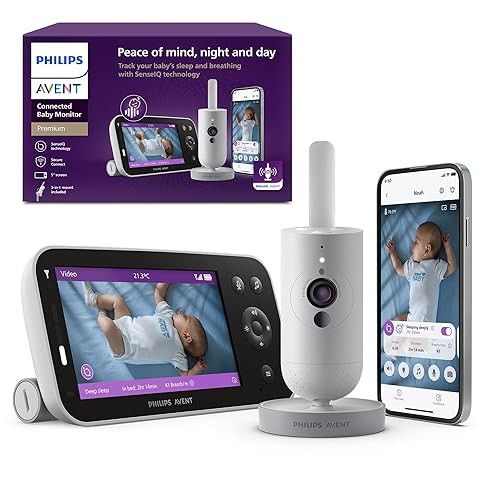
- 1080p camera with sleep and breathing motion tracking
- 5-inch HD parent unit screen included
- App and parent unit work simultaneously
- Wall and crib mount included in the box
- No subscription required for core features
- Sleep tracking less detailed than Nanit
- App can feel slower than competitors
- Limited third-party accessory ecosystem
Philips Avent has earned the trust of parents for decades across bottles, breast pumps, and pacifiers - and their Premium Connected monitor brings that same reliability to baby surveillance. The SCD973 combines a 1080p camera with both a dedicated 5-inch parent unit and a smartphone app, so you can switch between the two depending on where you are in the house.
The camera tracks breathing motion (similar to Nanit but without a separate wearable) and sends alerts if it detects an unusual pattern. Room temperature, humidity, and night vision are all built in. The two-way talk is clear and the night vision maintains true-to-life colors even in low light.
The standout feature here is no mandatory subscription. Core features including live streaming, motion alerts, and basic sleep data work without any monthly fee. This makes the Philips Avent a strong value proposition compared to Nanit or Owlet, which push users toward paid plans for full functionality.
Best for: Parents who want a trusted brand name, a dedicated parent unit, and no subscription fees.
HelloBaby Baby Monitor No WiFi with Mount
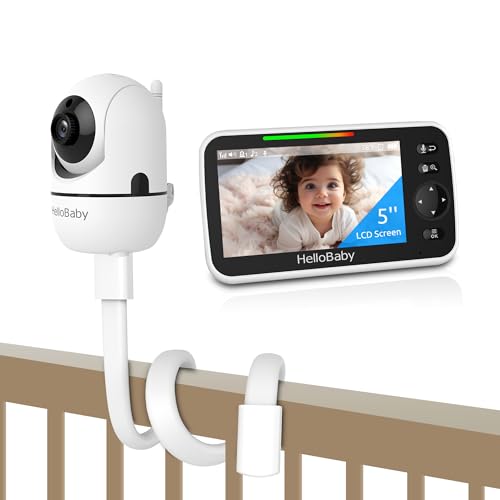
- 30-hour battery life on the parent unit
- 5-inch IPS color screen with clear display
- No WiFi required - secure FHSS signal
- Flexible mount included for easy positioning
- VOX mode (sound-activated) saves battery
- No app or remote viewing capability
- No smart features or sleep analytics
- Camera pan/tilt must be done manually
The HelloBaby stands out for one reason that parents love: a 30-hour battery life on the parent unit. Most video baby monitors require daily charging - the HelloBaby lets you go multiple days without plugging in, which is a real quality-of-life improvement when you are sleep-deprived and juggling a newborn.
The 5-inch IPS screen delivers a bright, clear picture even at the edges of the room. Like the Infant Optics, it operates on a no-WiFi FHSS signal - no internet needed, no cloud storage, no privacy worries. The flexible mount included in the box makes it easy to attach to a crib rail or dresser at the right angle without buying accessories separately.
VOX mode (voice-activated display) is a nice touch: the parent unit stays dark and quiet until it picks up sound from the nursery, then wakes up automatically - helping preserve battery and letting you sleep without a glowing screen on the nightstand.
What you give up is smart features. There is no app, no sleep tracking, and no remote access. But with 4.7 stars across thousands of reviews, parents consistently praise its reliability and the exceptional battery life. For parents who want simple, dependable monitoring without subscription fees or app complexity, this is the one.
Best for: Parents who want a no-fuss no-WiFi monitor with exceptional battery life.
Baby Monitor Buying Guide: What to Look For
WiFi vs. No-WiFi Monitors
This is the biggest decision you will make. WiFi monitors (Nanit, Owlet, Philips Avent) let you check on your baby from anywhere via a smartphone app - ideal if you work from home or want to watch during a date night. No-WiFi monitors (Infant Optics, HelloBaby) use a direct encrypted radio signal between camera and parent unit - faster, more reliable within the home, and impossible to hack remotely.
If you value remote access and smart features, go WiFi. If you prioritize simplicity, privacy, and offline reliability, go no-WiFi.
Smart Features vs. Simple Monitoring
Smart monitors offer breathing motion tracking, sleep analytics, heart rate monitoring (Owlet), and AI-powered insights. These features genuinely help some parents - especially new parents anxious about SIDS or irregular breathing patterns.
That said, many pediatricians note that FDA-cleared baby monitors (the Owlet Dream Sock is one) are worth the peace of mind, while camera-based breathing motion tracking is a helpful indicator but not a medical device. Understand what you are getting before making a purchase decision based on safety claims.
Video Quality and Night Vision
Look for at least 720p - all five monitors on this list offer 1080p. Night vision matters more than daytime resolution. True infrared night vision (showing in black and white) is reliable; color night vision can look washed out in some monitors. Read reviews specifically about night vision quality before buying.
Battery Life
Parent unit battery life ranges from 6 hours (some budget models) to 30 hours (HelloBaby). If you want to carry the parent unit around the house all day without charging, prioritize battery. If it stays plugged in on your nightstand, battery matters less.
Sound Quality and Two-Way Audio
Two-way audio lets you talk to your baby through the monitor - useful for soothing without walking to the nursery. Check reviews for audio clarity; cheap monitors can have echo or static that startles babies. All five monitors on this list have two-way talk.
Subscription Costs
Factor in ongoing costs. Nanit charges around $100/year for full analytics. Owlet charges around $10/month for Owlet+. The Philips Avent and both no-WiFi options have no subscription requirements. Over two years, a $10/month subscription adds $240 to the total cost.
Frequently Asked Questions
What is the best baby monitor in 2026?
The Nanit Smart Baby Video Monitor System is the best overall baby monitor in 2026 for parents who want WiFi connectivity, breathing motion tracking, and detailed sleep analytics. For parents who prefer no-WiFi, the Infant Optics DXR-8 PRO SS is the top pick.
Are WiFi baby monitors safe?
WiFi baby monitors are safe to use but can be vulnerable to hacking if your home network is not secured. Always use a strong, unique password on your WiFi router, keep the monitor's firmware updated, and choose brands with good security track records. For maximum security, a no-WiFi monitor like the Infant Optics DXR-8 PRO SS is the safest option.
Do I need a baby monitor with breathing tracking?
Breathing tracking can provide peace of mind, especially for newborns and parents with a family history of SIDS risk factors. The Owlet Dream Sock is the only FDA-cleared option on this list. Camera-based breathing motion tracking (Nanit, Philips Avent) is useful but not a medical device. Consult your pediatrician if you have specific concerns.
What is the difference between the Nanit and Owlet?
The Nanit uses camera-based breathing motion tracking and requires Breathing Wear (a special swaddle or sleep sack). The Owlet Dream Duo 3 includes a physical sock that the baby wears, which tracks heart rate and blood oxygen via pulse oximetry - similar to a hospital monitor. The Owlet's wearable approach is more direct, while the Nanit relies on visual tracking through the camera.
Can I use a baby monitor without WiFi?
Yes. The Infant Optics DXR-8 PRO SS and HelloBaby monitors on this list both operate on a private FHSS radio signal between the camera and parent unit. You do not need a home internet connection or smartphone. The tradeoff is you cannot view the feed remotely when away from home.
How long do I need a baby monitor?
Most parents use baby monitors from birth until age 2 to 3, when children begin transitioning to a toddler bed and can call out if they need something. Some parents continue using monitors through preschool age. There is no set timeline - use it as long as it gives you peace of mind and serves your family.
Is the Owlet Dream Sock FDA cleared?
Yes. The Owlet Dream Sock 3 received FDA 510(k) clearance as a prescription-use pulse oximetry device. The consumer version included with the Dream Duo 3 provides heart rate and oxygen monitoring for home use and is intended for healthy infants as a wellness device, not a medical monitor.
What is the range of a baby monitor?
WiFi monitors have unlimited range as long as you have internet access. No-WiFi monitors typically cover 500 to 1,000 feet in open space, which translates to reliable coverage within most homes and apartments. Walls and floors reduce the effective range. The Infant Optics DXR-8 PRO SS is rated for up to 700 feet of open-air range.